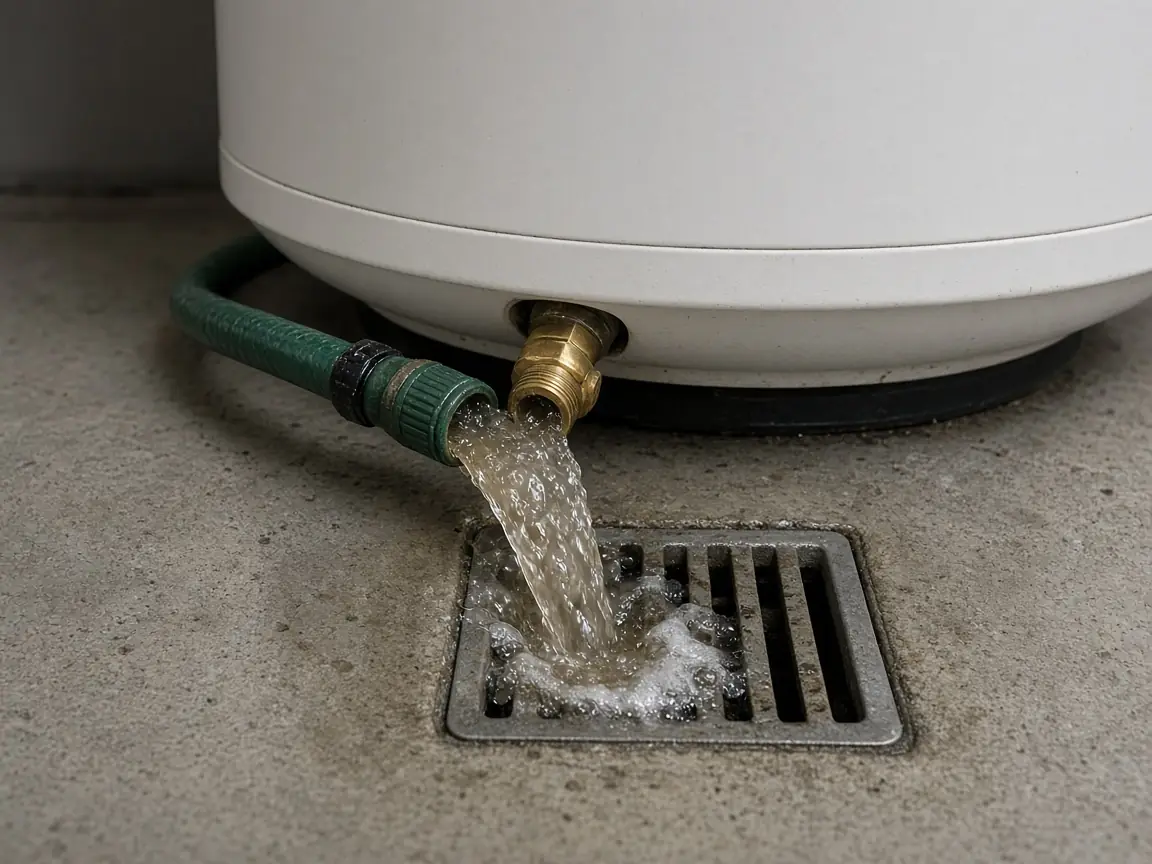
Flush a tank water heater in Portland, OR when it pops or rumbles while heating, or as routine maintenance every one to three years depending on your water. Portland's soft Bull Run supply leaves less scale than hard-water regions, so many city tanks need flushing less often; homes on wells or other suppliers may need it more. On tanks older than about ten years that have never been flushed, opening the drain can loosen sediment that was sealing a weak spot, so check age and condition first.
Flushing removes sediment that settles on the tank bottom, where it insulates water from a gas burner or buries a lower electric element. In Portland basements and garages, from older homes near Forest Park to east side bungalows around Mt. Tabor Park, sediment shows up as noise more often than as lost capacity.
Signs a flush could help
- Popping, crackling, or rumbling when the burner or elements run.
- Hot water running out sooner than it used to.
- Rusty or cloudy hot water at the first draw, though rusty water can also mean anode or tank corrosion.
- A drain valve that releases gritty water when opened briefly.
How a flush works
Energy is shut off: the breaker for electric tanks, the gas control set to pilot or off for gas tanks. The cold supply is closed and a hot faucet opened to break the vacuum. A hose goes from the drain valve to a floor drain or outside. The tank drains, then short bursts of cold supply stir sediment loose until the water runs clear. The tank is refilled completely with a hot faucet open to bleed air before energy is restored. On electric tanks, restoring power before the tank is full can burn out the upper element in moments.
Drain valves
Many tanks have plastic drain valves that can crack or refuse to reseal after years of disuse. If a valve drips after a flush, it can be replaced with a full-port brass valve, which also drains sediment more effectively.
Anode check
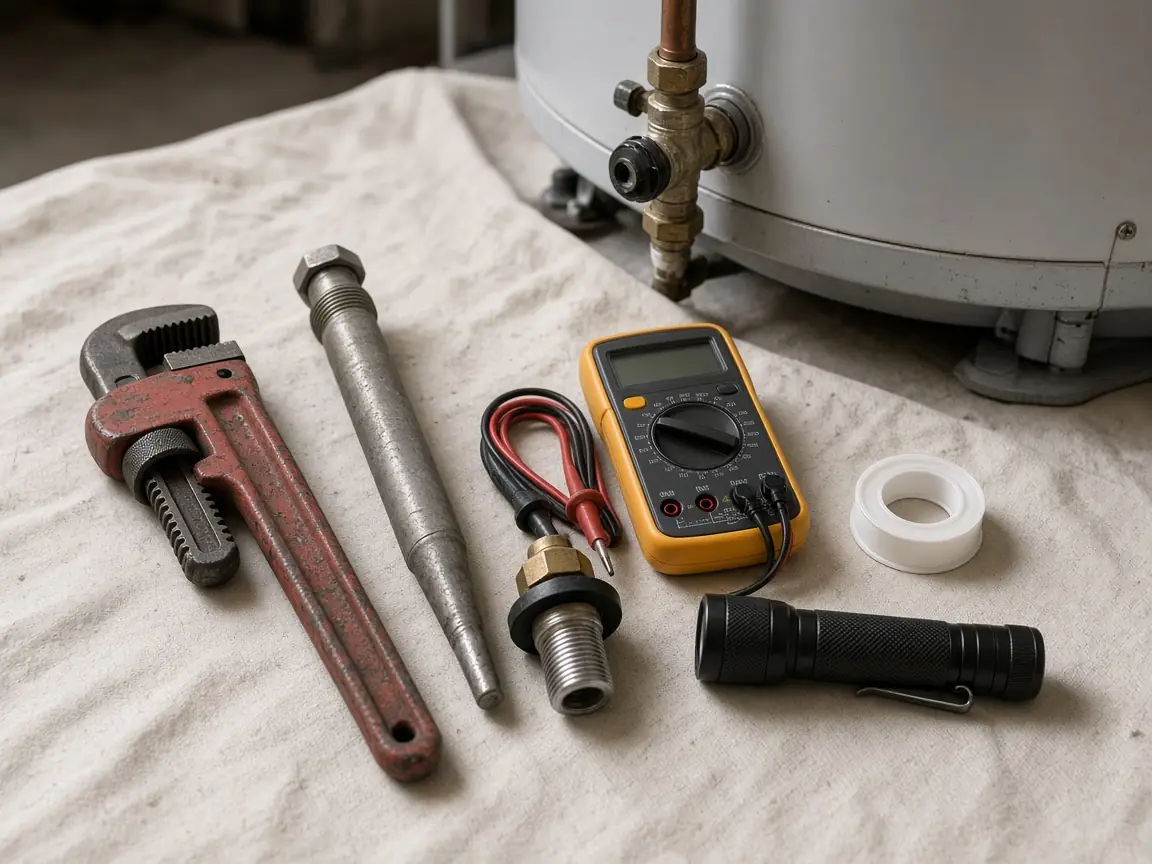
A flush is a good time to inspect the anode rod, which protects the tank from corrosion. The anode rods guide explains when to replace it and why some tanks with smelly hot water need a different type.
When not to flush
If the tank is old, has visible rust at the base, or has never been flushed in more than a decade, a flush can expose a leak. In that case, plan for water heater replacement rather than adding stress to the tank. If the tank is leaking now, see emergency water heater repair.
Tankless units
Tankless water heaters need descaling with a pump and solution rather than a simple drain. See tankless water heater repair and the tankless descaling guide.
What comes out of a Portland tank
On soft Bull Run water, the material that drains out is often fine sand, rust particles from the tank and pipes, and bits of a deteriorated dip tube, rather than thick white scale. On wells or harder supplies, chunks of mineral scale are more common and can clog the drain valve. If the drain clogs repeatedly, short bursts of cold supply pressure can clear it, but stop if the valve begins to leak.
Keeping records
Write the flush date on a tag on the tank, along with the anode inspection result. That history helps decide whether a noisy tank is worth flushing again or whether replacement planning should start.
What a proper flush in Portland involves
- Tank age and condition reviewed before draining
- Energy turned off and cold supply closed
- Drain valve type checked; brittle plastic valves noted before opening
- Hose route secured to a safe drain or outdoor discharge
- Tank drained and stirred with brief cold-supply bursts until clear
- Anode rod inspected while the tank is depressurized
- Tank refilled completely with air bled before energy is restored
- Relief valve tested and checked for proper reseating
Flush prep list for Portland
Before a flush in Portland, find the drain valve and check what it is made of, identify where the hose will discharge, and gather a hose long enough to reach without kinks, gloves, and a bucket for the first sample. Note the tank age from the rating plate. If the anode rod will be inspected too, have the correct socket size and a replacement rod on hand. Plan the job for a dry, mild day so the hose route outdoors is safe.
Water heater flush by city
Each city page below covers local housing, water, and permit notes for this service.
- Water heater flush in Beaverton
- Water heater flush in Gresham
- Water heater flush in Hillsboro
- Water heater flush in Lake Oswego
- Water heater flush in Tigard
- Water heater flush in Milwaukie
- Water heater flush in Tualatin
- Water heater flush in Happy Valley
Portland at a glance
- Coverage: Portland, Oregon and nearby cities, shown on the map on this page at city level, not a business address.
- Landmarks named on this site: Forest Park, Washington Park, and Mt. Tabor Park.
- Permits: City of Portland residential plumbing permits and the Oregon Building Codes Division.
- Incentives: Energy Trust of Oregon lists current water heater offers.