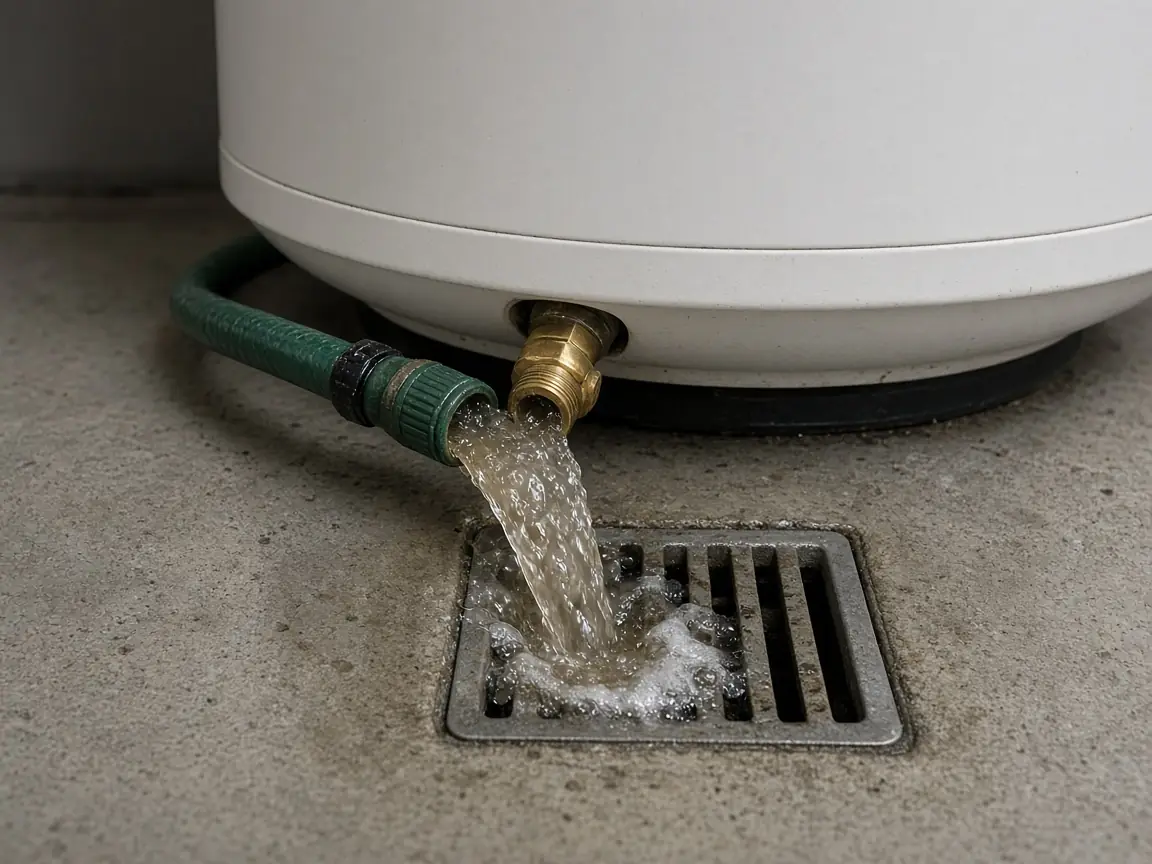
Mineral scale wears out a tank water heater by building up on the bottom and on electric elements, which insulates the water from the heat source, wastes energy, and makes the tank rumble. Much of Portland, OR is served by the soft Bull Run supply, so scale builds slowly for most city homes. Homes on wells, groundwater blends, or other suppliers can see more minerals. Find your supplier on your water bill, then set a flushing schedule to match.
Hard water means water with more dissolved calcium and magnesium. When water is heated, some of those minerals come out of solution and settle as scale. In a tank, scale collects on the bottom above a gas burner or coats the lower element in an electric tank. In a tankless unit, it lines the narrow passages of the heat exchanger.
Portland's water in context
The Portland Water Bureau's primary supply comes from the Bull Run watershed east of the city, a protected source that produces notably soft water. The city also maintains a groundwater supply used at times to supplement Bull Run, which can change mineral content for a period. Water from the Bull Run passes through neighborhoods from the west hills near Forest Park to the east side, so most Portland homes share the same soft baseline.
Nearby cities differ. Lake Oswego and Tigard draw from the Clackamas River through a shared partnership. Milwaukie relies largely on local wells. Gresham has been adding groundwater sources alongside Bull Run purchases. Rural homes on private wells may have considerably harder water. Because supply depends on your address, the first step is always to check your bill or your supplier's annual water quality report.
What scale does to a tank
- Noise. Water trapped under a scale layer boils in small bursts, making popping and rumbling sounds.
- Lost efficiency. Scale insulates the bottom of a gas tank, so more fuel goes up the flue.
- Overheated bottoms. On gas tanks, heat trapped under scale can stress the tank bottom and shorten its life.
- Element failure. On electric tanks, scale on the lower element can make it overheat and burn out.
- Less capacity. Heavy buildup takes up space and can clog the drain valve.
On soft water, the sediment in many Portland tanks is less about scale and more about fine sand, rust from pipes, and debris. The symptoms are similar but usually milder.
Setting a flushing schedule
- Soft supply, quiet tank: flushing every two to three years is often enough.
- Moderate minerals or a noisy tank: flush yearly.
- Hard well water: consider flushing every six to twelve months and adding treatment.
See water heater flush for the steps and the cautions for older tanks.
Tankless units
Tankless heat exchangers are more sensitive to scale than tanks. Even on soft water, manufacturers recommend periodic descaling. The tankless descaling guide covers timing and method, and tankless water heater repair covers overheat codes that scale can cause.
Softeners and treatment
On hard well water, a softener or scale-reduction system can protect both tanks and tankless units. Softened water can speed up anode consumption, so pair a softener with regular anode checks; see the anode rods guide.
Signs your water may be harder than you think
White crust on faucet aerators, spots on dishes, and scale inside kettles all suggest more minerals. If you see these in a home that should be on soft water, check whether your supplier is blending groundwater or whether the home is on a different system.
Sources
The Portland Water Bureau publishes information on the Bull Run and groundwater supplies. Other cities publish water quality reports on their official sites.
Reading a water quality report
Suppliers usually report hardness in milligrams per liter or grains per gallon. Water under about 60 mg/L is generally considered soft, and Bull Run water typically sits well below that. Values above about 120 mg/L are considered hard, and above 180 very hard. If your report lists a range, the high end matters most for scale, because summer groundwater blending or seasonal changes can push mineral content up for weeks at a time.