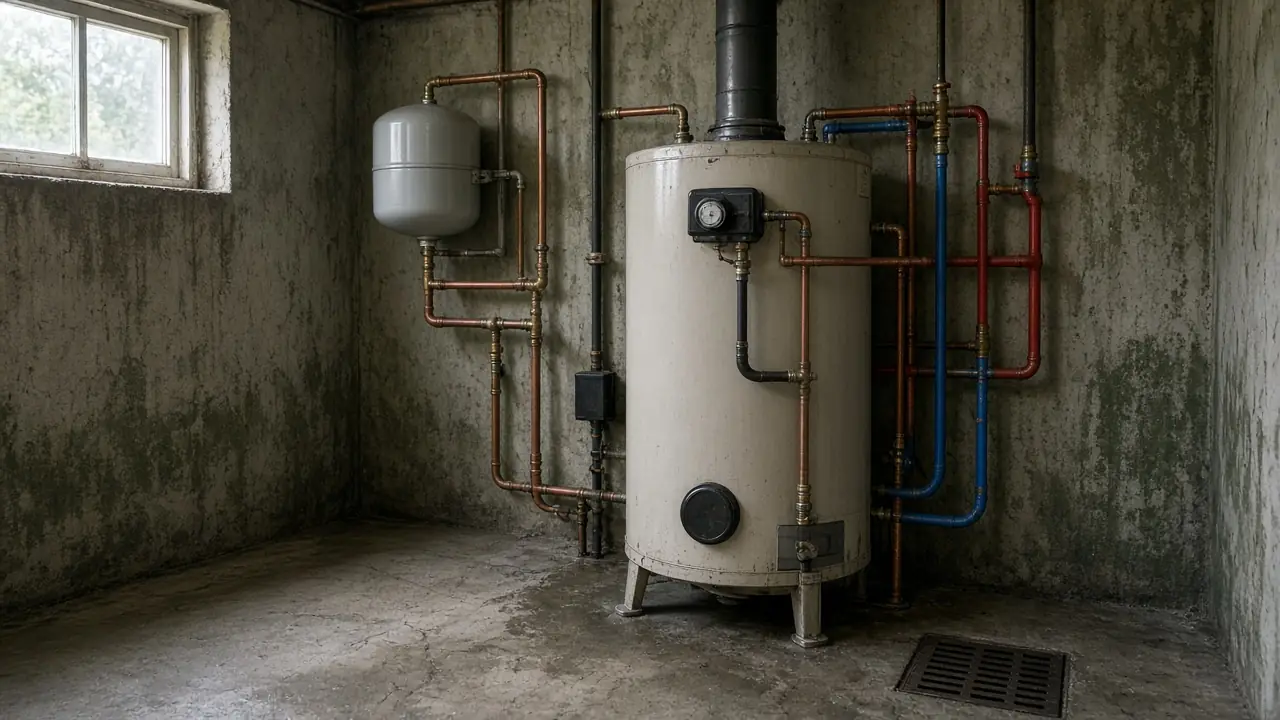
For a water heater problem in Lake Oswego, OR, check for leaks, confirm power or gas, note error codes, and read the rating plate. Larger homes on hillside lots often use high-capacity tanks, linked tankless units, or recirculation systems, so problems can involve demand, distance, and controls as much as a single failed part. Dry units with one bad component are usually worth repairing; leaking tanks or cracked heat exchangers usually are not.
Lake Oswego homeowners know Millennium Plaza Park downtown and George Rogers Park along the Willamette. Between those areas, homes run from mid-century houses to large newer properties on slopes.
Common Lake Oswego water heater problems
Slow hot water. Long pipe runs in large homes delay hot water. Recirculation pumps help but can fail or be set wrong. Check timers and pumps first.
Linked tankless units. Some homes use two or more tankless units. If one faults, the other may cover quietly until demand rises. See tankless water heater repair in Lake Oswego.
Large tank wear. 75- or 80-gallon tanks and multiple tanks wear like any other, with anode, element, and burner failures. See water heater repair in Lake Oswego.
Hillside basements. Gas tanks in lower-level utility rooms face venting and combustion air questions, especially after remodels.
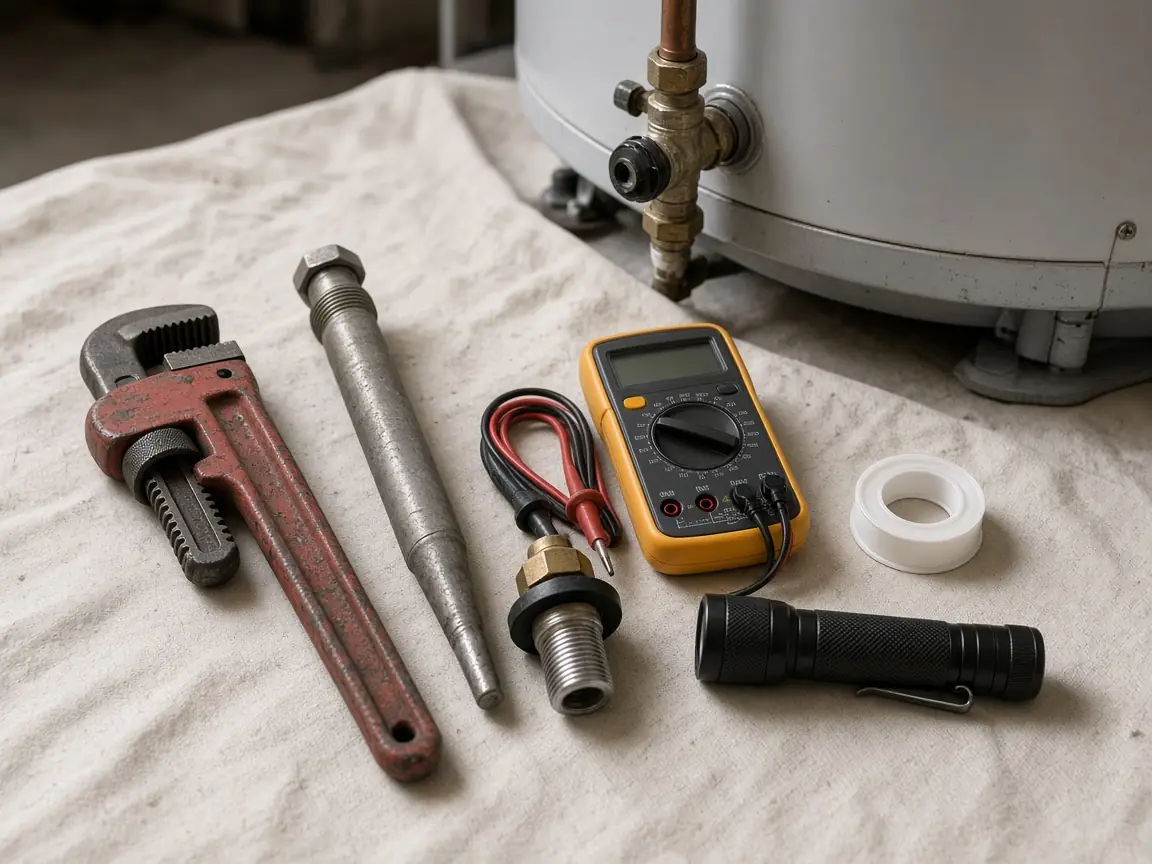
Repair or replace in Lake Oswego
Replacement often involves sizing and system decisions, such as whether to keep recirculation or switch to a heat pump tank. See water heater replacement in Lake Oswego.
Lake Oswego remodels and water heaters
Remodels are common in Lake Oswego, and they often change what a water heater needs to do. Adding a large soaking tub, a second primary bathroom, or multiple shower heads can outstrip the original tank or tankless unit. Finishing a basement can reduce combustion air for a gas tank and enclose it in a space that was never planned for it. When a remodel is planned, include the water heater in the design: capacity, location, venting, drainage, and access for future service. It is much cheaper to plan a vent route or condensate drain before walls close than after.
Permits and official sources
The City of Lake Oswego site lists building contacts, and the Oregon Building Codes Division explains statewide plumbing permit rules.
Nearby
For neighboring guidance, see Tigard. For all cities, see the service area overview.
Living with a water heater in Lake Oswego
Lake Oswego wraps around Oswego Lake south of Portland, bordered by the Willamette River on the east and wooded hills to the west. Many homes are larger than the metro average, with more bathrooms, soaking tubs, and long pipe runs, and a good share use hot-water recirculation or more than one heater. Older neighborhoods near downtown and the river include 1940s through 1960s houses with masonry chimneys that once vented both a furnace and a water heater; furnace upgrades have left many water heaters venting alone in chimneys that are now too large. Hillside lots create daylight basements where the heater sits against a below-grade wall, often close to finished space. Much of the city's water comes through the Lake Oswego Tigard Water Partnership from the Clackamas River, which is relatively soft, so scale is rarely the main problem. Capacity, venting, and protecting finished basements are the local factors that come up most often for Lake Oswego water heaters.
A five-minute check for Lake Oswego homeowners
Before you compare repair or replacement options in Lake Oswego, spend five minutes gathering the facts that every diagnosis starts with.
- Look at the floor and the tank base. Dry, damp, or actively dripping? Water from the top fittings or relief valve pipe is a different problem from water coming out under the jacket.
- Photograph the rating plate. It shows the brand, model, serial number, capacity, fuel, and usually the manufacture date, which may be encoded in the serial number.
- Confirm energy. For electric tanks, check the double breaker in the panel. For gas tanks, look through the sight glass for a pilot or burner flame and confirm other gas appliances work.
- Note the symptom precisely: no hot water, short hot water, lukewarm water, noise, smell, discolored water, or an error code on a tankless display.
- Find the shutoffs. Locate the cold supply valve above the heater and the main water shutoff, and make sure both turn.
With those notes, a repair visit in Lake Oswego is faster, and you can judge quotes on facts rather than guesses.
Water heater services in Lake Oswego
- Water heater repair in Lake Oswego: Leaks at fittings, no heat, lukewarm water, and noises on tank heaters.
- Water heater replacement in Lake Oswego: Swapping a failed tank for gas, electric, or heat pump, with permit and code items.
- Emergency water heater repair in Lake Oswego: Safety-first steps for leaks, gas odor, and running relief valves.
- Gas water heater repair in Lake Oswego: Pilot, ignition, thermocouple, venting, and combustion-air checks.
- Water heater flush in Lake Oswego: Draining sediment from a noisy tank that still holds water.
- Tankless water heater installation in Lake Oswego: Sizing gas line, venting, and condensate for a first tankless unit.
- Tankless water heater repair in Lake Oswego: Error codes, flame failure, scale, and flow problems on tankless units.
- Tankless water heater replacement in Lake Oswego: Replacing an old tankless unit and re-checking vent, gas, and valves.
Lake Oswego at a glance
- Location: Lake Oswego, Oregon, about 15–20 minutes south of central Portland.
- Local landmarks used on this page: Millennium Plaza Park, George Rogers Park.
- City information and building contacts: City of Lake Oswego.
- State permit rules: Oregon Building Codes Division.
- Utilities: PGE or another electric utility and NW Natural gas serve most addresses; incentives are listed by Energy Trust of Oregon.
- Nearby city page: Tigard.
- Map: the map on this page shows Lake Oswego, Oregon at city level, not a business address.