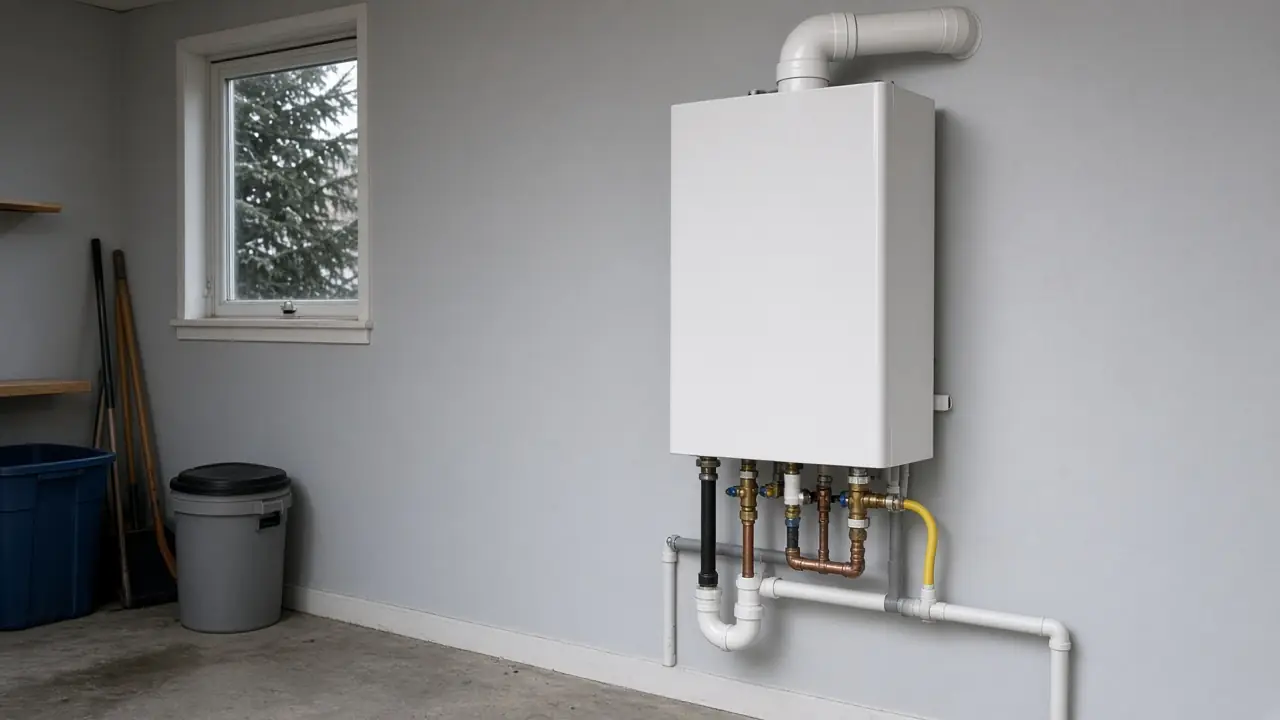
A first tankless installation in Lake Oswego, OR has to include a gas line sized for the unit's maximum input, an approved vent and termination, condensate drainage for condensing models, isolation valves, and a permit. In larger Lake Oswego homes, peak hot-water flow can exceed what one unit delivers in winter, so installs may need a larger unit, two units linked together, or a small buffer tank. If the home has a recirculation loop, the tankless model must support recirculation properly.
Tankless conversions are popular in Lake Oswego remodels, where owners want endless hot water for large showers and soaking tubs and want to reclaim basement or garage space. The planning challenges are capacity, gas supply, and recirculation.
Sizing for peak demand
Tankless units are rated by flow at a given temperature rise. Lake Oswego's winter supply water is cold enough that the rise is large, which reduces available flow. A home with multiple rain showers, body sprays, or a large tub may need more than one unit. Many brands allow two or more units to be linked so they share demand and back each other up.
Gas supply
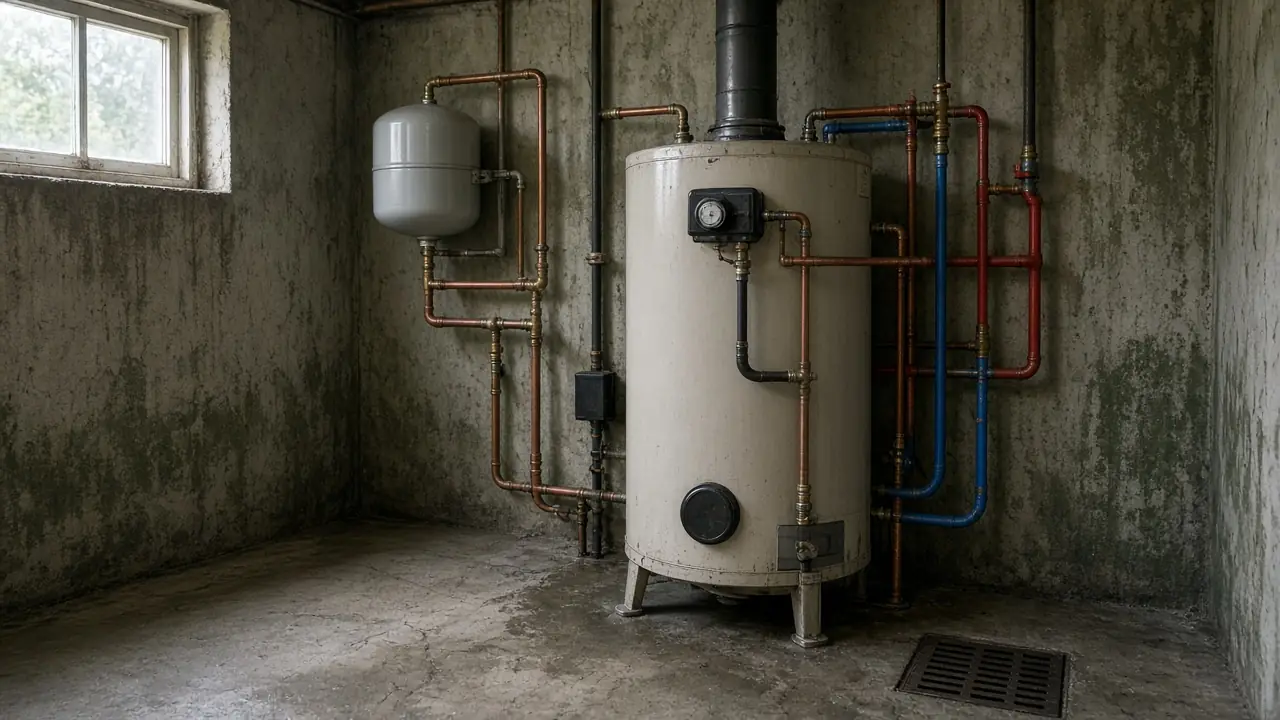
A single whole-home unit can draw far more gas than a tank. Two linked units double that. Older homes often need a new, larger gas line from the meter, and NW Natural may need to upgrade the meter or regulator. A load calculation with every gas appliance is essential.
Recirculation with tankless
Many large Lake Oswego homes already have recirculation loops. Not every tankless unit handles recirculation well; some have built-in pumps and controls, others require a small buffer tank to prevent short-cycling. Choose a model designed for recirculation if the home depends on quick hot water at distant baths.
Venting on hillside lots
Hillside homes often let the vent exit a daylight basement wall at grade on one side and high above grade on the other. Terminations must meet clearance rules from windows, doors, and grade, and should not exhaust into a covered patio or under a deck. A roof termination may be simpler on some homes.
Condensate
Condensing units need a neutralizer and drain. Basement installs usually have a floor drain nearby; garage installs may need a pump.
Service and water quality
Clackamas River water serving much of Lake Oswego is relatively soft, which is easy on heat exchangers. Isolation valves still matter for periodic descaling; see the tankless descaling guide.
Electric tankless
Whole-home electric tankless units in large homes require very high electrical capacity. Even 200-amp services are often insufficient. A heat pump water heater is usually the practical electric alternative.
Permits and incentives
Tankless installs generally require plumbing and often mechanical permits; see the Oregon Building Codes Division. Local contacts start at the City of Lake Oswego. For incentives, check the NW Natural water heater offer and Energy Trust's residential water heater incentives.
Lake Oswego notes
Remodels in the older neighborhoods between Millennium Plaza Park and George Rogers Park often pair a tankless conversion with retiring an old chimney. Removing the water heater from the chimney can solve an orphaned-vent problem at the same time.
Living with a water heater in Lake Oswego
Lake Oswego wraps around Oswego Lake south of Portland, bordered by the Willamette River on the east and wooded hills to the west. Many homes are larger than the metro average, with more bathrooms, soaking tubs, and long pipe runs, and a good share use hot-water recirculation or more than one heater. Older neighborhoods near downtown and the river include 1940s through 1960s houses with masonry chimneys that once vented both a furnace and a water heater; furnace upgrades have left many water heaters venting alone in chimneys that are now too large. Hillside lots create daylight basements where the heater sits against a below-grade wall, often close to finished space. Much of the city's water comes through the Lake Oswego Tigard Water Partnership from the Clackamas River, which is relatively soft, so scale is rarely the main problem. Capacity, venting, and protecting finished basements are the local factors that come up most often for Lake Oswego water heaters.
What a first tankless install in Lake Oswego should cover
- Gas load calculation for every appliance and the pipe length from the meter
- Unit sized by flow rate at the coldest realistic inlet temperature
- Vent material and termination chosen per the manufacturer and code clearances
- Condensate drain and neutralizer planned for condensing models
- Isolation service valves and an accessible inlet filter installed
- Electrical outlet or circuit provided for controls, fans, and freeze protection
- Permits pulled for plumbing and, where needed, mechanical work
Tankless install prep list for Lake Oswego
Before requesting a first tankless quote in Lake Oswego, list every gas appliance in the house, note the distance from the gas meter to the proposed unit location, and photograph the wall where it would hang and the outside wall where the vent would exit. Count the showers and appliances that run together on a busy morning. Check the electrical panel label for open spaces. Those details let an installer size the gas line, vent, and unit properly the first time.
Lake Oswego at a glance
- Location: Lake Oswego, Oregon, about 15–20 minutes south of central Portland.
- Local landmarks used on this page: Millennium Plaza Park, George Rogers Park.
- City information and building contacts: City of Lake Oswego.
- State permit rules: Oregon Building Codes Division.
- Utilities: PGE or another electric utility and NW Natural gas serve most addresses; incentives are listed by Energy Trust of Oregon.
- Nearby city page: Tigard.
- Map: the map on this page shows Lake Oswego, Oregon at city level, not a business address.
Related pages
If you already have a tankless unit, see tankless water heater replacement in Lake Oswego. To compare against a larger tank or a dual-tank system, read water heater replacement in Lake Oswego. The Lake Oswego overview lists every page, tankless water heater installation in Portland covers the metro, and Tigard tankless installation is next door.