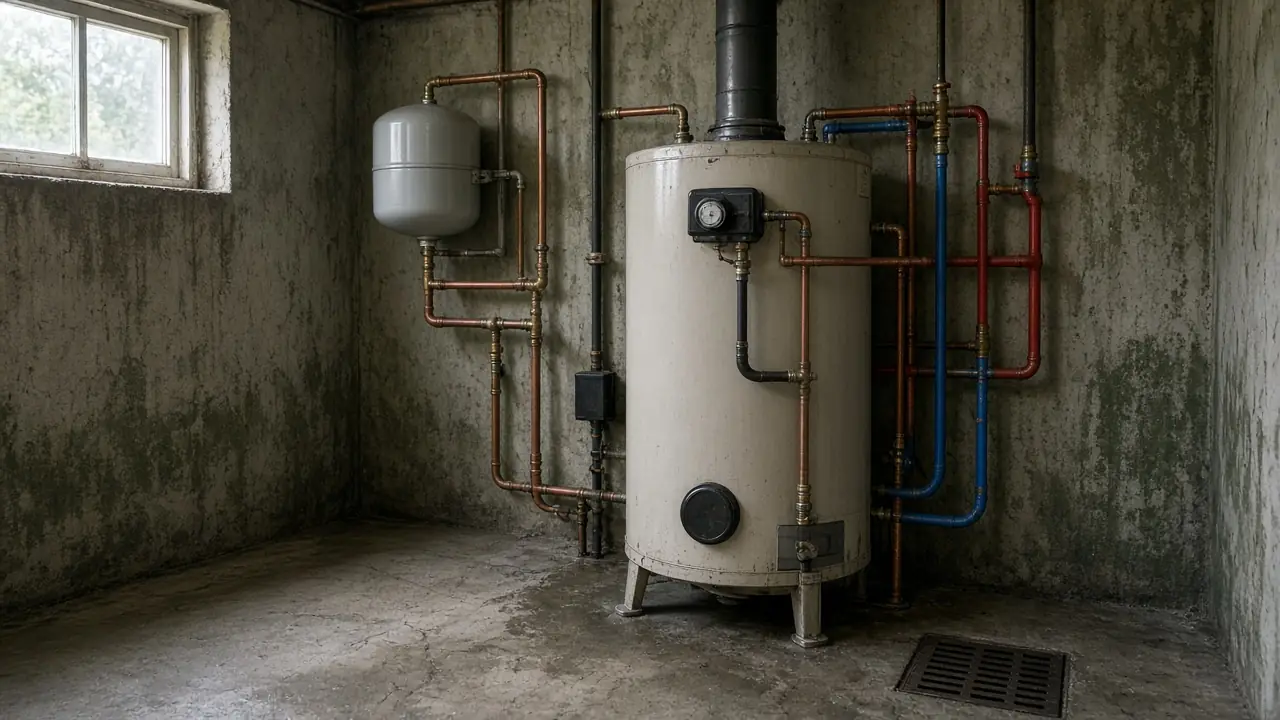
A water heater in Lake Oswego, OR should be replaced when the tank leaks from its shell, shows rust in the hot water or at the base, or needs an expensive part after a decade or more. Lake Oswego replacements often involve larger capacity needs, two-tank setups, recirculation systems, and older chimneys that may need a liner when a gas tank is replaced. Oregon generally requires a permit, and code items such as strapping and expansion control are usually updated at the same time.
Lake Oswego homes tend to be larger than the metro average, with more bathrooms and higher peak demand. Getting the replacement right is mostly about matching capacity and the venting to the home.
When the tank is finished
Water from the shell or seam, rust-colored hot water, flaking rust at the base, or a burner chamber full of scale are clear signals. A relief valve that keeps opening after the expansion tank checks out suggests an internal control fault. Past twelve years, any of these points to replacement.
Sizing for larger households
Use the first-hour rating rather than gallons alone, and plan for the busiest real hour: perhaps two showers, a soaking tub, and a dishwasher. Large tubs can empty a 50-gallon tank on their own. Options include a larger single tank, two tanks piped together, a high-input gas tank, or a tankless unit sized for peak flow. Each has trade-offs in space, venting, and cost.
Dual-tank setups
Many large Lake Oswego homes run two tanks. When one fails, replacing both at once is often sensible if they are the same age; otherwise the second may fail within a year or two. Piping them in parallel with balanced connections helps both tanks share the load evenly.
Recirculation
If the home has a recirculation pump, the replacement should preserve or improve it. A dedicated return line with a timer or demand control saves water and energy. Make sure check valves are in good shape; failing ones cause hot water in cold lines.
Venting and chimney liners
A gas tank replacement in an older home may expose a chimney problem: an orphaned water heater in a masonry chimney sized for a furnace and heater together. A properly sized liner may be required for the new tank to vent safely. Alternatively, a power-vent or direct-vent tank can vent through a side wall and leave the chimney behind.
Heat pump and electric options
A heat pump water heater can work well in a Lake Oswego garage or a large basement utility room with enough air volume. It needs a condensate drain and a 240-volt circuit. Energy Trust of Oregon lists current incentives, and PGE's water heater page explains how the technology works. In larger households, a bigger heat pump tank or two units may be needed.
Tankless as a replacement
Tankless units can meet high peak demand if sized and supplied properly, but they need gas line capacity and venting that many older homes lack. See tankless water heater installation in Lake Oswego for the details.
Code items and permits
Expect seismic straps, a proper relief-valve discharge, an expansion tank where the system is closed, and correct gas or electrical connections. The Oregon Building Codes Division summarizes permit requirements, and local contacts start at the City of Lake Oswego. Check contractor registration with the Oregon CCB search.
Access on hillside lots
Steep driveways and stairs down to daylight basements make moving tanks harder. A large tank may need two people and a stair-climbing dolly. Plan the route, protect finished floors, and clear the path.
Lake Oswego notes
Downtown around Millennium Plaza Park and the older neighborhoods near George Rogers Park have many homes from the 1940s through 1960s with original chimneys. Newer houses on the city's west and south sides more often have power-vent tanks or tankless units with side-wall terminations.
Living with a water heater in Lake Oswego
Lake Oswego wraps around Oswego Lake south of Portland, bordered by the Willamette River on the east and wooded hills to the west. Many homes are larger than the metro average, with more bathrooms, soaking tubs, and long pipe runs, and a good share use hot-water recirculation or more than one heater. Older neighborhoods near downtown and the river include 1940s through 1960s houses with masonry chimneys that once vented both a furnace and a water heater; furnace upgrades have left many water heaters venting alone in chimneys that are now too large. Hillside lots create daylight basements where the heater sits against a below-grade wall, often close to finished space. Much of the city's water comes through the Lake Oswego Tigard Water Partnership from the Clackamas River, which is relatively soft, so scale is rarely the main problem. Capacity, venting, and protecting finished basements are the local factors that come up most often for Lake Oswego water heaters.
What a Lake Oswego replacement should include
- Old tank drained, disconnected, and hauled away
- New heater sized from first-hour rating and household demand
- Seismic strapping installed to current Oregon requirements
- Relief valve discharge piped to an approved termination
- Thermal expansion tank added or checked where the system is closed
- Gas connector, vent connector, or electrical circuit matched to the new unit
- Drain pan, leak alarm, or automatic shutoff considered for finished spaces
- Permit pulled and final inspection scheduled
Replacement prep list for Lake Oswego
Before comparing replacement quotes in Lake Oswego, collect a photo of the old rating plate, a tape-measured photo of the space including door widths along the path in, the fuel type, the breaker size for electric units, and the vent type for gas units. Note any problems the old heater had, such as running out of hot water, so the new one can be sized for real demand. Ask each quote to list the permit, haul-away, expansion tank, straps, pan, and any fuel-change work as separate lines.
Lake Oswego at a glance
- Location: Lake Oswego, Oregon, about 15–20 minutes south of central Portland.
- Local landmarks used on this page: Millennium Plaza Park, George Rogers Park.
- City information and building contacts: City of Lake Oswego.
- State permit rules: Oregon Building Codes Division.
- Utilities: PGE or another electric utility and NW Natural gas serve most addresses; incentives are listed by Energy Trust of Oregon.
- Nearby city page: Tigard.
- Map: the map on this page shows Lake Oswego, Oregon at city level, not a business address.
Related pages
If the tank still works, start with water heater repair in Lake Oswego. If you already have a tankless unit, see tankless water heater replacement in Lake Oswego. The Lake Oswego overview lists every page, water heater replacement in Portland covers the metro, and Milwaukie's replacement page covers the neighbor across the river.