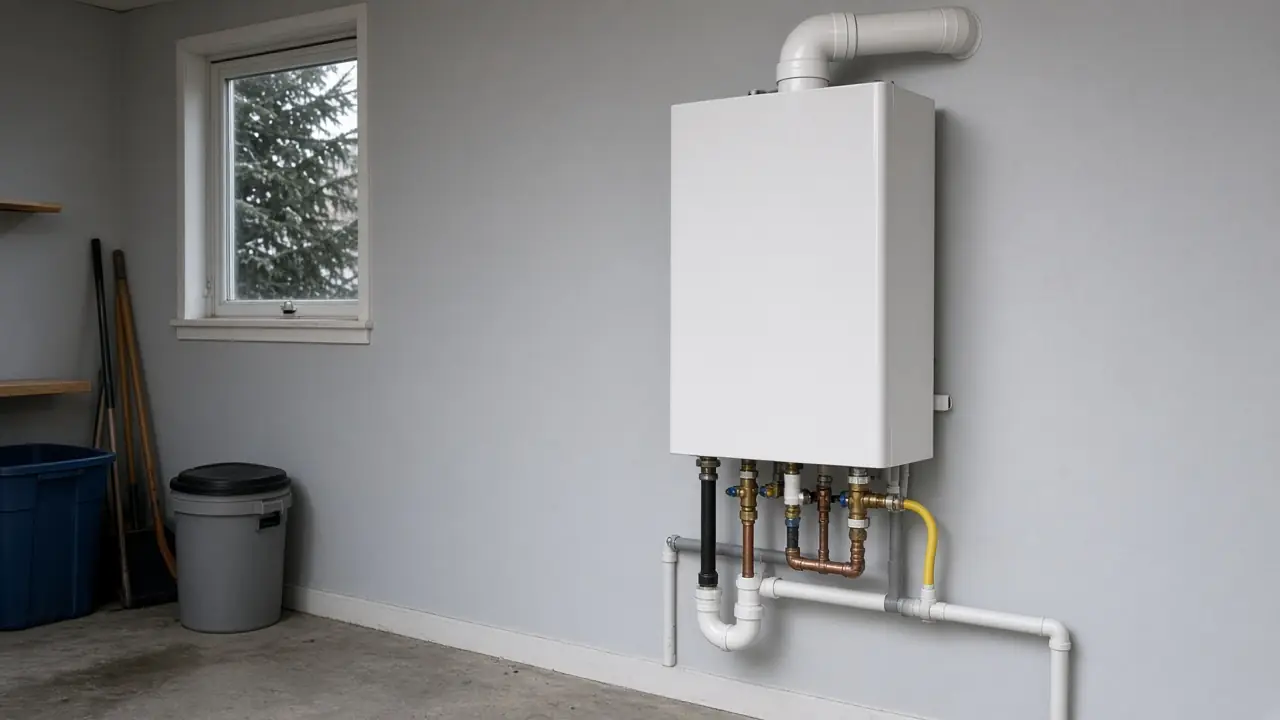
Replace a tankless water heater in Portland, OR when the heat exchanger is cracked or leaking, repairs keep recurring, or parts are no longer available for an older unit. The new unit may need a different gas input, vent material, or condensate drain than the old one, so the existing gas line, vent route, and valves must be checked against the new manual. Some owners use the moment to switch to a tank or heat pump water heater instead.
Tankless replacement is common in Portland homes that installed early units years ago, from garages in newer east side neighborhoods near Powell Butte Nature Park to basements in older houses near Washington Park.
Why tankless units fail
The most common end-of-life failures are a leaking or cracked heat exchanger, often from scale or freezing, and repeated board or fan failures. A unit that needs a costly part and is past fifteen years is usually a candidate for replacement.
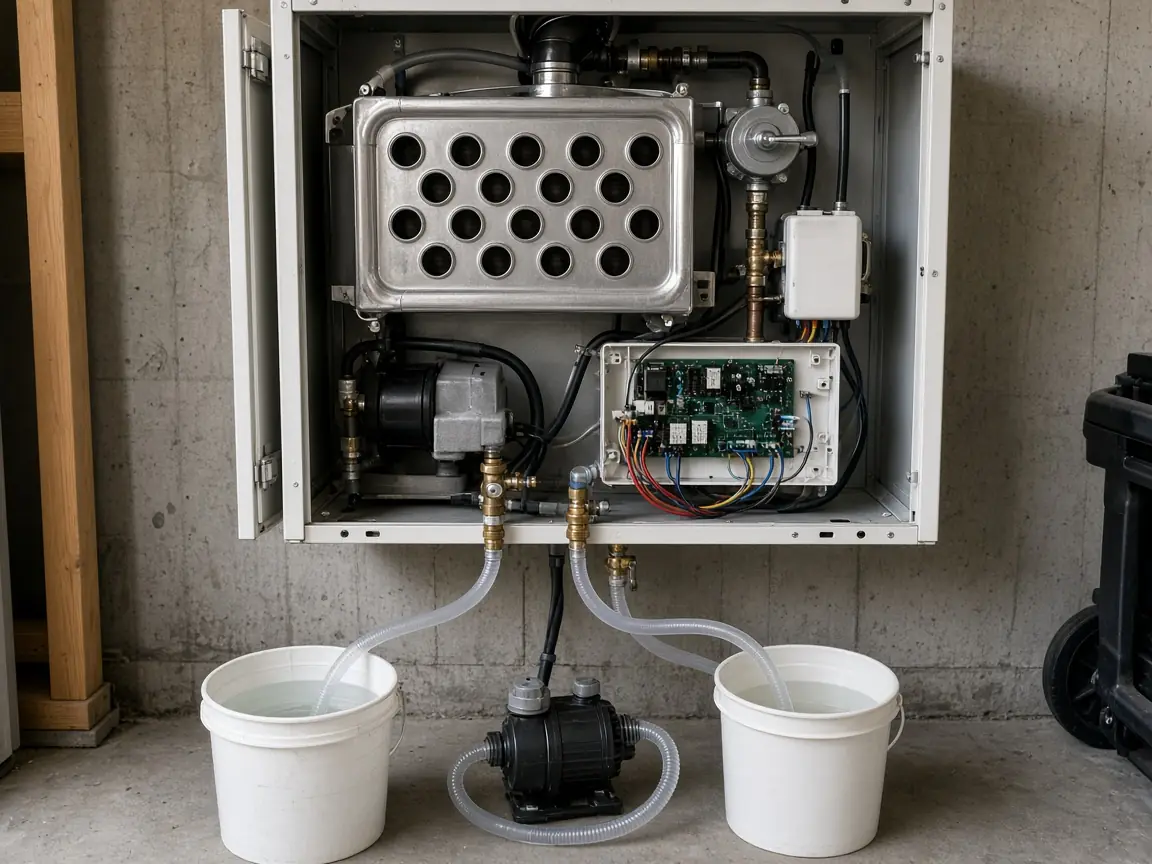
Matching the new unit
A replacement is not always a direct swap.
- Gas input. Newer units may have higher input. The gas line must be checked for capacity.
- Venting. Non-condensing units often vent with stainless steel; condensing units use plastic and need a condensate drain. Changing types may require a new vent route.
- Connections. Gas and water connections may sit in different spots, requiring piping changes.
- Valves and filters. Replace old service valves and add an accessible inlet filter.
Switching to a different type
Some owners go back to a tank, especially if tankless never met expectations. Others switch to a heat pump tank to move off gas. Space, electrical capacity, and incentives drive that decision. The heat pump guide explains the tradeoffs, and Energy Trust of Oregon lists offers.
Upgrading to a condensing model
Condensing tankless units capture more heat from exhaust and are more efficient, but they produce acidic condensate that must be neutralized and drained. Their plastic vents can be easier to route, which can make a basement-to-side-wall layout simpler. Ask whether the efficiency gain is worth the extra drain work in your home.
Permits
Replacement generally requires a plumbing permit, and vent or gas changes may require mechanical permits. See the City of Portland plumbing permits page.
When repair still makes sense
If the unit is younger and the failure is a sensor, igniter, or filter, see tankless water heater repair first.
Planning ahead
Before the old unit fails completely, gather its model number, age, and service history, and photograph the gas, water, and vent connections. This helps installers quote accurately and spot compatibility issues early.
Questions for the installer
- Will the existing gas line carry the new unit's maximum input with all other appliances running?
- Does the new unit's vent require a different material, diameter, or termination point?
- Is a condensate drain and neutralizer needed, and where will it drain?
- Will new isolation valves and an inlet filter be installed?
- Is the permit included in the quote, and who schedules inspection?
- How will freeze protection and outage backup be handled for a garage unit?
Removing the old unit
The old unit, vent pipe, and any unused fittings should be removed, wall penetrations sealed, and gas lines capped properly. If the vent route changes, the old hole must be patched and weatherproofed so rain does not get in, which matters on Portland's wet exterior walls.
After installation
Ask for a walkthrough of the display, error codes, isolation valves, and the descaling procedure. Register the unit for warranty and keep the permit record with the manual.
What a tankless swap in Portland should include
- Cause of the old unit's failure documented
- New unit's maximum input compared with the gas line capacity
- Vent material, diameter, and length matched to the new manual
- Condensate drain, neutralizer, and route confirmed or added
- Isolation valves, relief valve, and inlet filter replaced or added
- Connection spacing adapted with proper fittings
- Freeze protection and outage plan reviewed
- Permit pulled and inspection completed
Tankless swap prep list for Portland
Before replacing a tankless unit in Portland, gather the old unit's model and serial, the install date, the vent material and route, and any repair history. Photograph the gas connection, water connections, condensate line, and outside terminations. Note any changes since the original install, such as added bathrooms or gas appliances. Ask quotes to confirm vent compatibility, gas load, condensate handling, valves, and permit in writing.
Tankless water heater replacement by city
Each city page below covers local housing, water, and permit notes for this service.
- Tankless water heater replacement in Beaverton
- Tankless water heater replacement in Gresham
- Tankless water heater replacement in Hillsboro
- Tankless water heater replacement in Lake Oswego
- Tankless water heater replacement in Tigard
- Tankless water heater replacement in Milwaukie
- Tankless water heater replacement in Tualatin
- Tankless water heater replacement in Happy Valley
Portland at a glance
- Coverage: Portland, Oregon and nearby cities, shown on the map on this page at city level, not a business address.
- Landmarks named on this site: Forest Park, Washington Park, and Mt. Tabor Park.
- Permits: City of Portland residential plumbing permits and the Oregon Building Codes Division.
- Incentives: Energy Trust of Oregon lists current water heater offers.