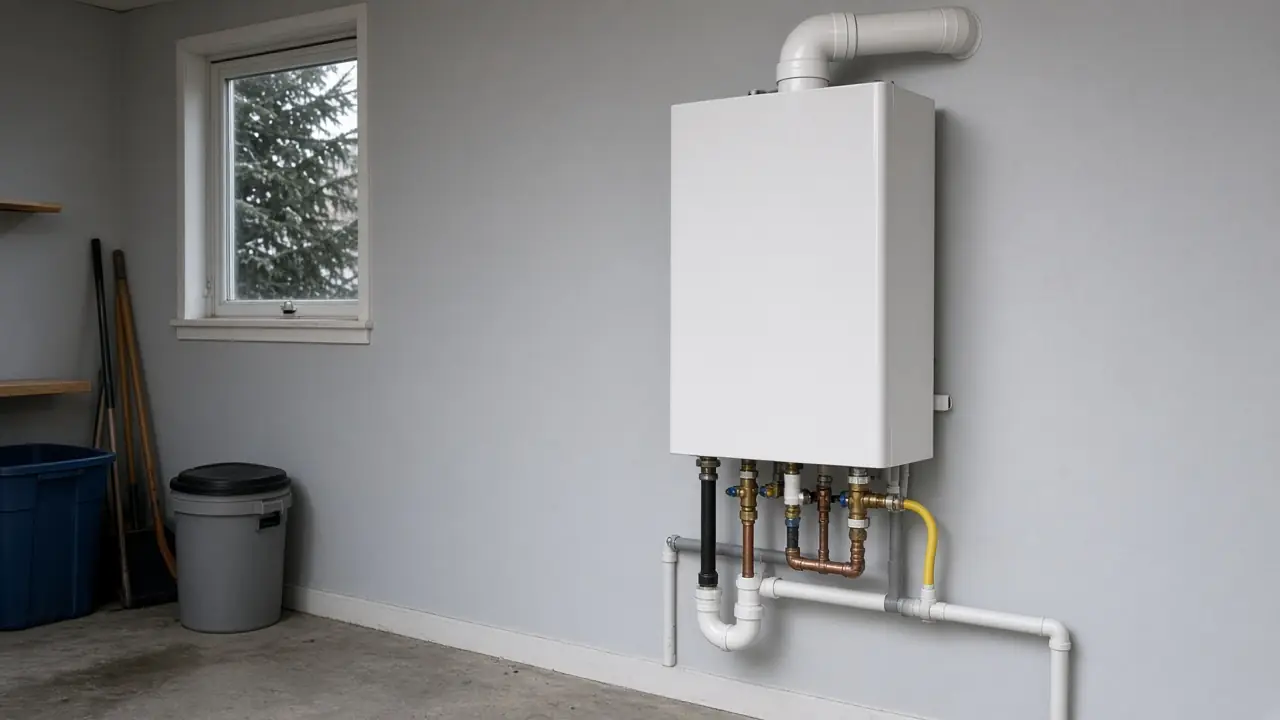
When replacing a tankless unit in Gresham, OR, recheck the gas line against the new unit's input, confirm the vent material and length are approved for the new model, verify condensate drainage, add or replace isolation valves, and reconsider the mounting location if the old unit failed from freezing. Many Gresham replacements follow east-wind freeze damage, so moving an exterior unit indoors or improving freeze protection is often part of the job. A permit is generally required.
Tankless units in east county face harsher winter conditions than units elsewhere in the metro. A replacement is the best chance to fix whatever made the old unit fail early.
Why the old unit failed matters
Ask for the cause in writing. A cracked heat exchanger from freezing calls for a different plan than a worn-out exchanger after twenty years of scale. Repeated control board failures after storms suggest surge protection is needed. Heavy scale says the descaling schedule was too loose for the water supply. Each cause changes how the new unit should be installed.
Relocating away from the cold
If the old unit hung on an exterior wall or in an unheated garage and froze, consider moving the new unit to a conditioned space with a short vent run. That may mean extending gas and water lines, but it can prevent a repeat failure. If relocation is not practical, plan better insulation of exposed piping and a clear procedure for draining during long outages.
Venting rules for the new model
Brands differ on approved vent materials, sizes, and lengths. A new condensing unit may require PVC, CPVC, or polypropylene, and may not accept the old stainless vent. Check termination clearances, and if possible, avoid facing a termination into the prevailing east wind.
Gas supply recheck
New units may have higher maximum inputs. If gas appliances have been added since the original install, the line may now be undersized. A quick load calculation avoids flame failures on the coldest mornings, which is precisely when undersized lines show up.
Condensate and freezing
Condensate lines that run through cold spaces can freeze and back up, triggering error codes. Route them through conditioned space where possible, or protect them with heat tape. Replace the neutralizer media during the swap.
Valves, filter, and connections
Install new isolation service valves and a relief valve if the old ones are worn. Connection spacing varies between brands, so short repipes are common. Make sure the inlet filter is accessible.
Outage backup
Consider adding a battery backup for the unit's controls or a generator inlet for the circuit. This does not keep freeze protection running for long, but it can keep hot water available during short outages. If hot water during multi-day outages is essential, a standing-pilot tank may be a better fit; compare with water heater replacement in Gresham.
Incentives and permits
Energy Trust of Oregon lists current residential water heater incentives, and NW Natural explains its water heater offer. Confirm eligibility before budgeting. Replacement is generally permitted work; the Oregon Building Codes Division summarizes the rules, and Gresham permit contacts start at the City of Gresham.
Sizing with Gresham winters in mind
Use the coldest realistic inlet temperature when sizing. If the old unit struggled on winter mornings, step up in capacity or reduce simultaneous demand. Ask the installer to show the flow chart at your winter inlet temperature, not just the headline maximum flow.
A replacement checklist for Gresham
- Cause of the old unit's failure documented.
- Mounting location reconsidered for freeze risk.
- Vent material and route matched to the new manual.
- Gas load recalculated.
- Condensate routed away from cold spaces; neutralizer refreshed.
- Isolation valves, relief valve, and filter installed.
- Surge protection and outage plan in place.
- Permit pulled and inspection passed.
Gresham notes
Spring is the easiest time to replace a tankless unit here: freezing nights are over, and the long, cool shoulder season keeps demand moderate. It is also when the creek-side paths at Main City Park and the sports fields at Red Sunset Park come back to life, so book before the summer rush.
Living with a water heater in Gresham
Gresham is the largest city on the east side of the metro, sitting between Portland and the foothills that rise toward Mount Hood. Its location near the west end of the Columbia River Gorge exposes it to strong, cold east winds in winter, and those events often bring the region's sharpest freezes, ice, and power outages to east Multnomah County first. Housing includes mid-century ranches, 1970s and 1980s subdivisions, manufactured-home communities, and newer neighborhoods on the city's southern and eastern edges. Many water heaters sit in attached garages, exterior closets, or manufactured-home utility compartments that get genuinely cold during an east-wind spell. Johnson Creek runs through the city, and the Springwater Corridor trail links Gresham to Portland. Water service has long included Portland's soft Bull Run supply, and the city has been developing groundwater sources, so mineral content can differ by address. Cold inlet water, wind at the vent cap, and outage restarts are the local factors that show up most in Gresham water heater problems.
What a tankless swap in Gresham should include
- Cause of the old unit's failure documented
- New unit's maximum input compared with the gas line capacity
- Vent material, diameter, and length matched to the new manual
- Condensate drain, neutralizer, and route confirmed or added
- Isolation valves, relief valve, and inlet filter replaced or added
- Connection spacing adapted with proper fittings
- Freeze protection and outage plan reviewed
- Permit pulled and inspection completed
Tankless swap prep list for Gresham
Before replacing a tankless unit in Gresham, gather the old unit's model and serial, the install date, the vent material and route, and any repair history. Photograph the gas connection, water connections, condensate line, and outside terminations. Note any changes since the original install, such as added bathrooms or gas appliances. Ask quotes to confirm vent compatibility, gas load, condensate handling, valves, and permit in writing.
Gresham at a glance
- Location: Gresham, Oregon, about 20–30 minutes east of central Portland by I-84 or US-26.
- Local landmarks used on this page: Main City Park, Red Sunset Park.
- City information and building contacts: City of Gresham.
- State permit rules: Oregon Building Codes Division.
- Utilities: PGE or another electric utility and NW Natural gas serve most addresses; incentives are listed by Energy Trust of Oregon.
- Nearby city page: Happy Valley.
- Map: the map on this page shows Gresham, Oregon at city level, not a business address.
Related pages
If the unit might still be repairable, start with tankless water heater repair in Gresham. For a first install in a home that never had tankless, see tankless water heater installation in Gresham. The Gresham overview lists all pages, tankless water heater replacement in Portland covers the metro, and Happy Valley's tankless replacement page is next door.