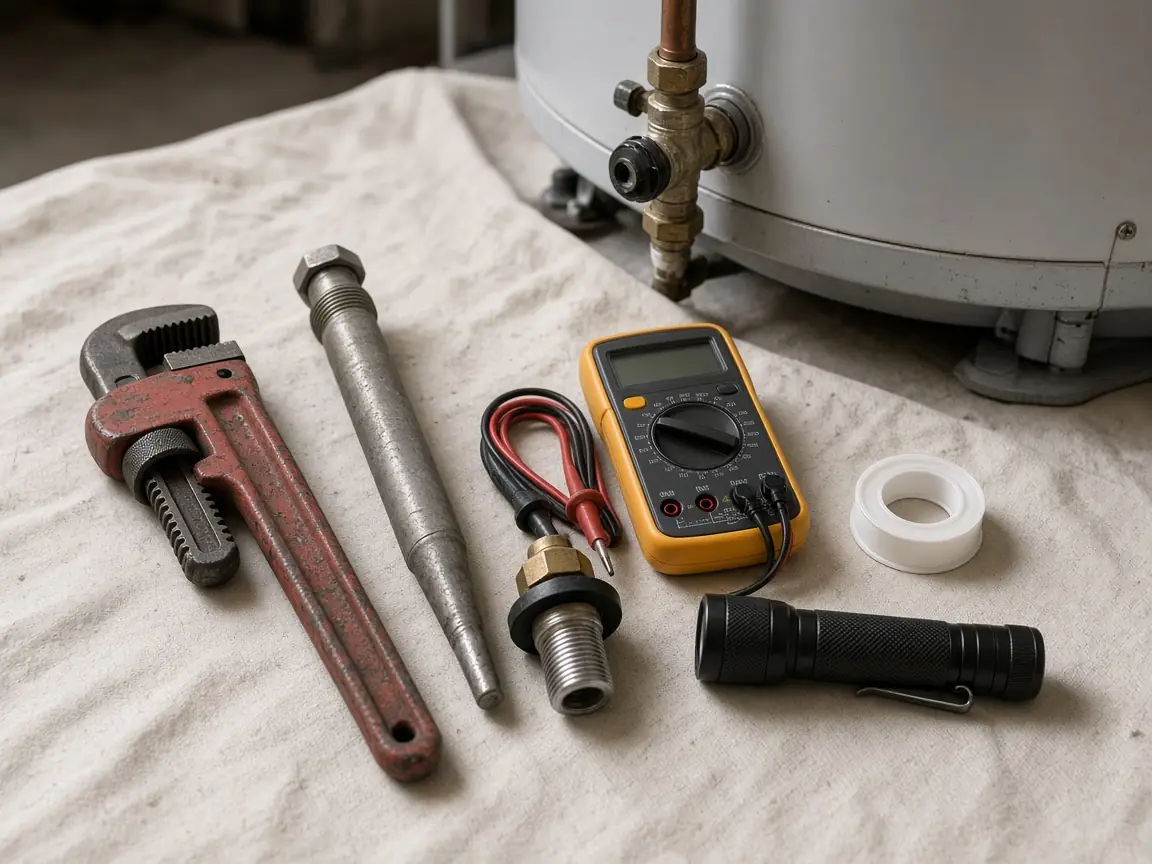
Before repairing a water heater in Gresham, OR, check three things: whether the tank shell is dry, whether the problem started after a power outage or a cold east-wind spell, and how old the heater is according to its rating plate. A dry tank with a failed element, thermostat, thermocouple, igniter, or leaking top fitting is a good repair candidate. A tank that is weeping from the steel or rusting through at the base is not, and belongs on water heater replacement in Gresham.
Gresham sits at the east end of the metro, closer to the Columbia River Gorge than any other city on this site. When cold air pours west out of the Gorge in winter, east Multnomah County often sees the region's sharpest wind, ice, and outages first. That weather pattern shapes many of the repair requests we hear about here: pilots blown out by gusts, power-vent tanks that did not restart after an outage, frozen condensate lines, and tanks working overtime against icy supply water.
Outage and wind problems come first in winter
After a power outage, electric tanks usually just resume heating, though a tripped high-limit switch can stop them. Gas tanks with standing pilots generally keep running, but gas tanks with electronic ignition or power venting need electricity and sometimes need a manual reset afterward. If your hot water disappeared after a storm, check the breaker, look for a blinking status light on the gas control, and read the reset steps on the tank label before assuming a part failed.
Strong gusts can also push down an atmospheric vent and snuff a pilot, especially on tanks in garages with a roof vent cap exposed to the east. If your pilot goes out only on windy days, the vent cap and the draft are worth inspecting. That is a gas water heater repair in Gresham topic.
Common part failures on Gresham tanks
On electric tanks, the upper and lower elements and their thermostats fail most often. A failed upper element usually means no hot water at all. A failed lower element means a small amount of hot water that runs out quickly. Elements can be tested with a multimeter once the breaker is confirmed off. On gas tanks, thermocouples, flame sensors, and pilot assemblies are the usual suspects.
The relief valve is another frequent call. A valve that drips steadily after years of service is usually worn. A valve that releases hot water in bursts can signal excess pressure from thermal expansion or a thermostat stuck on. Both deserve a careful look, and the expansion tank guide explains why pressure shows up as a relief-valve problem.
Is the repair worth it?
On a tank under about eight years old with a dry base, almost any single part repair is worthwhile. Between eight and twelve years, weigh the part against the tank's condition. Past twelve, a costly repair such as a gas control valve usually makes less sense than replacement. Gresham has many homes with tanks in unheated garages or on outdoor-adjacent porches, where corrosion advances faster, so add a look at the outer jacket and the gas connector to the decision.
Inlet water temperature and "not enough hot water"
In January and February, the water entering a Gresham tank is noticeably colder than in August. The heater has to work harder to reach the same temperature, and recovery slows. A family that never ran out of hot water in summer may run out every winter morning with the same tank. That is not always a broken part. If the elements and thermostats test good, the tank may simply be undersized for winter demand, and the fix might be a staggered schedule, a slightly higher setpoint with a mixing valve, or a larger heater.
What to check yourself, safely
- Confirm the breaker is on or the gas supply valve is open.
- On electric tanks, press the red reset button behind the upper access panel only with the breaker off first, then restore power.
- On gas tanks, look through the sight glass for a pilot or flame and read any blinking status code.
- Dry the floor and confirm the water source before calling anything a leak.
- If you smell gas, leave and call NW Natural from outside; do not relight anything.
Gresham resources
Repair work that changes gas piping or venting generally needs a permit under Oregon rules; the Oregon Building Codes Division summarizes when. Gresham building contacts start on the City of Gresham website. Before hiring anyone, the Oregon CCB search confirms a contractor's registration.
Gresham is a city of parks and trail connections, and plenty of residents spend a dry winter afternoon at Main City Park along Johnson Creek or on the ball fields at Red Sunset Park. Coming home to a cold shower after a day outside is a common way people discover a dead element.
Living with a water heater in Gresham
Gresham is the largest city on the east side of the metro, sitting between Portland and the foothills that rise toward Mount Hood. Its location near the west end of the Columbia River Gorge exposes it to strong, cold east winds in winter, and those events often bring the region's sharpest freezes, ice, and power outages to east Multnomah County first. Housing includes mid-century ranches, 1970s and 1980s subdivisions, manufactured-home communities, and newer neighborhoods on the city's southern and eastern edges. Many water heaters sit in attached garages, exterior closets, or manufactured-home utility compartments that get genuinely cold during an east-wind spell. Johnson Creek runs through the city, and the Springwater Corridor trail links Gresham to Portland. Water service has long included Portland's soft Bull Run supply, and the city has been developing groundwater sources, so mineral content can differ by address. Cold inlet water, wind at the vent cap, and outage restarts are the local factors that show up most in Gresham water heater problems.
What a repair visit in Gresham should check
- Rating plate read for age, fuel, capacity, and element wattage or burner input
- Breaker, disconnect, or gas supply confirmed before any panel comes off
- Elements and thermostats tested for continuity and resistance with power verified off
- Pilot, thermocouple, flame sensor, or igniter inspected on gas tanks
- Relief valve, discharge pipe, and expansion tank checked for pressure problems
- Top fittings, flex connectors, and drain valve inspected for weeps
- Tank base and jacket checked for rust that would make a repair a poor investment
Repair prep list for Gresham
Before a repair visit in Gresham, gather the rating plate photo (brand, model, serial, and manufacture date), note the fuel type, and write down exactly what changed: no hot water, short hot water, noise, or water on the floor. Note whether the breaker or gas supply has been checked and whether a reset was tried. A photo of the top connections and the burner or element panels helps a technician bring the right parts. Keep the area around the heater clear by about three feet so panels can come off safely.
Gresham at a glance
- Location: Gresham, Oregon, about 20–30 minutes east of central Portland by I-84 or US-26.
- Local landmarks used on this page: Main City Park, Red Sunset Park.
- City information and building contacts: City of Gresham.
- State permit rules: Oregon Building Codes Division.
- Utilities: PGE or another electric utility and NW Natural gas serve most addresses; incentives are listed by Energy Trust of Oregon.
- Nearby city page: Happy Valley.
- Map: the map on this page shows Gresham, Oregon at city level, not a business address.
Related pages for Gresham
If the tank is popping and rumbling rather than failing outright, read water heater flush in Gresham. If water is on the floor right now, go to emergency water heater repair in Gresham. The Gresham overview lists everything for the city, water heater repair in Portland covers the metro, and water heater repair in Happy Valley is the neighbor to the southwest.