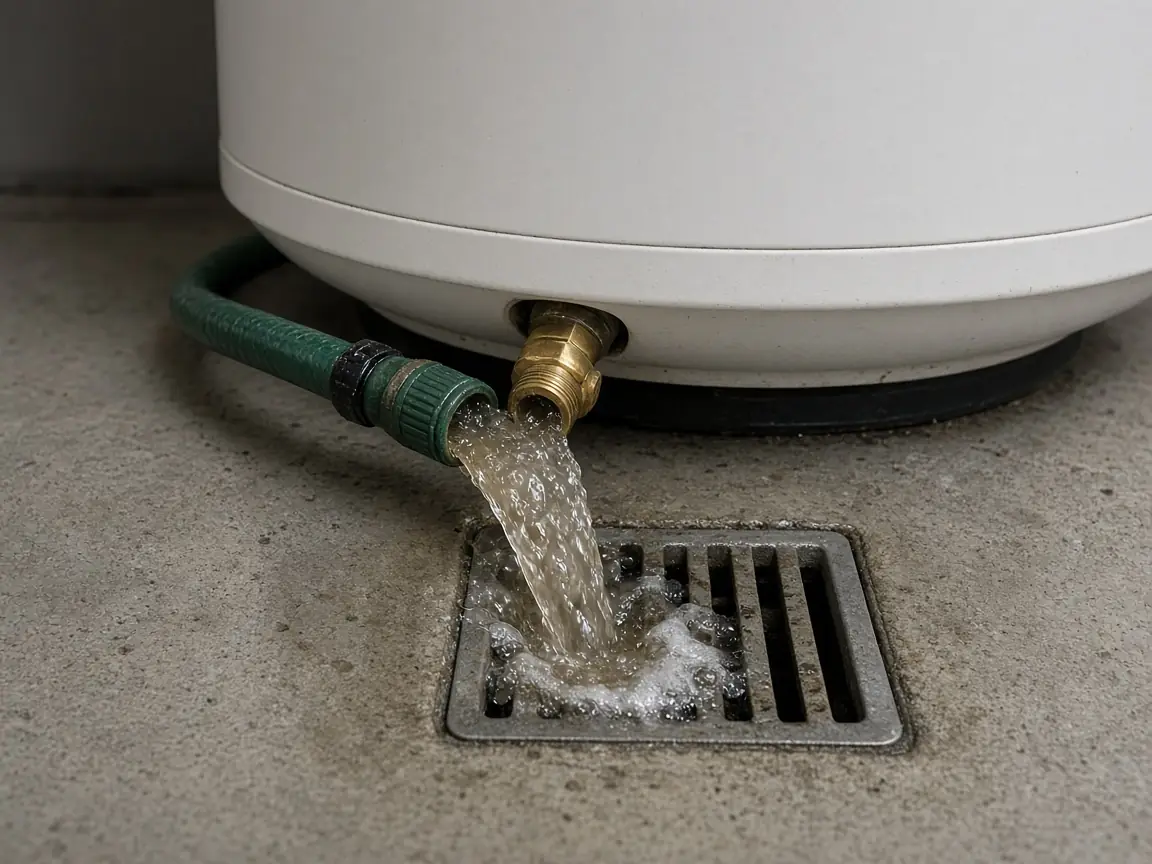
A water heater flush in Gresham, OR is worth doing when a tank that is dry on the outside makes popping or rumbling sounds while it heats, or when it has gone a few years without maintenance. Flushing removes loose sediment so heat reaches the water efficiently. Skip it on tanks that already leak, show heavy rust at the base, or have brittle plastic drain valves, and avoid flushing during a freeze when drain water can ice over walks and driveways.
Gresham's water supply has long included Portland's Bull Run water, which is soft, and the city has been developing groundwater sources as well. Groundwater is often a bit harder than Bull Run surface water. Your water bill names your supplier, and Gresham's own city website links to its water information. Whatever the source, tanks collect some sediment over time: mineral scale, sand, pipe corrosion products, and fragments of aging dip tubes.
Signs the tank wants a flush
The classic sign is a popping or rumbling noise during heating. Others include hot water that runs out a little sooner than it used to, a drain valve that releases cloudy or gritty water when opened briefly, and on electric tanks, a lower element that fails more often than it should. Sediment can bury the lower element and make it overheat.
If you hear a sizzle on a gas tank, look for water dripping onto the burner. That is a leak, not sediment.
Age and condition limits
Flush freely on tanks under about eight years. Between eight and twelve years, inspect carefully first: look for rust at the base and at fittings, and test whether the drain valve opens and closes smoothly. Past twelve years with no maintenance history, a flush can loosen debris that keeps the drain valve from sealing or reveal a thin spot in the tank. On those heaters, it is often better to plan for water heater replacement in Gresham than to risk a flood.
Step by step
Turn off the breaker on electric tanks; set gas tanks to pilot or off. Close the cold supply valve. Connect a hose to the drain valve and route it to a floor drain, a utility sink, or outdoors to ground sloping away from the house. Open a hot tap upstairs to let air in. Open the drain valve. When flow slows or the water clears, open the cold supply briefly with the drain still open to stir the bottom, then close it again. Repeat until the water runs clear. Close the drain, open the cold supply, run the hot tap until water flows smoothly, and only then restore power or gas.
The first water out is scalding. Wear gloves and keep the hose end secured.
Gresham weather cautions
East-wind cold snaps can drop overnight temperatures well below freezing for several days. Do not run drain water onto driveways, sidewalks, or steps during those spells; it freezes into a hazard. Do not leave a hose outside afterward to freeze and split. If the heater is in a cold garage, consider waiting for a milder week. Draining and refilling a tank in a freezing garage also stresses fittings and can cause condensation that looks like a leak for a few hours afterward.
Drain valve problems
Many tanks ship with plastic drain valves that clog with sediment or crack with age. If the valve will not open, do not force it with pliers. If it will not close completely after the flush, a hose cap can stop a slow drip temporarily, and a brass full-port replacement valve is a sensible small repair. Full-port valves also make future flushes faster because large sediment flakes can pass.
Check the anode while the tank is cool
The anode rod screws into the top of most tanks. With water off and pressure relieved, it can be pulled for inspection. If more than a few inches of the core wire are exposed, replace it. The anode rod guide covers types and sizes. Groundwater can change how quickly an anode is consumed.
Gresham notes
A Saturday flush fits neatly between errands; just pick a dry one so you can enjoy the paths at Main City Park afterward, or a walk on the loop trails at Red Sunset Park. If you prefer a professional flush, the Oregon CCB search lets you confirm the contractor's registration first.
How the flush fits with other maintenance
Annual relief-valve checks, a look at the expansion tank pressure, and a glance at the gas vent connector all fit into the same hour. The hard water guide explains why some tanks scale faster than others even in a soft-water region.
After the flush: what normal looks like
Expect some air sputtering from faucets for a minute after the refill, and possibly a little cloudiness that clears. The first heating cycle may still pop a bit as remaining loose flakes settle; it should quiet down over the next day or two. If the noise is unchanged after a thorough flush, the remaining sediment is probably hardened scale that a flush cannot move, and the conversation shifts toward how many years the tank has left.
Living with a water heater in Gresham
Gresham is the largest city on the east side of the metro, sitting between Portland and the foothills that rise toward Mount Hood. Its location near the west end of the Columbia River Gorge exposes it to strong, cold east winds in winter, and those events often bring the region's sharpest freezes, ice, and power outages to east Multnomah County first. Housing includes mid-century ranches, 1970s and 1980s subdivisions, manufactured-home communities, and newer neighborhoods on the city's southern and eastern edges. Many water heaters sit in attached garages, exterior closets, or manufactured-home utility compartments that get genuinely cold during an east-wind spell. Johnson Creek runs through the city, and the Springwater Corridor trail links Gresham to Portland. Water service has long included Portland's soft Bull Run supply, and the city has been developing groundwater sources, so mineral content can differ by address. Cold inlet water, wind at the vent cap, and outage restarts are the local factors that show up most in Gresham water heater problems.
What a proper flush in Gresham involves
- Tank age and condition reviewed before draining
- Energy turned off and cold supply closed
- Drain valve type checked; brittle plastic valves noted before opening
- Hose route secured to a safe drain or outdoor discharge
- Tank drained and stirred with brief cold-supply bursts until clear
- Anode rod inspected while the tank is depressurized
- Tank refilled completely with air bled before energy is restored
- Relief valve tested and checked for proper reseating
Flush prep list for Gresham
Before a flush in Gresham, find the drain valve and check what it is made of, identify where the hose will discharge, and gather a hose long enough to reach without kinks, gloves, and a bucket for the first sample. Note the tank age from the rating plate. If the anode rod will be inspected too, have the correct socket size and a replacement rod on hand. Plan the job for a dry, mild day so the hose route outdoors is safe.
Gresham at a glance
- Location: Gresham, Oregon, about 20–30 minutes east of central Portland by I-84 or US-26.
- Local landmarks used on this page: Main City Park, Red Sunset Park.
- City information and building contacts: City of Gresham.
- State permit rules: Oregon Building Codes Division.
- Utilities: PGE or another electric utility and NW Natural gas serve most addresses; incentives are listed by Energy Trust of Oregon.
- Nearby city page: Happy Valley.
- Map: the map on this page shows Gresham, Oregon at city level, not a business address.
Related pages
Tankless units are descaled, not flushed this way; see tankless water heater repair in Gresham. If water is still lukewarm after flushing, read water heater repair in Gresham for element and dip tube causes. The Gresham overview lists all city pages, water heater flush in Portland covers the metro, and flush notes for Happy Valley are close by.