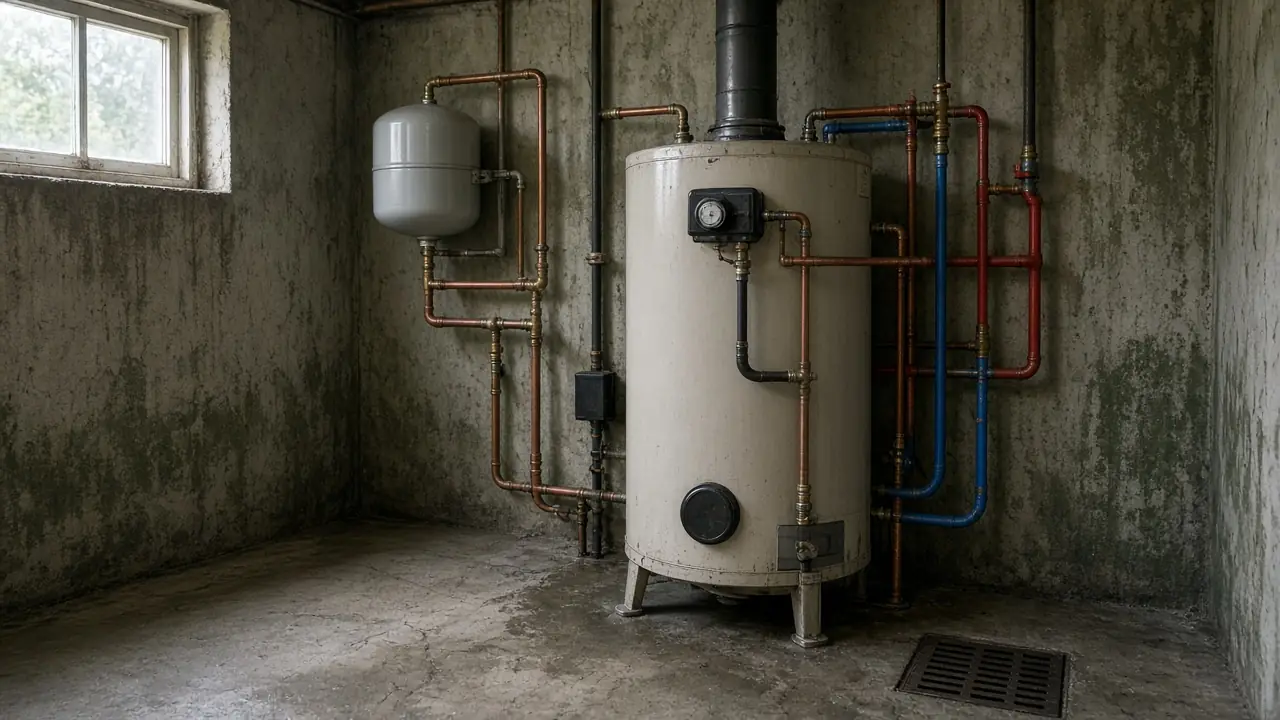
A water heater in Gresham, OR should be replaced when the tank leaks from its shell, when rust shows at the base or in the hot water, or when an older heater needs an expensive part. Gresham households should also think about outage resilience when choosing the replacement, since east-wind ice storms hit this end of the metro hard. A standing-pilot gas tank keeps heating water without electricity, while electric, heat pump, power-vent, and most tankless units do not.
That trade-off is not a reason to avoid efficient equipment, but it is a real Gresham consideration. Many east county homeowners remember winter outages lasting a day or more. Knowing how each option behaves when the lights go out is part of choosing well.
Clear signs a Gresham tank is finished
Water dripping from the tank body or bottom seam, rust-colored hot water that does not clear, heavy corrosion around the base, and a burner area full of rust scale are the strongest signals. A tank that rumbles even after a flush has likely built up hardened sediment and lost efficiency. If any of these appear on a heater past ten years, replacement is the realistic path.

Options and how they behave in an outage
Standing-pilot gas tank. The simplest gas replacement. It keeps making hot water during a power outage because the pilot and gas valve need no electricity. It is the least efficient option.
Power-vent or electronic-ignition gas tank. More efficient and can vent through a side wall, but stops when power fails unless it has a battery or generator backup.
Electric tank. Simple and inexpensive to install where a circuit exists. Stops during outages, but a full tank stays warm for many hours.
Heat pump water heater. The most efficient electric option. Needs space, room air, a condensate drain, and a suitable circuit. Stops during outages but, like an electric tank, holds heat in the stored water. Energy Trust of Oregon lists incentives for qualifying heat pump installs, and the Energy Trust explainer walks through the benefits.
Gas tankless. Endless hot water and saved floor space, but needs power for controls and fans, plus a large gas line. See tankless water heater installation in Gresham.
Where Gresham tanks live
Gresham's housing includes mid-century ranches, 1970s and 1980s subdivisions, manufactured homes, and newer builds on the city's southern and eastern edges. Many tanks sit in attached garages that get genuinely cold during an east-wind event. A heat pump tank in a cold garage will lean on its backup resistance elements more often in winter, so it still works but saves less. A tank on a back porch enclosure or in a manufactured home's exterior closet faces even more cold exposure, and those installations need attention to insulation and freeze protection on the piping.
Code items to expect
Oregon replacements commonly bring the installation up to current code: seismic strapping, a properly routed relief-valve discharge, a thermal expansion tank where needed, correct venting for gas, and the right breaker and wire for electric. Manufactured homes have their own water heater rules, including specific listing requirements, so the replacement must be approved for that use. The Oregon Building Codes Division explains when permits are required, and Gresham permit contacts begin on the City of Gresham site.
Sizing for east county winters
Supply water is coldest in mid-winter, and Gresham's colder snaps make it colder still. Size the replacement for winter demand, not summer. Count the showers that run back-to-back on a school morning. Consider a first-hour rating, printed on the yellow EnergyGuide label, rather than tank gallons alone. Heat pump tanks are often sized one step larger than the tank they replace because their pure heat-pump recovery is slower.
Cost drivers that are easy to miss
The heater is only part of a replacement bill. Hauling away the old tank, a new gas flex connector, an expansion tank, seismic straps, a drain pan with a piped outlet, a new relief-valve discharge line, and the permit fee all add up. Switching fuels adds more: running a new 240-volt circuit for a heat pump tank, or capping a gas line that is no longer needed. Ask for a line-item quote so you can compare options fairly. A quote that looks cheaper because it leaves out code items will cost more at inspection time.
Planning ahead instead of reacting
Most replacements happen on the worst possible day: the tank fails, the floor is wet, and the decision gets made in a hurry. If your tank is past ten years, take a photo of the rating plate, measure the space, and decide now which option you want. Then, if the old tank fails, the conversation is about scheduling rather than shopping.
A planning session costs nothing more than a quiet hour; save it for a wet day when Red Sunset Park and the paths of Main City Park are too soggy to enjoy.
Living with a water heater in Gresham
Gresham is the largest city on the east side of the metro, sitting between Portland and the foothills that rise toward Mount Hood. Its location near the west end of the Columbia River Gorge exposes it to strong, cold east winds in winter, and those events often bring the region's sharpest freezes, ice, and power outages to east Multnomah County first. Housing includes mid-century ranches, 1970s and 1980s subdivisions, manufactured-home communities, and newer neighborhoods on the city's southern and eastern edges. Many water heaters sit in attached garages, exterior closets, or manufactured-home utility compartments that get genuinely cold during an east-wind spell. Johnson Creek runs through the city, and the Springwater Corridor trail links Gresham to Portland. Water service has long included Portland's soft Bull Run supply, and the city has been developing groundwater sources, so mineral content can differ by address. Cold inlet water, wind at the vent cap, and outage restarts are the local factors that show up most in Gresham water heater problems.
What a Gresham replacement should include
- Old tank drained, disconnected, and hauled away
- New heater sized from first-hour rating and household demand
- Seismic strapping installed to current Oregon requirements
- Relief valve discharge piped to an approved termination
- Thermal expansion tank added or checked where the system is closed
- Gas connector, vent connector, or electrical circuit matched to the new unit
- Drain pan, leak alarm, or automatic shutoff considered for finished spaces
- Permit pulled and final inspection scheduled
Replacement prep list for Gresham
Before comparing replacement quotes in Gresham, collect a photo of the old rating plate, a tape-measured photo of the space including door widths along the path in, the fuel type, the breaker size for electric units, and the vent type for gas units. Note any problems the old heater had, such as running out of hot water, so the new one can be sized for real demand. Ask each quote to list the permit, haul-away, expansion tank, straps, pan, and any fuel-change work as separate lines.
Gresham at a glance
- Location: Gresham, Oregon, about 20–30 minutes east of central Portland by I-84 or US-26.
- Local landmarks used on this page: Main City Park, Red Sunset Park.
- City information and building contacts: City of Gresham.
- State permit rules: Oregon Building Codes Division.
- Utilities: PGE or another electric utility and NW Natural gas serve most addresses; incentives are listed by Energy Trust of Oregon.
- Nearby city page: Happy Valley.
- Map: the map on this page shows Gresham, Oregon at city level, not a business address.
Related Gresham pages
If the tank is still working but acting up, see water heater repair in Gresham. If you already own a tankless unit that needs replacing, read tankless water heater replacement in Gresham. The Gresham overview collects the city's pages, metro context is on water heater replacement in Portland, and nearby Happy Valley replacement notes cover the hills to the southwest.