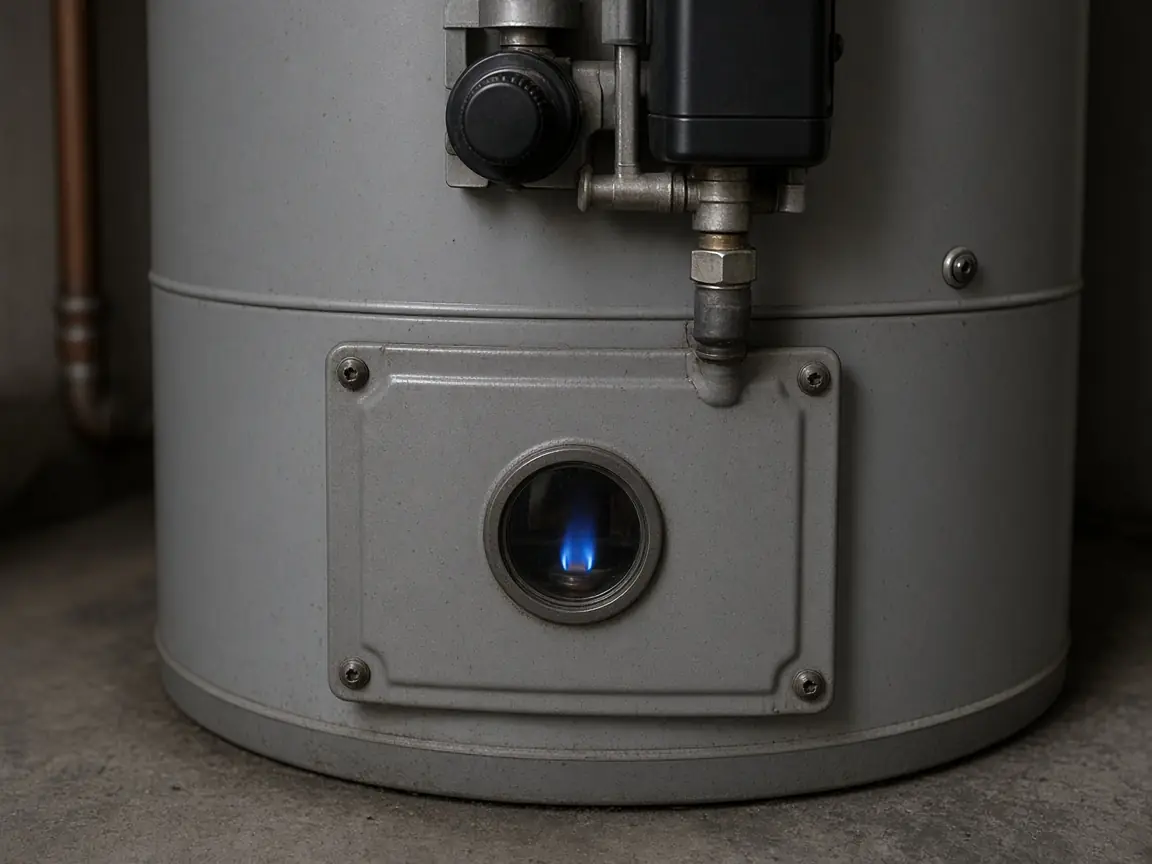
To check a gas water heater in Gresham, OR, confirm the gas supply valve is open, look through the sight glass for a pilot or burner flame, and note whether the problem lines up with windy weather or a power outage. In east county, wind-related pilot outages and electronic-ignition tanks that did not restart after an outage are common. Soot, scorching, or an exhaust smell near the draft hood point to venting or combustion air and mean the heater should stay off until it is inspected.
Gresham is the windiest corner of the metro during east-wind events, and that wind interacts with gas water heaters in specific ways. Atmospheric vents rely on warm exhaust rising. A strong gust across a roof vent cap can reverse that draft for a moment, pushing air down the flue and blowing out a pilot. It can also push exhaust back into the room. Both are worth fixing.
Wind, draft, and the vent cap
A vent cap that is damaged, missing, too low relative to the roof, or close to a taller wall can allow downdrafts. If the pilot goes out mainly on windy days, start with the cap and the vent height. Inside, check that the vent connector from the draft hood rises steadily toward the chimney or roof penetration, that its joints are secured with screws, and that it is not rusted through. A draft hood that spills warm, moist air when the burner is running is a sign the vent is not pulling properly.
Power-vent tanks are less sensitive to wind, but their side-wall terminations can be blocked by drifting leaves or by snow on the rare snowy day. Check that the termination is clear.

Outage restarts
Tanks with standing pilots normally keep running through outages. Tanks with electronic ignition, hot-surface igniters, or power-vent blowers stop when the power goes out and may enter a lockout if the outage interrupts a heating cycle. After an outage, the gas control status light often blinks a code. Note the pattern, then follow the reset instructions on the tank label. If it does not restart after a proper reset, a pressure switch, igniter, or control board may have been affected.
Thermocouples, flame sensors, and pilot assemblies
A weak thermocouple produces a pilot that lights while the button is held and dies when it is released. Repeated wind-related outages can also coat the pilot assembly with soot, which weakens the flame and the thermocouple signal. Replacing the thermocouple and cleaning the pilot assembly is a common, modest repair. Flame sensors on newer tanks can be cleaned or replaced; their failure usually shows up as a status code.
Combustion air
Many Gresham homes have had insulation, new windows, and weatherstripping added over the years. Tighter houses are more comfortable, but a gas water heater in a small closet or basement may no longer get enough combustion air. Signs include a lazy yellow flame, soot, and condensation on nearby surfaces. The basement venting guide covers how tight homes affect gas burners. Working carbon monoxide alarms on every level are essential in any home with a gas heater.
Gas control valves and burners
A gas control valve that will not hold a pilot with a known-good thermocouple, or will not open the main burner, has likely failed. On an older tank, replacing it may not be worth the money; compare with water heater replacement in Gresham. Burners can clog with rust flakes falling from the flue, especially on tanks in cold, damp garages. Uneven flame or a roaring sound at ignition suggests the burner and the combustion chamber need cleaning or that the tank is near the end.
What not to do
Do not relight a pilot if you smell gas. Do not disable a flammable-vapor sensor or a thermal cutoff because the tank keeps shutting off; those devices are telling you something. Do not tape or patch a rusted vent connector. If the heater sits in a garage, keep gasoline, solvents, and paint well away from it.
Notes worth keeping by the heater
Tape a card near the tank with the install date, the last thermocouple or igniter change, and the date the vent was last inspected. After each east-wind event, jot down whether the pilot held. Over a winter or two, that card tells you whether the problem is the weather, the vent, or a part that keeps failing, which is exactly what a technician will ask first.
Gresham resources
Gas piping and venting work generally requires permits in Oregon; the Oregon Building Codes Division summarizes the rules, and Gresham's building contacts start at the City of Gresham. If you are weighing an upgrade, NW Natural explains its water heater offer.
East county residents get out on Red Sunset Park fields and the Main City Park creekside whenever the weather breaks. The calm days right after an east-wind spell are the best time to climb up and look at a vent cap.
Living with a water heater in Gresham
Gresham is the largest city on the east side of the metro, sitting between Portland and the foothills that rise toward Mount Hood. Its location near the west end of the Columbia River Gorge exposes it to strong, cold east winds in winter, and those events often bring the region's sharpest freezes, ice, and power outages to east Multnomah County first. Housing includes mid-century ranches, 1970s and 1980s subdivisions, manufactured-home communities, and newer neighborhoods on the city's southern and eastern edges. Many water heaters sit in attached garages, exterior closets, or manufactured-home utility compartments that get genuinely cold during an east-wind spell. Johnson Creek runs through the city, and the Springwater Corridor trail links Gresham to Portland. Water service has long included Portland's soft Bull Run supply, and the city has been developing groundwater sources, so mineral content can differ by address. Cold inlet water, wind at the vent cap, and outage restarts are the local factors that show up most in Gresham water heater problems.
What a gas diagnosis in Gresham should cover
- Gas supply valve position and gas pressure confirmed
- Pilot, thermocouple, thermopile, flame sensor, or igniter tested
- Status light code read and matched to the manufacturer chart
- Vent connector slope, joints, and condition checked; draft tested at the hood
- Combustion air openings measured against the space and appliance input
- Burner and combustion chamber inspected for rust scale and soot
- Flammable-vapor sensor and thermal cutoff checked, never bypassed
- Carbon monoxide alarm presence confirmed
Gas repair prep list for Gresham
Before a gas repair visit in Gresham, note the heater brand and model, whether it has a standing pilot or electronic ignition, the vent type, and any blinking status pattern on the gas control. Record whether the problem lines up with wind, rain, an outage, or a recent remodel. Confirm every level of the home has a working carbon monoxide alarm. Keep the area around the burner clear of stored items and anything that gives off vapors, such as paint, solvents, or gasoline cans.
Gresham at a glance
- Location: Gresham, Oregon, about 20–30 minutes east of central Portland by I-84 or US-26.
- Local landmarks used on this page: Main City Park, Red Sunset Park.
- City information and building contacts: City of Gresham.
- State permit rules: Oregon Building Codes Division.
- Utilities: PGE or another electric utility and NW Natural gas serve most addresses; incentives are listed by Energy Trust of Oregon.
- Nearby city page: Happy Valley.
- Map: the map on this page shows Gresham, Oregon at city level, not a business address.
Related pages
A gas tank that pops and rumbles may also need sediment cleared; see water heater flush in Gresham. If you are thinking about a tankless conversion, read tankless water heater installation in Gresham. The Gresham overview has the full list, gas water heater repair in Portland covers the metro, and gas repair notes for Happy Valley are next door.