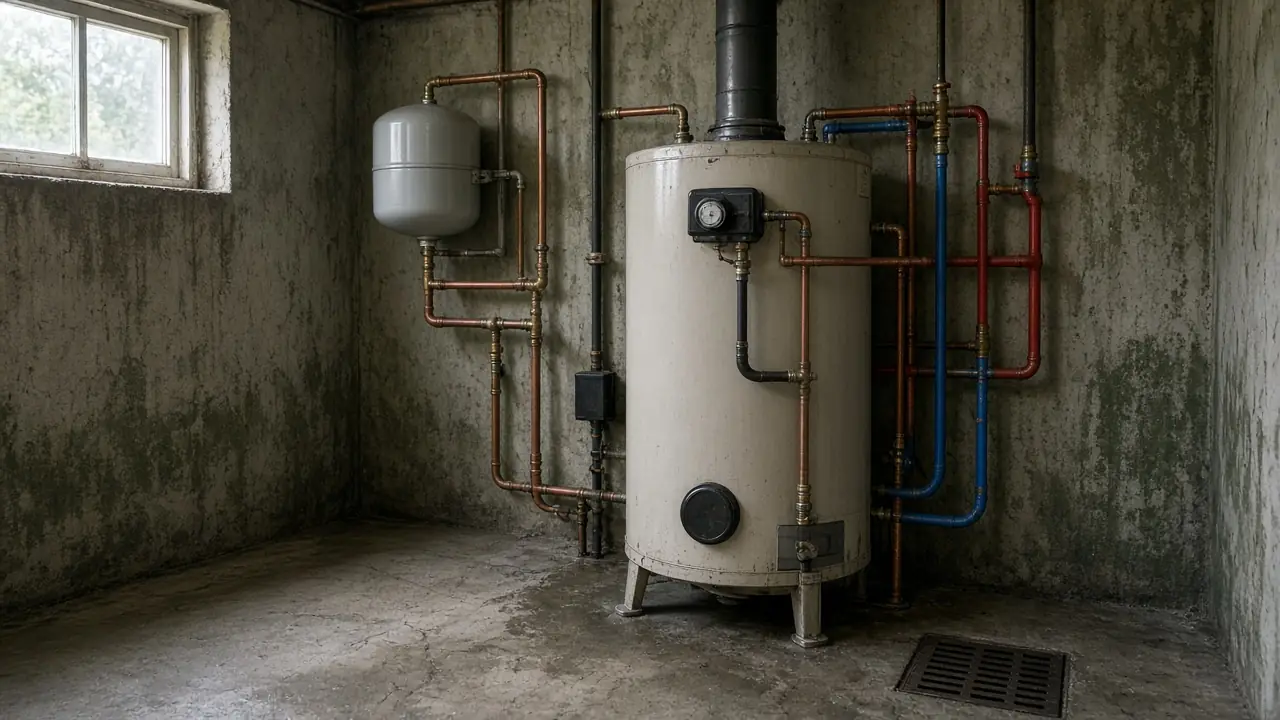
A gas water heater in a Portland, OR basement needs a steady supply of combustion air and a vent that draws exhaust up and out. Older homes often vent through masonry chimneys shared with a furnace. When the furnace is replaced with a high-efficiency model that vents out a side wall, the water heater can be left alone in a chimney too large for it, causing poor draft and condensation. Basement remodels and weatherization can also starve the burner of air. Soot, scorch marks, or a pilot that keeps going out are warning signs.
Many older homes across Portland, including houses near Washington Park and Mt. Tabor Park, keep gas water heaters in basements beside furnaces. The venting arrangement in these homes often dates from decades ago.
How atmospheric venting works
Most standard gas tanks use natural draft. Hot exhaust rises through a draft hood on top of the tank, into a vent connector, and up a chimney or metal flue. The draft depends on the exhaust staying warm enough to rise.
The orphaned water heater
When a furnace that shared the chimney is replaced with a high-efficiency model, the water heater may be left venting alone into a large masonry chimney. Its small exhaust volume cools quickly, draft weakens, and condensation forms inside the chimney, which can damage masonry and allow exhaust to spill. Common fixes include a properly sized liner, a new vent, or switching to a power-vent or different type of water heater.
Combustion air
Burners need air. Finishing a basement, adding walls around the water heater, or tightening the house with weatherization can reduce available air. Doors with louvers, ducted outside air, or relocating the water heater may be needed. Exhaust fans and dryers can also pull air away from the burner and cause backdrafting.
Warning signs
- Soot or rust around the draft hood.
- Scorched or melted plastic near the top of the tank.
- A pilot that goes out on windy days.
- Condensation dripping onto the burner.
- A CO alarm sounding.
If you see these, turn the unit off and have the venting checked. See gas water heater repair. If a CO alarm sounds, leave and call 911.
Testing draft
A technician can check draft by holding a smoke source near the draft hood with the burner running and doors and fans set to worst-case conditions. Exhaust should be pulled into the vent, not pushed out.
When replacement changes venting
During water heater replacement, venting must be checked against code. If the chimney is unsuitable, options include a liner, a power-vent tank, a condensing tankless unit, or a heat pump tank that needs no venting at all. The heat pump guide explains that path.
Permits
Venting changes can require mechanical permits. See the City of Portland plumbing permits page and the permit guide.
A west hills example
Picture a 1920s house with a basement gas tank and a furnace that once shared a brick chimney. The furnace was replaced years ago with a high-efficiency model that vents out the side wall. Since then, the water heater's pilot goes out on windy nights, and there is rust on the top of the tank. A draft test shows exhaust spilling at the draft hood. The fix is a stainless steel liner sized for the water heater alone, or replacing the tank with a power-vent or heat pump model. Either option resolves the spillage; the liner keeps the existing tank and costs less if the tank is young.
Common mistakes
- Enclosing a water heater in a finished room without providing air.
- Running a powerful kitchen exhaust fan in a tight house without makeup air.
- Assuming an old chimney is fine because it has worked for decades.
- Ignoring rust and soot on the vent connector.
What to ask during an inspection
Ask whether the vent connector slopes upward, whether joints are secure, whether the chimney is lined and sized properly for the water heater alone, and whether draft passes under worst-case conditions with fans running.