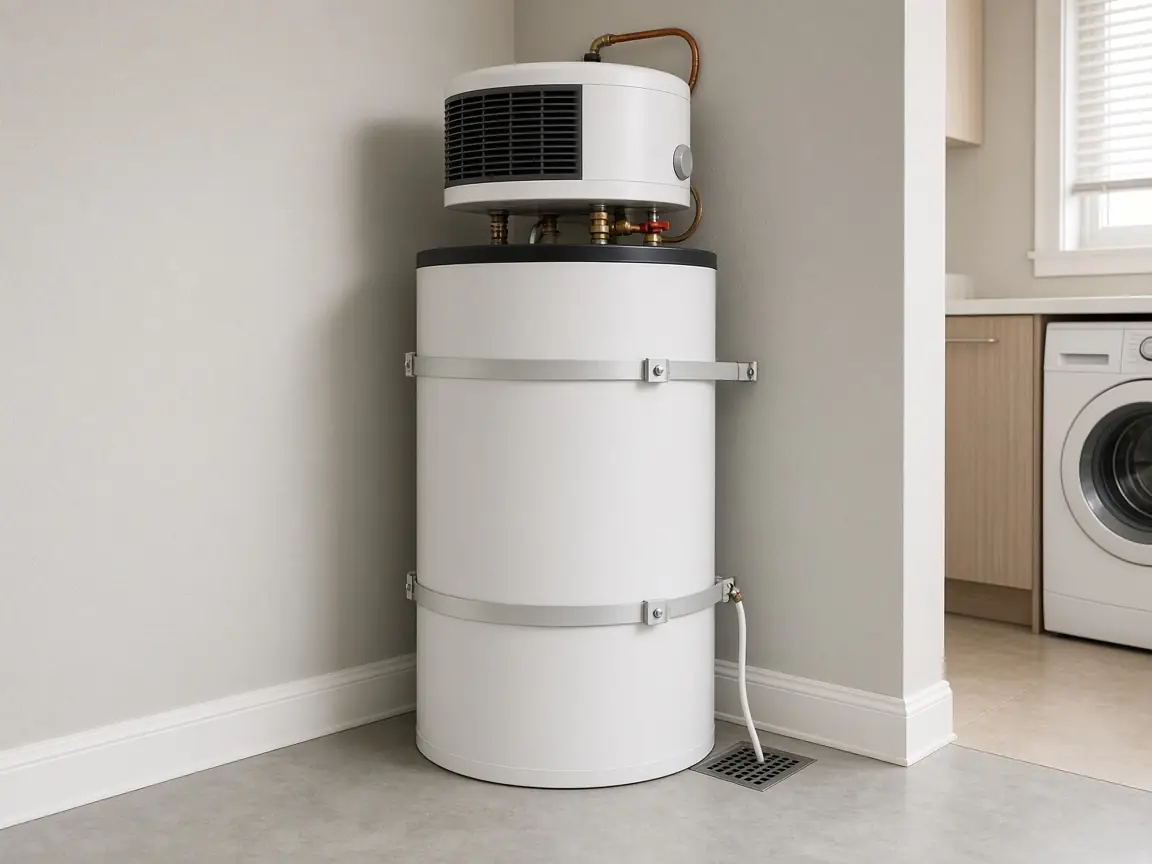
A heat pump water heater can be a good fit for a Portland, OR home if you have a garage or basement with enough space and air, a location that usually stays above about 40 degrees, a drain for condensate, and a suitable electrical circuit. It uses much less electricity than a standard electric tank by moving heat from surrounding air into the water. It cools and dries the space around it, which can help in damp basements. Incentives through Energy Trust of Oregon may offset the higher purchase price.
Portland's mild climate suits heat pump water heaters better than colder regions. Many homes, from older basements near Mt. Tabor Park to garages in newer neighborhoods, have spaces that stay cool but not freezing most of the year.
How it works
A heat pump water heater contains a compressor and fan on top of a tank. The fan pulls in room air, the heat pump extracts heat and transfers it to the water, and cooler, drier air is exhausted. Backup electric elements handle high demand.
Location needs
- Space and air. Manufacturers specify a minimum room volume or ducting. Small closets may require louvered doors or ducts.
- Temperature. Efficiency drops in cold spaces. Most units work best between about 40 and 90 degrees.
- Height. Units are often taller than standard tanks.
- Condensate. A drain line or condensate pump is required.
Garage vs basement
Garages offer space but may get cold in winter, reducing efficiency. Basements stay more stable and benefit from dehumidification. Units can cool adjacent rooms slightly, which is often welcome in summer.
Noise
The fan and compressor produce a hum similar to a dehumidifier. Avoid placing units right beside bedrooms.
Electrical
Most units need a dedicated 240-volt circuit. Some newer models plug into a standard 120-volt outlet, which can avoid panel upgrades in older homes.
Outages
Heat pump tanks need electricity and stop during outages, though the tank stays hot for a while. Plan for storms.
Incentives
Energy Trust of Oregon explains the benefits and lists current incentives. PGE also provides information.
Choosing a heat pump
See water heater replacement for sizing and code items. If you have gas venting problems, a heat pump can eliminate them; see the gas venting guide. For maintenance, clean the air filter regularly and check the condensate line, similar to the care described in water heater flush.
A basement example
Consider a 1940s house on the east side with a gas tank in an unfinished basement that stays around 55 degrees year round. The owner wants to stop using gas for water heating. The basement has plenty of room, a floor drain for condensate, and space in the panel for a 240-volt circuit. A heat pump tank fits well: it runs efficiently at basement temperatures, dehumidifies the space, and eliminates the chimney venting question. The old chimney opening must be sealed properly once the gas tank is removed.
When a heat pump is a poor fit
- A small closet with no way to add louvers or ducts.
- A garage that regularly drops below freezing.
- A home where the panel has no capacity and the 120-volt models are too small.
- A space directly beside a bedroom where the hum would bother sleepers.
Settings to know
Most units offer modes such as heat pump only, hybrid, high demand, and vacation. Hybrid mode uses the heat pump most of the time and the elements only when demand is high. Vacation mode lowers energy use while you are away. Choosing the right mode affects both comfort and savings.
Maintenance
Clean the air filter every few months, check the condensate drain, and flush the tank on the same schedule as a standard electric tank. Test the relief valve yearly.
Sizing a heat pump tank
Because heat pump mode recovers more slowly than a standard electric or gas tank, many households choose the next size up, such as a 65-gallon unit in place of a 50-gallon tank. That extra stored water covers back-to-back showers without forcing the backup elements on, which keeps operating costs low.