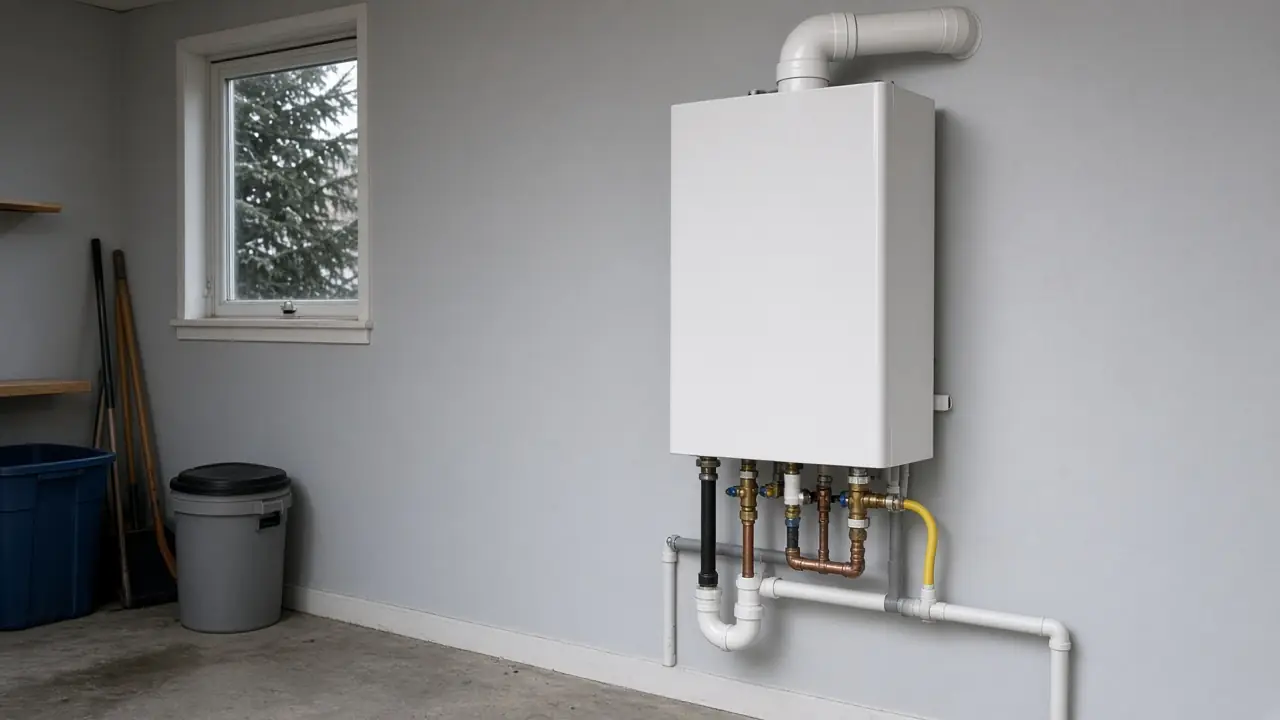
A first tankless installation in Gresham, OR has to include a gas line sized for the unit's full input, a dedicated vent and termination that meet clearance rules, a condensate drain with neutralizer for condensing units, isolation valves for descaling, and a permit. Because Gresham sees the metro's coldest east-wind spells, a Gresham install should also plan for freeze protection and for what happens during a power outage, since tankless units need electricity to run.
Tankless units are a good fit for many Gresham homes: they free up garage space, deliver continuous hot water, and can be efficient. The extra planning here simply reflects the climate at the east end of the metro.
Gas supply first
Whole-home gas tankless units can draw several times the gas of a tank heater. The gas line from the meter needs to be sized for the total connected load of the house, including the furnace, range, fireplace, and dryer if gas. Long runs in older ranch homes often need upsizing. NW Natural may need to confirm the meter and regulator can supply the higher load. Skipping this step is the most common cause of ignition failures and lukewarm water on cold mornings.
Venting and termination
Condensing units vent in plastic pipe through a side wall or roof; non-condensing units need stainless steel. Terminations must clear windows, doors, vents, and grade by set distances, and in Gresham they should not face directly into the prevailing east wind if another option exists. Wind-driven rain and occasional snow can affect a poorly placed termination.
Freeze protection
Most tankless units include electric freeze protection for the internal heat exchanger, but it works only with power. Units mounted outside or on cold exterior walls are most at risk. During an extended outage in freezing weather, the unit should be drained following the manual. Some owners add a small battery backup for the controls, though that does not cover the freeze heaters for long. Insulate exposed piping near the unit, including the cold supply and the condensate line, which can freeze and block drainage.
Outage planning
A tankless unit will not make hot water without power. If your household relies on hot water through winter outages, consider whether a generator connection, a battery backup sized for the unit, or keeping a tank-style heater is the better plan. That is not a reason to rule out tankless, but it is a question to answer before committing.
Condensate drainage
Condensing units produce acidic water that needs a neutralizer and a drain. In garages without a floor drain, a small condensate pump is common. Route condensate lines where they will not freeze, or use heat tape where they must pass through cold space.
Water quality and service valves
Gresham's water can come from Bull Run surface water or local groundwater depending on the address; groundwater tends to be harder. Harder water scales heat exchangers faster, so isolation valves with service ports are essential. The tankless descaling guide explains maintenance intervals.
Sizing
Size by peak flow at the coldest inlet temperature. Gresham's winter supply water can be colder than in west-side cities during cold snaps. A unit that seems generous in summer can struggle on a February morning with two showers and a dishwasher running.
Permits and incentives
Tankless installs generally need plumbing permits and often mechanical permits for gas piping and venting. The Oregon Building Codes Division outlines the rules, and Gresham's permit contacts start at the City of Gresham. For incentives, read the NW Natural water heater offer and Energy Trust's residential water heater incentives, and confirm eligibility before counting on them.
Choosing the mounting spot
Indoor mounting on an interior-side wall near an exterior wall usually gives the best balance: short vent, protected from freezing, and accessible for service. A garage wall works if the garage stays above freezing most of the time. Outdoor units save space but carry the most freeze risk at this end of the metro.
What a complete quote should list
A first tankless quote in Gresham should spell out the unit model and its maximum input, the gas line work from meter to unit, the vent material and route, the condensate drain or pump and neutralizer, isolation valves, the electrical outlet or circuit, freeze protection steps for the chosen location, removal of the old tank, and permit fees. If any of those are missing, ask why. Missing gas or vent work is the usual reason one quote looks far cheaper than another, and it tends to resurface as a change order.
Gresham notes
East county households tend to plan around weather; the same people who check the forecast before heading to Red Sunset Park or a trail day on the Gresham trails system should apply that habit to a tankless plan. Ask how the unit will behave on the coldest, windiest night of the year.
Living with a water heater in Gresham
Gresham is the largest city on the east side of the metro, sitting between Portland and the foothills that rise toward Mount Hood. Its location near the west end of the Columbia River Gorge exposes it to strong, cold east winds in winter, and those events often bring the region's sharpest freezes, ice, and power outages to east Multnomah County first. Housing includes mid-century ranches, 1970s and 1980s subdivisions, manufactured-home communities, and newer neighborhoods on the city's southern and eastern edges. Many water heaters sit in attached garages, exterior closets, or manufactured-home utility compartments that get genuinely cold during an east-wind spell. Johnson Creek runs through the city, and the Springwater Corridor trail links Gresham to Portland. Water service has long included Portland's soft Bull Run supply, and the city has been developing groundwater sources, so mineral content can differ by address. Cold inlet water, wind at the vent cap, and outage restarts are the local factors that show up most in Gresham water heater problems.
What a first tankless install in Gresham should cover
- Gas load calculation for every appliance and the pipe length from the meter
- Unit sized by flow rate at the coldest realistic inlet temperature
- Vent material and termination chosen per the manufacturer and code clearances
- Condensate drain and neutralizer planned for condensing models
- Isolation service valves and an accessible inlet filter installed
- Electrical outlet or circuit provided for controls, fans, and freeze protection
- Permits pulled for plumbing and, where needed, mechanical work
Tankless install prep list for Gresham
Before requesting a first tankless quote in Gresham, list every gas appliance in the house, note the distance from the gas meter to the proposed unit location, and photograph the wall where it would hang and the outside wall where the vent would exit. Count the showers and appliances that run together on a busy morning. Check the electrical panel label for open spaces. Those details let an installer size the gas line, vent, and unit properly the first time.
Gresham at a glance
- Location: Gresham, Oregon, about 20–30 minutes east of central Portland by I-84 or US-26.
- Local landmarks used on this page: Main City Park, Red Sunset Park.
- City information and building contacts: City of Gresham.
- State permit rules: Oregon Building Codes Division.
- Utilities: PGE or another electric utility and NW Natural gas serve most addresses; incentives are listed by Energy Trust of Oregon.
- Nearby city page: Happy Valley.
- Map: the map on this page shows Gresham, Oregon at city level, not a business address.
Related pages
If you already have a tankless unit that is failing, see tankless water heater replacement in Gresham. If you are comparing against a new tank, read water heater replacement in Gresham. The Gresham overview gathers everything, the metro page is tankless water heater installation in Portland, and tankless installation in Happy Valley covers the neighbor.