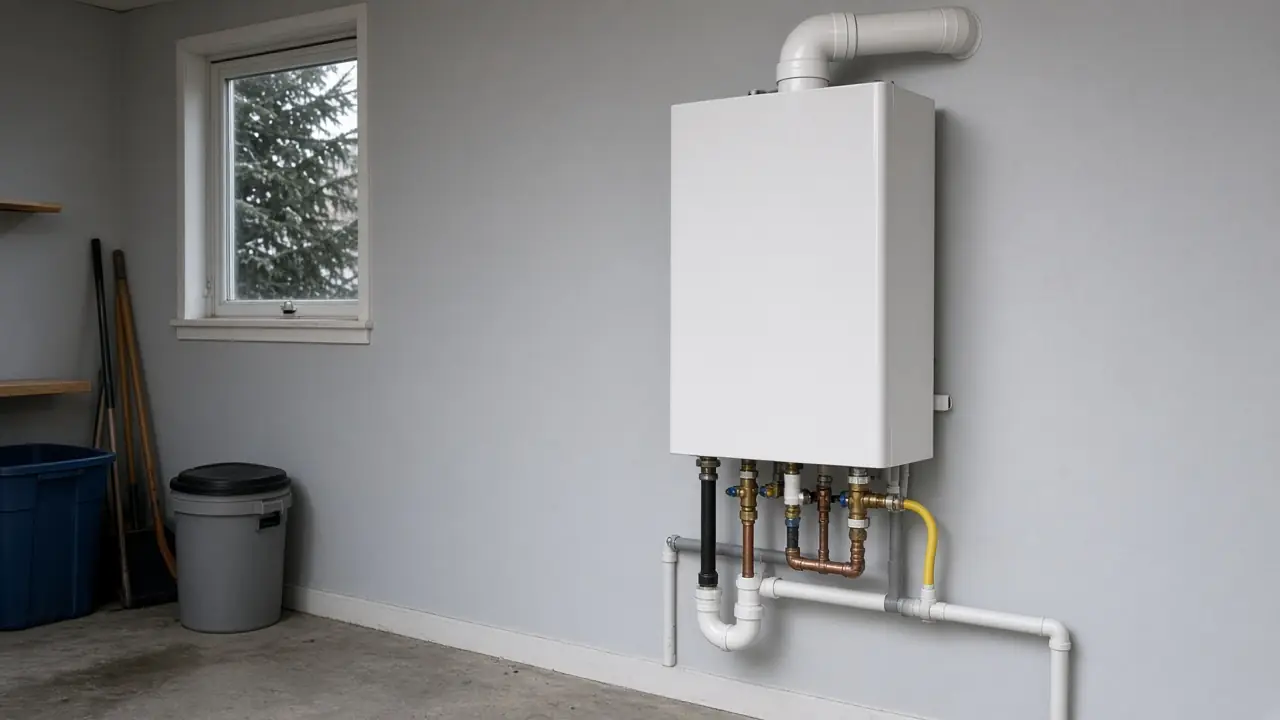
A first tankless installation in Happy Valley, OR has to include a gas line sized for the unit's maximum input, an approved vent and termination, condensate drainage, isolation valves, and a permit. Newer Happy Valley homes often have gas service and meters closer to what tankless units need than older houses do, but large homes with several baths may still need a larger unit, linked units, or recirculation support. HOA rules can affect vent locations.
Gas service
Calculate total load from every gas appliance and the pipe length from the meter. Many newer homes have adequately sized lines; some still need upsizing for whole-home units.
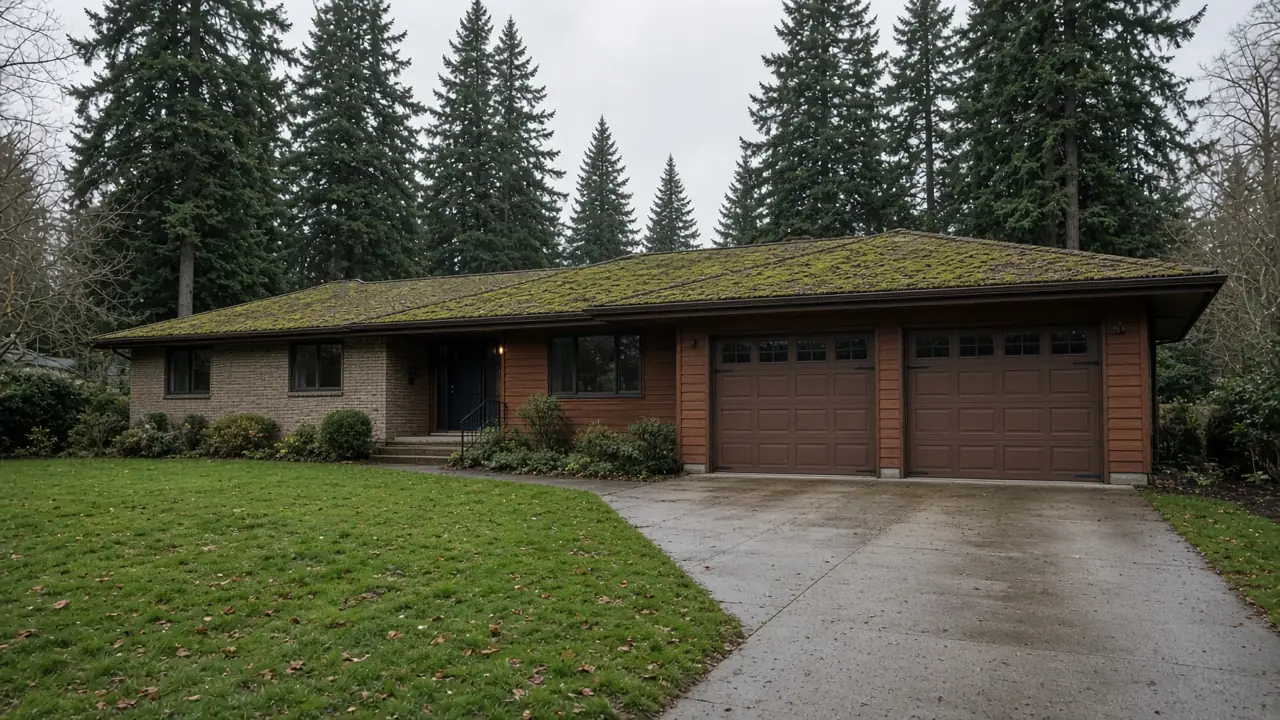
Sizing large homes
Size for peak flow at winter inlet temperature. Multiple showers plus a tub may need two linked units.
Recirculation
Large homes often want quick hot water at distant baths. Choose a model with built-in recirculation or plan a buffer tank.
Venting on hillsides
Terminations must meet clearances and should be placed above expected snow on higher streets. HOA approval may be needed for visible changes.
Condensate and valves
Neutralizer plus a drain or pump; isolation valves for descaling, see the tankless descaling guide.
Electric alternative
A heat pump water heater suits many Happy Valley garages if gas is not preferred.
Permits and incentives
See the Oregon Building Codes Division and the City of Happy Valley. Check the NW Natural water heater offer and Energy Trust incentives.
Happy Valley notes
Homes near Happy Valley Park and on the slopes toward Scouters Mountain Nature Park tend to be large and newer, which suits tankless installs well when sized for real peak demand.
Choosing between tankless and a heat pump tank
Happy Valley homeowners often weigh these two options side by side. A gas tankless unit offers continuous hot water and frees floor space, which suits large households with several baths. A heat pump water heater uses electricity very efficiently, cools and dries the garage a little, and has drawn Energy Trust incentives for qualifying installs, but it recovers more slowly and needs floor space and room air. If the home already has gas service sized for a tankless unit and the household runs many showers at once, tankless is often the comfort choice. If the household is smaller, the garage is roomy, and efficiency is the priority, a heat pump tank is hard to beat.
Builder-installed equipment and upgrades
Some newer Happy Valley homes already have a tankless unit from the builder, while others have a standard tank in a garage designed for easy swaps. If you are converting, check whether the builder left a stub-out for a larger gas line or a vent path. Those details can lower the cost of a conversion considerably.
Living with a water heater in Happy Valley
Happy Valley sits on the buttes and slopes southeast of Portland, near Mount Scott and Scouters Mountain, and it has been one of the fastest-growing cities in Oregon. Much of its housing is new, built from the 1990s onward, with many large two-story homes, steep driveways, and hillside lots. Newer construction means more tankless units, heat pump water heaters, and power-vent or direct-vent gas tanks than in older cities, along with modern code items such as expansion tanks and seismic strapping already in place. Elevation and exposure make some neighborhoods a little colder and windier than the valley floor in winter, and snow and ice can linger on the higher streets. Water service in the area is provided by regional water providers rather than a single city utility, so your bill is the best guide to the source. New-build equipment reaching its first replacement, warranties, and hillside access are the local factors that come up most for Happy Valley water heaters.
What a first tankless install in Happy Valley should cover
- Gas load calculation for every appliance and the pipe length from the meter
- Unit sized by flow rate at the coldest realistic inlet temperature
- Vent material and termination chosen per the manufacturer and code clearances
- Condensate drain and neutralizer planned for condensing models
- Isolation service valves and an accessible inlet filter installed
- Electrical outlet or circuit provided for controls, fans, and freeze protection
- Permits pulled for plumbing and, where needed, mechanical work
Tankless install prep list for Happy Valley
Before requesting a first tankless quote in Happy Valley, list every gas appliance in the house, note the distance from the gas meter to the proposed unit location, and photograph the wall where it would hang and the outside wall where the vent would exit. Count the showers and appliances that run together on a busy morning. Check the electrical panel label for open spaces. Those details let an installer size the gas line, vent, and unit properly the first time.
Happy Valley at a glance
- Location: Happy Valley, Oregon, about 20–25 minutes southeast of central Portland.
- Local landmarks used on this page: Happy Valley Park, Scouters Mountain Nature Park.
- City information and building contacts: City of Happy Valley.
- State permit rules: Oregon Building Codes Division.
- Utilities: PGE or another electric utility and NW Natural gas serve most addresses; incentives are listed by Energy Trust of Oregon.
- Nearby city page: Gresham.
- Map: the map on this page shows Happy Valley, Oregon at city level, not a business address.
Related pages
For existing units, see tankless water heater replacement in Happy Valley. To compare tanks, read water heater replacement in Happy Valley. The Happy Valley overview lists every page, tankless water heater installation in Portland covers the metro, and Gresham tankless installation is nearby.