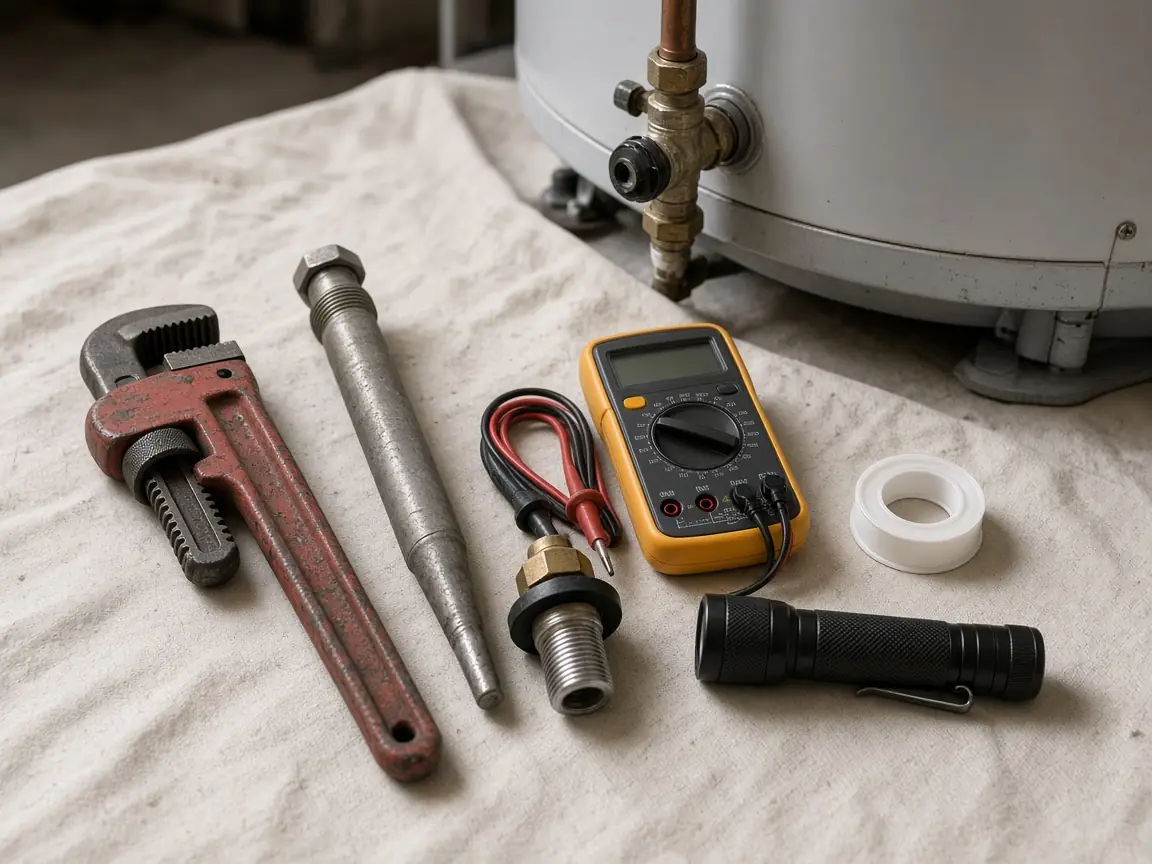
The anode rod in a Portland, OR water heater is a metal rod, usually magnesium or aluminum, that corrodes so the steel tank does not. Once it is consumed, the tank lining is next. Inspect the anode every few years and replace it when much of the core wire is exposed. Soft Bull Run water tends to be gentle on anodes, but softened or well water can consume them faster. A rotten-egg smell from hot water often means the anode is reacting with bacteria and may need a different type.
Tanks in basements and garages throughout Portland, including homes near Forest Park, depend on their anodes for long life. It is one of the few parts that can extend a tank's lifespan when maintained.
How an anode works
Steel tanks are lined with glass, but small gaps in the lining expose steel to water. The anode is more reactive than steel, so corrosion attacks the anode first. This is called sacrificial protection.
Types of anodes
- Magnesium: strong protection, common in soft water. Can react with bacteria to produce odor.
- Aluminum or aluminum-zinc: used in harder water and to reduce odor.
- Powered anodes: use a small electrical current and do not get consumed; useful for persistent odor.
When to inspect
Check every two to four years on soft water, more often on hard or softened water. Inspect during a water heater flush.
How to check
With the energy off and the cold supply closed, release pressure and unscrew the anode hex on top of the tank. It can be very tight. If the rod is pitted heavily, reduced to a thin wire, or missing large sections, replace it. Low ceilings may require a segmented rod.
Smelly hot water
A sulfur or rotten-egg smell in hot water only often comes from bacteria reacting with a magnesium anode. Switching to an aluminum-zinc or powered anode, and sanitizing the tank, usually fixes it. Homes on wells see this more often.
When it is too late
If the tank is already leaking, a new anode will not help. See water heater replacement. If the anode is gone and the tank is old, replacement planning is wise.
Related repairs
Anode inspection pairs well with checking elements; see the electric elements guide. For water quality, see the hard water guide. For other repairs, see water heater repair.
Water quality sources
The Portland Water Bureau publishes information about the city's supply, which helps estimate anode wear.
An example from a garage tank
A seven-year-old gas tank in a Northwest Portland garage starts producing slightly rusty hot water at the first draw. When the anode is pulled during a flush, only the steel core wire remains for most of its length. Replacing the rod and flushing the tank clears the rust, and the tank continues working for years. Had the anode been ignored, the lining would have begun corroding and the tank would have started leaking sooner.
Common mistakes
- Using an impact wrench without bracing the tank, which can damage fittings.
- Forgetting thread sealant on the new rod, causing leaks.
- Installing a rod too long for the tank.
- Removing the anode entirely to stop odor, which voids warranties and lets the tank corrode quickly.
Tools and parts
A 1-1/16 inch socket and a breaker bar, thread sealant tape or paste rated for potable water, the correct anode type and length for the tank, and a helper to steady the tank. In tight spaces, a flexible or segmented anode makes installation possible.
Warranties
Some manufacturers require original-type anodes. Check the manual before switching types, especially to powered anodes.
Softened water and anodes
If a softener is installed, anodes often wear noticeably faster, because softened water conducts current more readily. Homes that add a softener should shorten the inspection interval for the first few years until the wear rate is clear. Note the rod's condition each time so the next check can be timed sensibly.