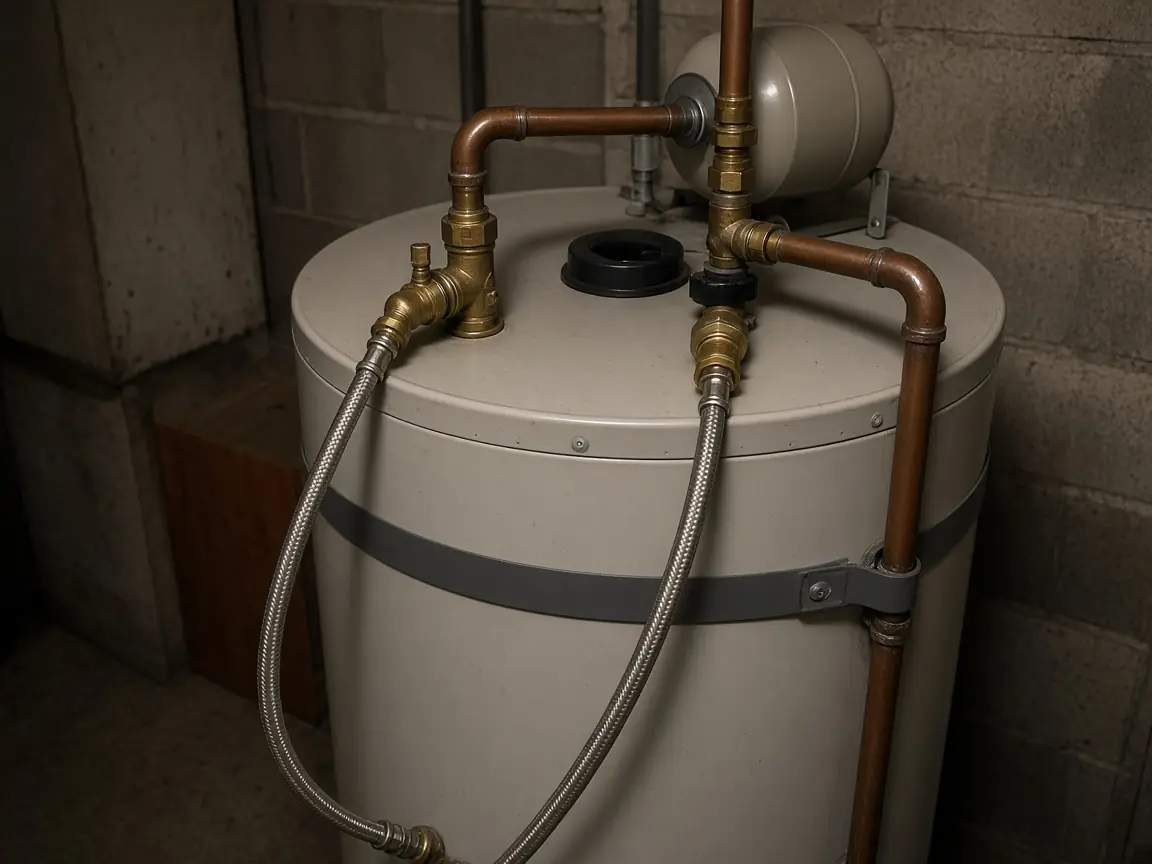
The temperature and pressure (T&P) relief valve on a Portland, OR water heater opens if the tank gets too hot or too pressurized, protecting it from failure. An expansion tank absorbs the extra volume water takes on when heated, keeping pressure stable in a closed system. If your home has a pressure-reducing valve, backflow preventer, or check valve on the main, an expansion tank is generally needed. A relief valve that drips after heating cycles often means the expansion tank has failed or house pressure is too high.
Water heaters in closets, basements, and garages across Portland, from condos near Tom McCall Waterfront Park to houses in the west hills, rely on these two components for safety.
The T&P relief valve
The valve sits on the top or side of the tank with a discharge pipe running down toward the floor or a drain. It opens at a set temperature or pressure. The discharge pipe must be the right size, made of approved material, and end at an approved location without being capped or threaded. Never plug a relief valve.
Test it by lifting the lever briefly; water should flow and stop when released. If it keeps dripping afterward, it may need replacing.
Thermal expansion
Water expands when heated. In an open system, extra volume flows back to the street main. In a closed system, with a pressure-reducing valve or backflow device, it has nowhere to go, and pressure spikes. That stresses the tank, fittings, and fixtures, and can open the relief valve.
The expansion tank
An expansion tank is a small tank with an air bladder, mounted on the cold supply near the water heater. Water pushes into it as it expands, compressing the air. The air charge should match house pressure.
Testing an expansion tank
- Tap it: the top half should sound hollow.
- Press the air valve briefly: water means the bladder has failed.
- Check air pressure with a tire gauge when the system is depressurized.
Expansion tanks often last five to ten years.
Code and permits
Oregon plumbing code generally requires thermal expansion control on closed systems. Inspectors check this during water heater replacement. See the permit guide and the City of Portland plumbing permits page.
High house pressure
Use a hose-bib gauge to check pressure. Readings above about 80 psi suggest the pressure-reducing valve needs adjustment or replacement. High pressure also contributes to water hammer and fixture wear. If your relief valve is running now, see emergency water heater repair.
Related
The anode rods guide covers another part that protects your tank.
A condo closet example
In a condo with an electric tank in a hall closet, the building's water service includes a backflow preventer, making each unit's system closed. Without an expansion tank, pressure rises every heating cycle, and the relief valve begins to drip into its discharge pipe. Over time, the dripping wears the valve seat and the fixtures in the unit start to leak. Installing a correctly charged expansion tank on the cold line stops the dripping, and replacing the worn relief valve restores normal operation.
Sizing and installation
Expansion tanks are sized by the water heater's capacity and house pressure. Before installation, the tank's air charge is set to match static house pressure. The tank should be supported so its weight does not hang on the pipe, and it is usually mounted on the cold supply between the shutoff and the water heater.
Common mistakes
- Leaving the factory air charge instead of matching house pressure.
- Mounting a heavy tank on a thin pipe without support.
- Capping or plugging a relief valve that drips.
- Routing the discharge pipe uphill or reducing its diameter.
Annual checks
Once a year, lift the relief valve lever briefly, tap the expansion tank to listen for air, and check house pressure with a hose-bib gauge. These quick checks catch most problems before they become leaks.
Relief valve discharge location
The discharge pipe should end within a short distance of the floor or at an approved drain, with an air gap, so hot water discharges safely and visibly. A discharge pipe that runs outdoors should be protected from freezing and should not end where water could hurt someone.