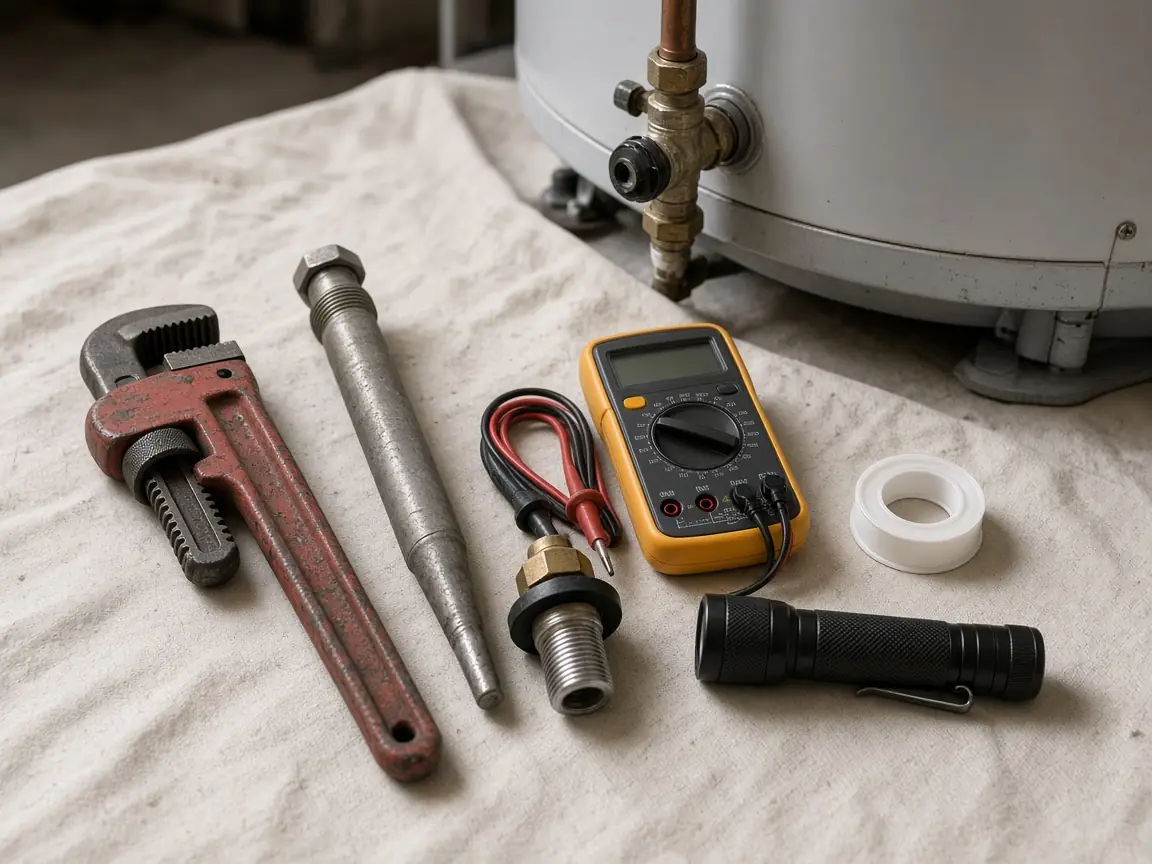
Before repairing a water heater in Lake Oswego, OR, confirm the tank is dry, note its age from the rating plate, and separate heater problems from distribution problems. Many Lake Oswego homes are large, with long pipe runs and hot-water recirculation pumps, so "slow hot water" at a far bathroom may be a pump, check valve, or timer issue rather than a failing heater. A dry tank with a failed element, thermostat, thermocouple, igniter, or top fitting is a solid repair candidate.
Lake Oswego's housing ranges from mid-century homes on wooded hillside lots to large newer houses with three or four bathrooms, and older cottages near the lake and the Willamette. That variety means water heater repairs here involve more than the tank. Recirculation systems, multiple heaters, and basements cut into slopes all come into play.
Heater problem or distribution problem?
Start at the heater. If the water at the tank's hot outlet, or the nearest faucet, is hot, the heater is probably working. If a distant bathroom takes minutes to get hot, look at the recirculation system. Recirc pumps fail, timers lose settings after outages, and check valves stick, letting hot and cold mix. A stuck check valve can also cause lukewarm water at the cold tap, which confuses many owners. If water is not hot even at the heater, the heater is the problem.
Common heater faults
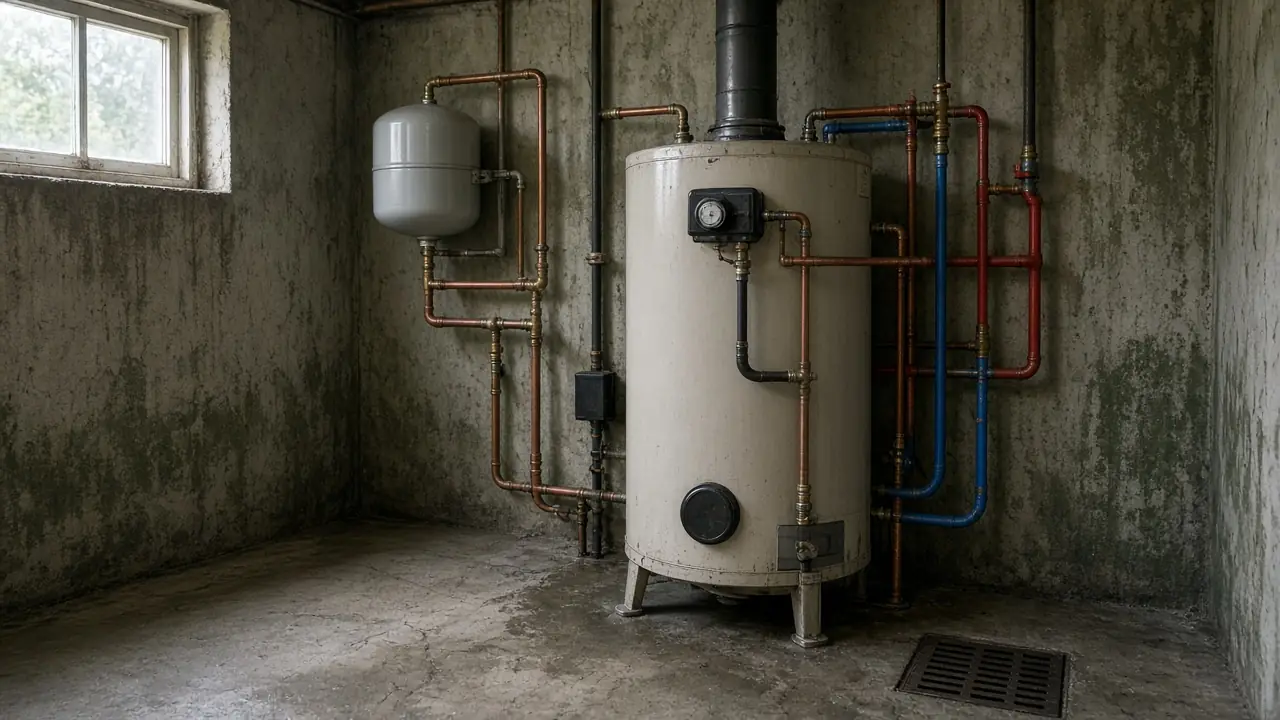
Electric tanks lose elements and thermostats. Gas tanks lose thermocouples, flame sensors, igniters, and occasionally gas control valves. Large homes often run two tanks in series or parallel; if one fails, the other carries the load and the house only notices that hot water runs out sooner. Check both.
Relief valves that drip after heating often trace to thermal expansion, especially where the home has a pressure-reducing valve. A properly charged expansion tank solves that. The expansion tank guide explains the details.
Orphaned chimney vents
Many older Lake Oswego homes once vented a gas furnace and a gas water heater together into a masonry chimney. When the furnace was upgraded to a high-efficiency model that vents through plastic pipe, the water heater was left alone in a chimney sized for both. A lone water heater in an oversized, cold masonry chimney can draft poorly and produce condensation that damages the chimney and the vent connector. Signs include water dripping at the draft hood, rust on the vent connector, and soot. A chimney liner sized for the heater is the usual fix, and it is a gas water heater repair in Lake Oswego topic.
Hillside basements
Homes on Lake Oswego's slopes often have daylight basements where the heater sits against a below-grade wall. Those spaces stay cool and can be damp, which slows recovery and rusts gas parts. If the basement has a sump or a floor drain, confirm it works before any repair that involves draining.
Repair or replace
Under eight years, repair is usually the answer. Between eight and twelve, consider the part cost and the tank's condition. Past twelve, or with rust at the base, plan for water heater replacement in Lake Oswego. In large homes with high demand, upgrading capacity at replacement time often makes sense.
Lake Oswego specifics
Water for much of the city comes through the Lake Oswego Tigard Water Partnership from the Clackamas River; your bill names your provider, and the City of Lake Oswego site links to water details. Clackamas River water is relatively soft, so heavy scale is uncommon, but sediment still accumulates over the years.
Lake Oswego's downtown gathers around Millennium Plaza Park near the lake, and George Rogers Park sits at the mouth of Oswego Creek on the Willamette, home to the historic iron furnace. Older homes in the neighborhoods between them are where orphaned chimney vents and long-retired gas lines are most often found.
Repairs that change gas piping or venting generally need permits under Oregon rules; see the Oregon Building Codes Division. Lake Oswego building contacts start on the city site.
Living with a water heater in Lake Oswego
Lake Oswego wraps around Oswego Lake south of Portland, bordered by the Willamette River on the east and wooded hills to the west. Many homes are larger than the metro average, with more bathrooms, soaking tubs, and long pipe runs, and a good share use hot-water recirculation or more than one heater. Older neighborhoods near downtown and the river include 1940s through 1960s houses with masonry chimneys that once vented both a furnace and a water heater; furnace upgrades have left many water heaters venting alone in chimneys that are now too large. Hillside lots create daylight basements where the heater sits against a below-grade wall, often close to finished space. Much of the city's water comes through the Lake Oswego Tigard Water Partnership from the Clackamas River, which is relatively soft, so scale is rarely the main problem. Capacity, venting, and protecting finished basements are the local factors that come up most often for Lake Oswego water heaters.
What a repair visit in Lake Oswego should check
- Rating plate read for age, fuel, capacity, and element wattage or burner input
- Breaker, disconnect, or gas supply confirmed before any panel comes off
- Elements and thermostats tested for continuity and resistance with power verified off
- Pilot, thermocouple, flame sensor, or igniter inspected on gas tanks
- Relief valve, discharge pipe, and expansion tank checked for pressure problems
- Top fittings, flex connectors, and drain valve inspected for weeps
- Tank base and jacket checked for rust that would make a repair a poor investment
Repair prep list for Lake Oswego
Before a repair visit in Lake Oswego, gather the rating plate photo (brand, model, serial, and manufacture date), note the fuel type, and write down exactly what changed: no hot water, short hot water, noise, or water on the floor. Note whether the breaker or gas supply has been checked and whether a reset was tried. A photo of the top connections and the burner or element panels helps a technician bring the right parts. Keep the area around the heater clear by about three feet so panels can come off safely.
Lake Oswego at a glance
- Location: Lake Oswego, Oregon, about 15–20 minutes south of central Portland.
- Local landmarks used on this page: Millennium Plaza Park, George Rogers Park.
- City information and building contacts: City of Lake Oswego.
- State permit rules: Oregon Building Codes Division.
- Utilities: PGE or another electric utility and NW Natural gas serve most addresses; incentives are listed by Energy Trust of Oregon.
- Nearby city page: Tigard.
- Map: the map on this page shows Lake Oswego, Oregon at city level, not a business address.
Related pages
If the tank is rumbling, see water heater flush in Lake Oswego. If you have a tankless unit showing a code, read tankless water heater repair in Lake Oswego. The Lake Oswego overview lists all city pages, water heater repair in Portland covers the metro, and water heater repair in Tigard is next door.