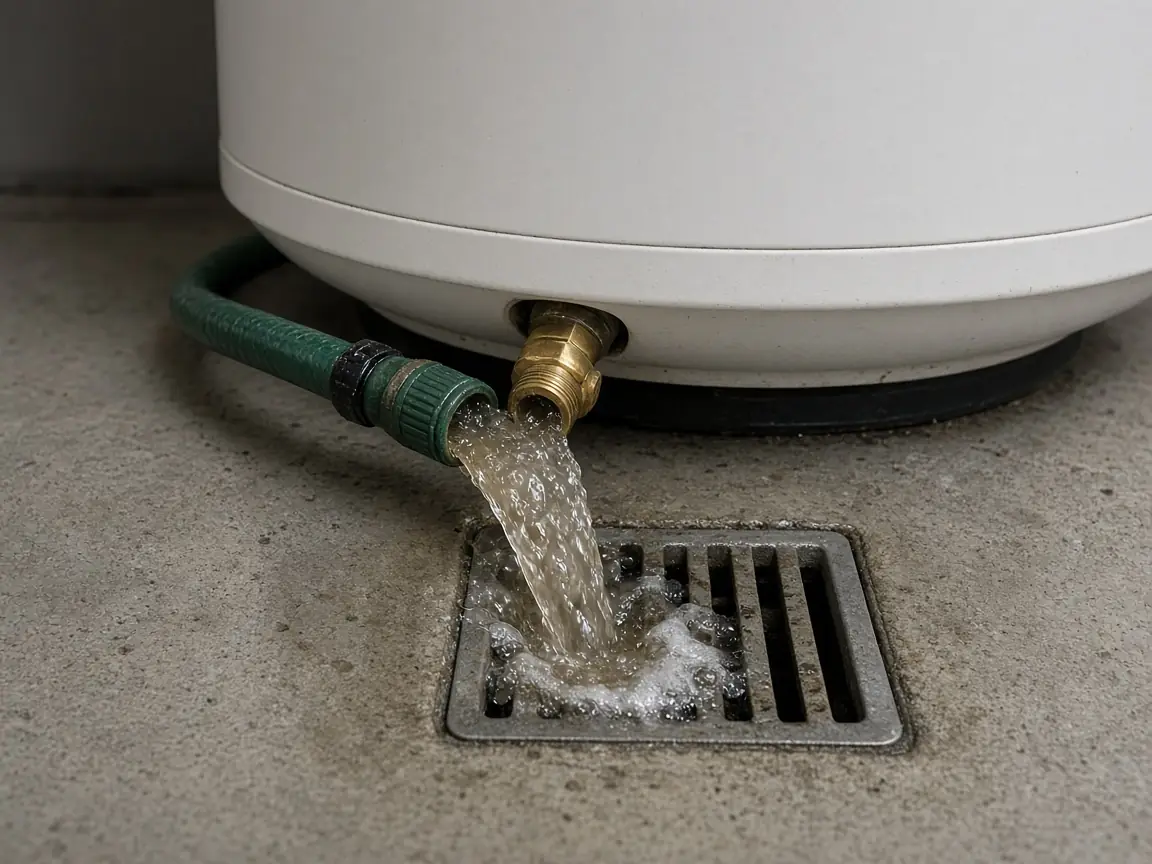
A water heater flush in Lake Oswego, OR is worth doing when a dry, sound tank starts popping or rumbling during heating, or after several years without maintenance. Lake Oswego's supply is relatively soft, so many tanks build sediment slowly, but grit from pipe corrosion, mains work, and aging dip tubes still collects. Skip the flush on tanks that leak from the shell, show rust at the base, or have brittle plastic drain valves.
Many Lake Oswego heaters sit in basements with floor drains, which makes flushing simpler than in homes where a hose has to cross finished floors. Large homes with two tanks need each one flushed separately.
Signs a flush will help
Popping or rumbling while heating is the main sign. Shorter hot water supply and a lower electric element that fails repeatedly are others. If the noise is a single thud when a faucet closes, it is water hammer. A sizzle on a gas tank can mean water dripping onto the burner, which is a leak.
Tanks to leave alone
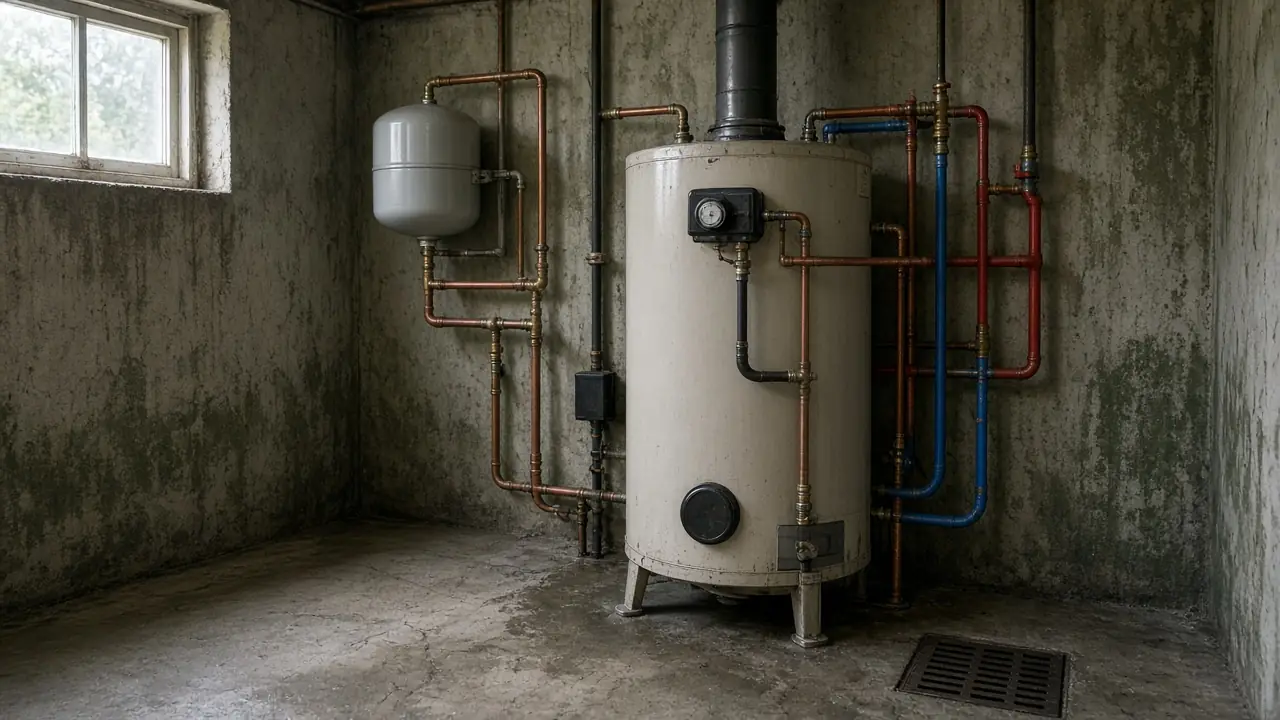
Tanks weeping from the shell, rusting at the base, or older than about twelve years with no maintenance history are poor flush candidates. Debris can keep the drain valve from sealing, and a weak spot can open. Plan water heater replacement in Lake Oswego instead.
The flush
Turn off energy to the heater. Close the cold supply. Connect a hose to the drain valve and run it to the floor drain, a utility sink, or outdoors downhill from the house. Open a hot faucet upstairs to let air in. Open the drain valve and let it run until the water clears, briefly opening the cold supply with the drain open to stir sediment. Close the drain, refill with a hot faucet open until flow is steady, and only then restore energy. Keep hands clear of the first scalding water.
Two tanks, two flushes
In dual-tank homes, isolate and flush one tank at a time so the house keeps some hot water. Check that both tanks' drain valves seal afterward, and inspect both anode rods if accessible.
Recirculation systems
Turn off the recirculation pump during the flush. After refilling, run it again and check that hot water returns promptly to distant fixtures. Sediment stirred during a flush can occasionally lodge in a check valve; if hot water starts appearing in cold lines afterward, that valve may need cleaning.
Anode rods
The anode rod protects the tank lining. Inspect it while the tank is depressurized. If several inches of bare core wire are visible, replace it. The anode rod guide covers rod types and when to swap.
Lake Oswego notes
Water for much of the city comes through the Lake Oswego Tigard Water Partnership from the Clackamas River; your bill names the provider, and the City of Lake Oswego site links to water details. Hillside homes with daylight basements usually have a floor drain near the heater, but confirm it flows before sending sediment into it.
Pick a mild, dry weekend if the hose must run outside. A morning flush leaves time for a walk along the river at George Rogers Park or downtown at Millennium Plaza Park. If you hire the work out, verify registration with the Oregon CCB search.
Living with a water heater in Lake Oswego
Lake Oswego wraps around Oswego Lake south of Portland, bordered by the Willamette River on the east and wooded hills to the west. Many homes are larger than the metro average, with more bathrooms, soaking tubs, and long pipe runs, and a good share use hot-water recirculation or more than one heater. Older neighborhoods near downtown and the river include 1940s through 1960s houses with masonry chimneys that once vented both a furnace and a water heater; furnace upgrades have left many water heaters venting alone in chimneys that are now too large. Hillside lots create daylight basements where the heater sits against a below-grade wall, often close to finished space. Much of the city's water comes through the Lake Oswego Tigard Water Partnership from the Clackamas River, which is relatively soft, so scale is rarely the main problem. Capacity, venting, and protecting finished basements are the local factors that come up most often for Lake Oswego water heaters.
What a proper flush in Lake Oswego involves
- Tank age and condition reviewed before draining
- Energy turned off and cold supply closed
- Drain valve type checked; brittle plastic valves noted before opening
- Hose route secured to a safe drain or outdoor discharge
- Tank drained and stirred with brief cold-supply bursts until clear
- Anode rod inspected while the tank is depressurized
- Tank refilled completely with air bled before energy is restored
- Relief valve tested and checked for proper reseating
Flush prep list for Lake Oswego
Before a flush in Lake Oswego, find the drain valve and check what it is made of, identify where the hose will discharge, and gather a hose long enough to reach without kinks, gloves, and a bucket for the first sample. Note the tank age from the rating plate. If the anode rod will be inspected too, have the correct socket size and a replacement rod on hand. Plan the job for a dry, mild day so the hose route outdoors is safe.
Lake Oswego at a glance
- Location: Lake Oswego, Oregon, about 15–20 minutes south of central Portland.
- Local landmarks used on this page: Millennium Plaza Park, George Rogers Park.
- City information and building contacts: City of Lake Oswego.
- State permit rules: Oregon Building Codes Division.
- Utilities: PGE or another electric utility and NW Natural gas serve most addresses; incentives are listed by Energy Trust of Oregon.
- Nearby city page: Tigard.
- Map: the map on this page shows Lake Oswego, Oregon at city level, not a business address.
Related pages
Tankless units are descaled, not flushed; see tankless water heater repair in Lake Oswego. If water is still lukewarm after flushing, water heater repair in Lake Oswego covers elements and dip tubes. The Lake Oswego overview lists every page, water heater flush in Portland covers the metro, and the hard water guide explains scale in soft-water regions. Next door, see flush notes for Tigard.