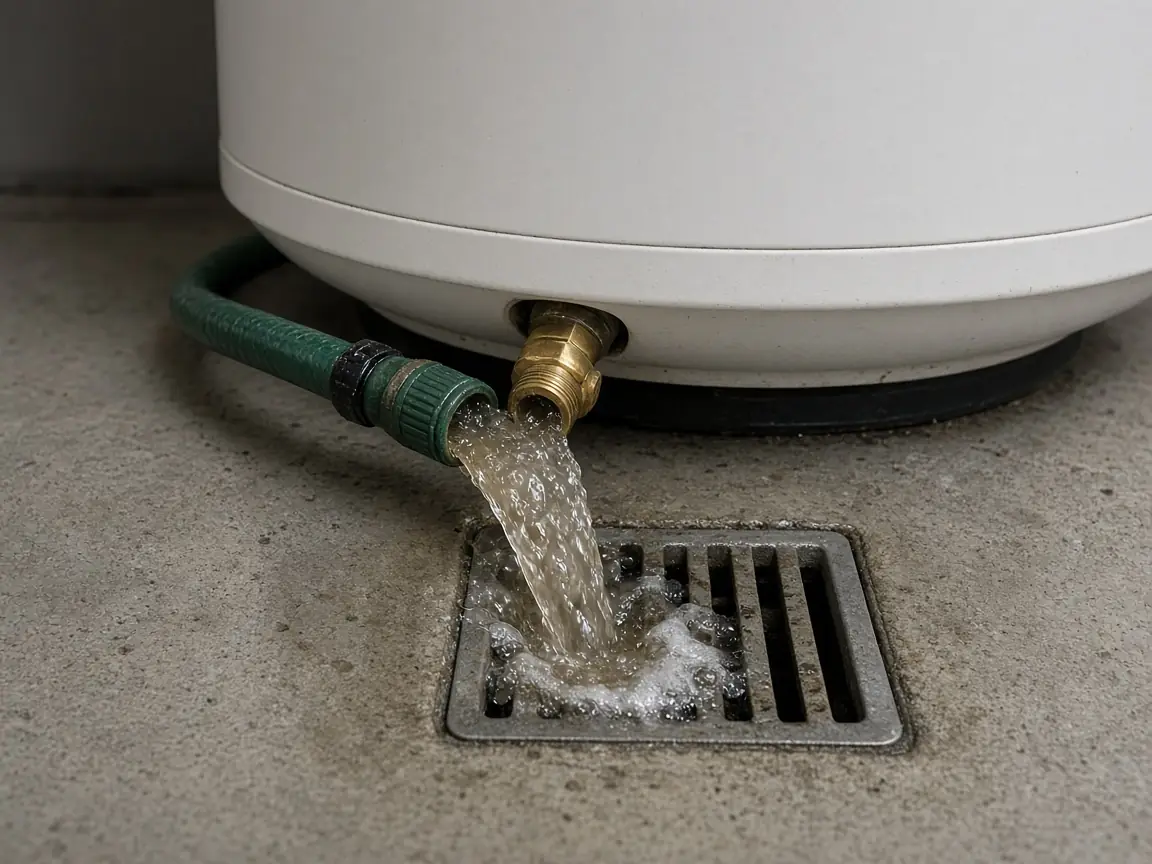
A water heater flush in Tualatin, OR is worth doing on a sound, dry tank that starts popping during heating, or after a few years without maintenance. Tualatin's supply has largely come through Portland's Bull Run system, which is soft, so mineral scale is usually light. Grit from water main work and aging pipes still settles in tanks. Garage tanks are easy to flush: run the hose out to the driveway, away from the foundation.
When to flush
Popping during heating, gritty water from a brief drain test, and slightly shorter hot water are the cues. On soft water, a flush every two years is often enough for quiet tanks.
When not to
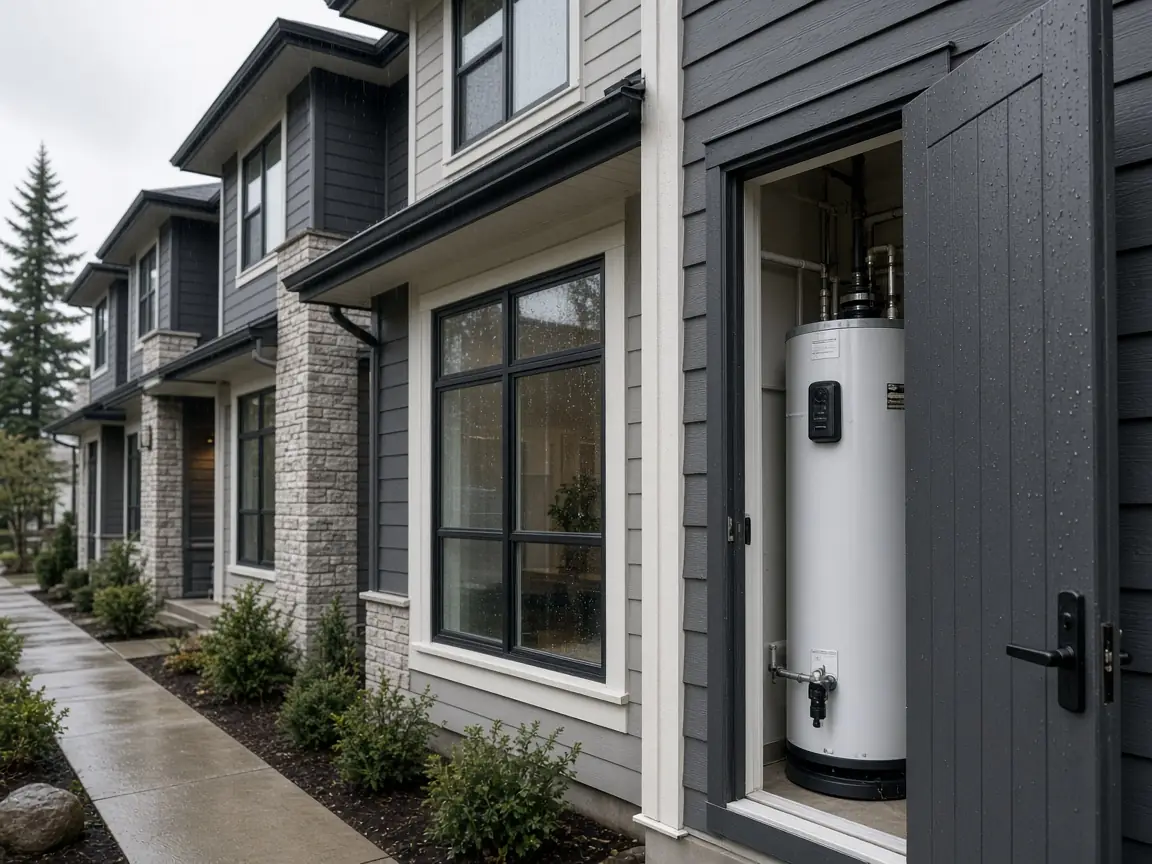
Skip tanks with wet shells, rust at the base, or brittle plastic drain valves. Old tanks without maintenance are better candidates for water heater replacement in Tualatin.
Steps
Energy off. Cold supply closed. Hose from drain valve to the driveway or a floor drain. Hot tap open inside. Drain valve open. Stir with short bursts of cold supply until clear. Close drain, refill with the hot tap open, restore energy last.
After main work
If the city has worked on water mains nearby and your hot water turns gritty, a short flush clears the tank. Clean faucet aerators too.
Anode check
Inspect the anode rod while the tank is depressurized. On soft water, anodes can last a long time, but they still wear. See the anode rod guide.
Tualatin notes
The City of Tualatin site has water information for city customers. Avoid draining onto lawns that slope back toward the house; Tualatin's low, damp ground near the river holds water. A dry-weather flush fits before an afternoon at Tualatin Community Park or Atfalati Park. Verify contractors with the Oregon CCB search.
What the drain water tells you
Catch the first gallon in a clear container. Grit that settles quickly is sediment from the mains. Fine white flakes are light scale. Rusty water that never clears suggests a spent anode or corrosion. Bits of white plastic hint at a failing dip tube, which also explains lukewarm water. Use what you see to decide the next step rather than assuming the flush fixed everything.
Gas versus electric flushing notes
On an electric tank, the breaker must be off before draining, or the upper element can burn out within minutes once it is exposed to air. On a gas tank, set the control to pilot so the burner does not fire while the water level drops. In both cases, refill completely, with a hot tap open until water flows steadily, before restoring heat. Skipping that refill check is the most common way a routine Tualatin flush turns into a repair.
Living with a water heater in Tualatin
Tualatin lies along the Tualatin River south of Tigard, where Interstate 5 and Interstate 205 meet. Much of the city was built from the 1970s through the 2000s, so neighborhoods of split-levels, two-story homes, and townhomes share similar water heater setups, often a gas or electric tank in the garage. The river, its floodplain, and wetland areas give parts of the city low, damp ground, and winter fog can settle along the river corridor, keeping garages cool and humid. Pressure-reducing valves are common, which makes expansion control part of routine maintenance. Tualatin's water has been supplied largely through Portland's Bull Run system, which is soft, so heavy scale is uncommon. A busy freeway location also means many households run on tight weekday schedules, which makes recovery time and first-hour capacity a practical concern on winter mornings. Garage corrosion, expansion control, and sizing for busy mornings are the local themes for Tualatin water heaters.
What a proper flush in Tualatin involves
- Tank age and condition reviewed before draining
- Energy turned off and cold supply closed
- Drain valve type checked; brittle plastic valves noted before opening
- Hose route secured to a safe drain or outdoor discharge
- Tank drained and stirred with brief cold-supply bursts until clear
- Anode rod inspected while the tank is depressurized
- Tank refilled completely with air bled before energy is restored
- Relief valve tested and checked for proper reseating
Flush prep list for Tualatin
Before a flush in Tualatin, find the drain valve and check what it is made of, identify where the hose will discharge, and gather a hose long enough to reach without kinks, gloves, and a bucket for the first sample. Note the tank age from the rating plate. If the anode rod will be inspected too, have the correct socket size and a replacement rod on hand. Plan the job for a dry, mild day so the hose route outdoors is safe.
Tualatin at a glance
- Location: Tualatin, Oregon, about 20–25 minutes south of central Portland on I-5.
- Local landmarks used on this page: Tualatin Community Park, Atfalati Park.
- City information and building contacts: City of Tualatin.
- State permit rules: Oregon Building Codes Division.
- Utilities: PGE or another electric utility and NW Natural gas serve most addresses; incentives are listed by Energy Trust of Oregon.
- Nearby city page: Tigard.
- Map: the map on this page shows Tualatin, Oregon at city level, not a business address.
Related pages
Tankless units are descaled, not flushed; see tankless water heater repair in Tualatin. For lukewarm water after a flush, read water heater repair in Tualatin. The Tualatin overview lists every page, water heater flush in Portland covers the metro, the hard water guide explains scale, and Tigard flush notes are next door.