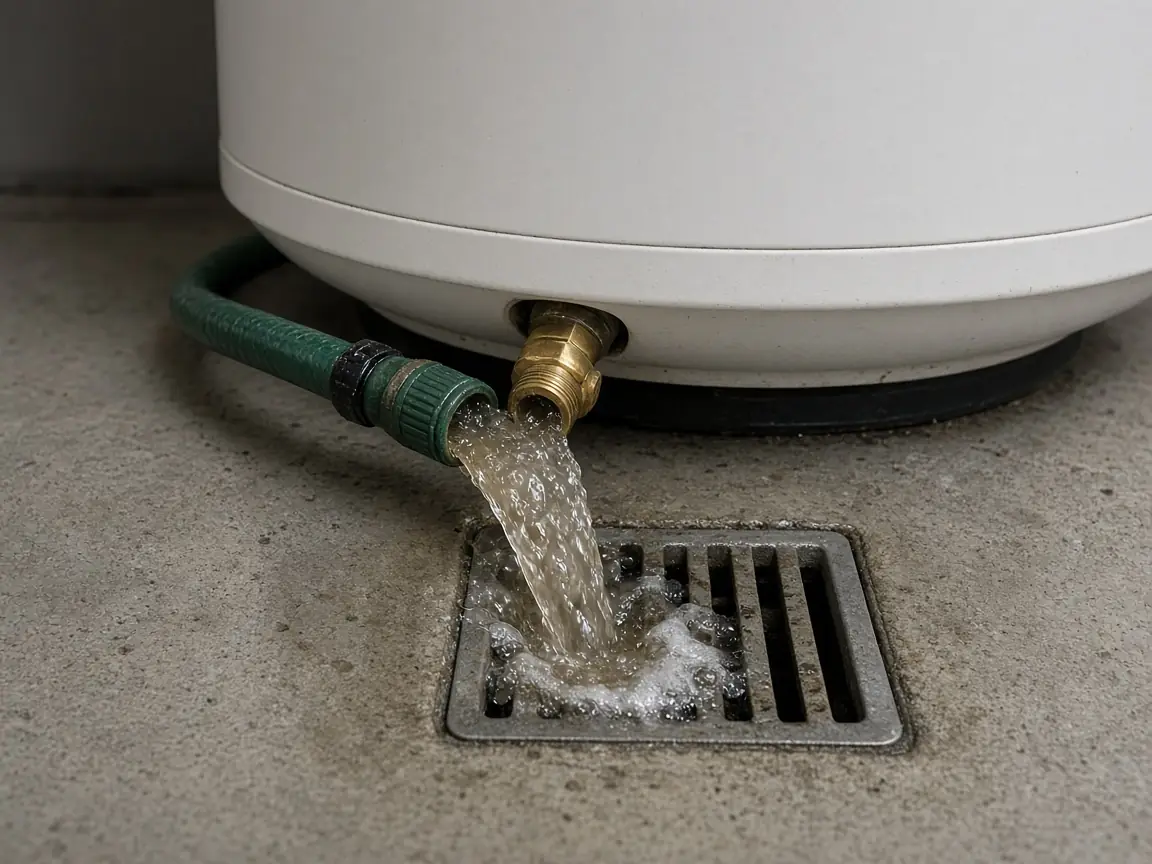
A water heater flush in Milwaukie, OR is worth doing on a dry, sound tank that pops or rumbles during heating, or once a year on homes that see heavy sediment. Milwaukie's city water comes from wells, and groundwater typically carries more minerals than Portland's Bull Run surface water, so sediment and scale can build faster here. Skip the flush on tanks that leak from the shell or have brittle drain valves, and check the anode rod while the tank is open.
How often
Many Milwaukie tanks do well with a yearly flush. Quiet tanks can stretch to two years. A tank that already pops is overdue. Electric tanks that keep losing lower elements often have sediment burying the element.

What to look for
Collect the first gallon in a clear jar. White or tan flakes are mineral scale. Sand-like grit is sediment from the mains. Rusty water that will not clear suggests corrosion or a spent anode.
The flush
Turn off energy, close the cold supply, attach a hose to the drain valve and lead it to the basement floor drain or laundry tub. Open a hot tap upstairs. Open the drain. When flow slows, briefly open the cold supply to stir the bottom. Repeat until the water runs clear. Close the drain, refill with a hot tap open, and restore energy only when the tank is full.
Hardened sediment
On well water, sediment can harden into a crust that a flush will not break up. If the tank still rumbles after a thorough flush, the crust may be permanent, and the tank's remaining life is limited. Plan ahead for water heater replacement in Milwaukie.
Anode rod
Mineral-rich water can consume anodes faster. Check yours every one to two years during a flush. If the core wire shows, replace it. The anode rod guide covers types; a powered anode is an option on harder water.
Drain valves in older tanks
Older plastic drain valves clog with flakes and may not reseal. If yours drips afterward, cap it and have a brass full-port valve installed.
Basement floor drains
Basement drains in older homes can be slow. Watch the drain during the flush; if it backs up, pause and let it catch up.
Milwaukie notes
The City of Milwaukie publishes information about its well-water system; your bill confirms your supplier. A Saturday morning flush leaves time for a walk at Kronberg Park or along the river at Milwaukie Bay Park. If you hire out the work, check the Oregon CCB search first.
Why minerals matter even in a mild-water region
Portland-area water is soft by national standards, which leads many homeowners to skip maintenance entirely. Groundwater systems are the exception. Calcium and magnesium carbonate come out of solution as water heats, settling on the tank floor and coating electric elements. A layer only a fraction of an inch thick can slow heat transfer enough to lengthen burner cycles and raise energy use. The hard water guide explains how scale forms and why it varies by address.
Living with a water heater in Milwaukie
Milwaukie is a compact city just south of Portland on the east bank of the Willamette River, where Johnson Creek and Kellogg Creek reach the river. Its neighborhoods are older on average than most suburbs on this site, with many homes from the 1920s through the 1960s: bungalows, small ranches, and post-war houses with basements or crawlspaces. That housing stock brings original galvanized or mixed piping, older gas lines, masonry chimneys, and basements that stay damp through the rainy season. The Orange Line light rail connects downtown Milwaukie to Portland, and the riverfront has been reshaped with new park space. Milwaukie's municipal water comes from city wells, so groundwater can carry somewhat more minerals than Portland's Bull Run surface water, and sediment and scale can build faster in some homes. Aging piping, basement moisture, and groundwater are the local factors that come up most in Milwaukie water heater work.
What a proper flush in Milwaukie involves
- Tank age and condition reviewed before draining
- Energy turned off and cold supply closed
- Drain valve type checked; brittle plastic valves noted before opening
- Hose route secured to a safe drain or outdoor discharge
- Tank drained and stirred with brief cold-supply bursts until clear
- Anode rod inspected while the tank is depressurized
- Tank refilled completely with air bled before energy is restored
- Relief valve tested and checked for proper reseating
Flush prep list for Milwaukie
Before a flush in Milwaukie, find the drain valve and check what it is made of, identify where the hose will discharge, and gather a hose long enough to reach without kinks, gloves, and a bucket for the first sample. Note the tank age from the rating plate. If the anode rod will be inspected too, have the correct socket size and a replacement rod on hand. Plan the job for a dry, mild day so the hose route outdoors is safe.
Milwaukie at a glance
- Location: Milwaukie, Oregon, about 15 minutes south and southeast of central Portland.
- Local landmarks used on this page: Kronberg Park, Milwaukie Bay Park.
- City information and building contacts: City of Milwaukie.
- State permit rules: Oregon Building Codes Division.
- Utilities: PGE or another electric utility and NW Natural gas serve most addresses; incentives are listed by Energy Trust of Oregon.
- Nearby city page: Lake Oswego.
- Map: the map on this page shows Milwaukie, Oregon at city level, not a business address.
Related pages
Tankless units are descaled, not flushed; see tankless water heater repair in Milwaukie. For lukewarm water after a flush, read water heater repair in Milwaukie. The Milwaukie overview lists every page, water heater flush in Portland covers the metro, and Lake Oswego flush notes are across the river.