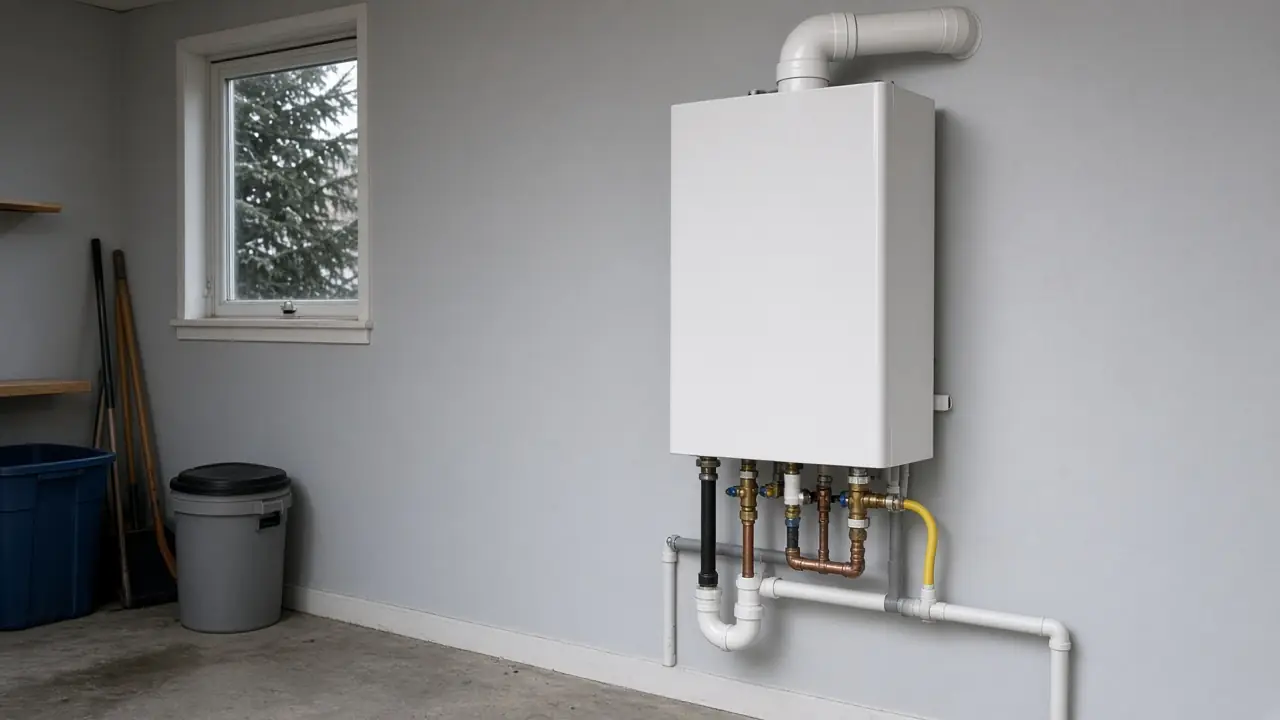
A first tankless installation in Milwaukie, OR has to include a gas line sized for the unit's full input, an approved vent and termination, a condensate drain for condensing units, isolation valves for descaling, and a permit. Because Milwaukie's water comes from wells and tends to carry more minerals than surface water, a Milwaukie install should also include a scale plan: a regular descaling schedule and, in some homes, a scale-reduction cartridge or softener ahead of the unit.
Gas supply in older homes
Older Milwaukie houses often have black iron gas lines sized decades ago for a furnace, range, and small tank. A whole-home tankless unit can need several times the gas of a tank. A load calculation from the meter tells you whether to upsize. Old fittings and valves along the way should be inspected while the line is opened.

Venting from a basement
Many Milwaukie tanks sit in basements and vent into masonry chimneys. A tankless unit vents through its own pipe, usually out a foundation or rim-joist wall. Terminations must clear grade, windows, and doors, and on small lots they must also respect property-line clearances. Retiring the water heater from the chimney may leave the furnace alone in it; check that the furnace still vents properly.
Scale protection
Groundwater minerals coat heat exchangers. Isolation valves with service ports are essential, and many installers recommend annual descaling on well water. A scale-reduction cartridge can help; follow the manufacturer's guidance. The tankless descaling guide explains the process.
Condensate
Condensing units need a neutralizer and a drain. Basement floor drains or laundry tubs are usually close.
Electrical
Gas units need an outlet or circuit. Electric whole-home tankless units need very high amperage, which many older Milwaukie homes with 100-amp services cannot supply. A heat pump water heater is often more practical.
Permits and incentives
Plumbing and often mechanical permits apply; see the Oregon Building Codes Division. Local contacts start at the City of Milwaukie. Review the NW Natural water heater offer and Energy Trust incentives.
Sizing
Size for winter inlet temperature and simultaneous fixtures. Groundwater is fairly steady in temperature through the year, but still cool, so the unit must deliver a large temperature rise.
Where it hangs in a small house
Older Milwaukie homes rarely have spare wall space near an exterior wall. Common choices are the basement wall nearest the old chimney, a garage wall if the house has an attached garage, or an outdoor-rated unit on a protected side of the house. A basement location keeps the unit warm and close to drains. An outdoor unit frees the basement entirely but relies on electric freeze protection during cold snaps. Walk each option with the gas route and vent exit in mind.
Milwaukie notes
Older homes near Kronberg Park and the riverfront by Milwaukie Bay Park often gain the most from a tankless conversion in basement space, but they also tend to need the most gas line work.
Living with a water heater in Milwaukie
Milwaukie is a compact city just south of Portland on the east bank of the Willamette River, where Johnson Creek and Kellogg Creek reach the river. Its neighborhoods are older on average than most suburbs on this site, with many homes from the 1920s through the 1960s: bungalows, small ranches, and post-war houses with basements or crawlspaces. That housing stock brings original galvanized or mixed piping, older gas lines, masonry chimneys, and basements that stay damp through the rainy season. The Orange Line light rail connects downtown Milwaukie to Portland, and the riverfront has been reshaped with new park space. Milwaukie's municipal water comes from city wells, so groundwater can carry somewhat more minerals than Portland's Bull Run surface water, and sediment and scale can build faster in some homes. Aging piping, basement moisture, and groundwater are the local factors that come up most in Milwaukie water heater work.
What a first tankless install in Milwaukie should cover
- Gas load calculation for every appliance and the pipe length from the meter
- Unit sized by flow rate at the coldest realistic inlet temperature
- Vent material and termination chosen per the manufacturer and code clearances
- Condensate drain and neutralizer planned for condensing models
- Isolation service valves and an accessible inlet filter installed
- Electrical outlet or circuit provided for controls, fans, and freeze protection
- Permits pulled for plumbing and, where needed, mechanical work
Tankless install prep list for Milwaukie
Before requesting a first tankless quote in Milwaukie, list every gas appliance in the house, note the distance from the gas meter to the proposed unit location, and photograph the wall where it would hang and the outside wall where the vent would exit. Count the showers and appliances that run together on a busy morning. Check the electrical panel label for open spaces. Those details let an installer size the gas line, vent, and unit properly the first time.
Milwaukie at a glance
- Location: Milwaukie, Oregon, about 15 minutes south and southeast of central Portland.
- Local landmarks used on this page: Kronberg Park, Milwaukie Bay Park.
- City information and building contacts: City of Milwaukie.
- State permit rules: Oregon Building Codes Division.
- Utilities: PGE or another electric utility and NW Natural gas serve most addresses; incentives are listed by Energy Trust of Oregon.
- Nearby city page: Lake Oswego.
- Map: the map on this page shows Milwaukie, Oregon at city level, not a business address.
Related pages
For existing tankless units, see tankless water heater replacement in Milwaukie. To compare with tanks, read water heater replacement in Milwaukie. The Milwaukie overview lists every page, tankless water heater installation in Portland covers the metro, and Lake Oswego tankless installation is across the river.