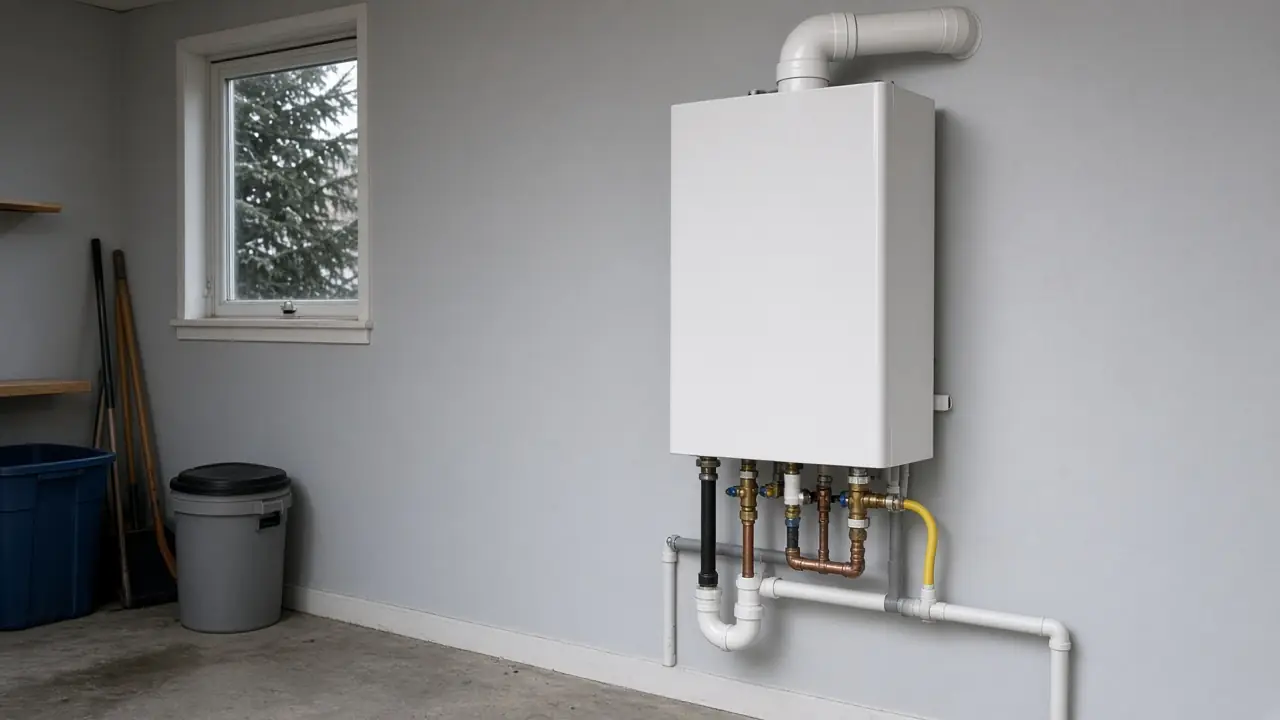
A first tankless installation in Hillsboro, OR has to include a gas line sized for the unit's full input, an approved vent that meets termination clearances from windows, doors, and neighboring walls, a condensate drain and neutralizer for condensing models, isolation valves for descaling, and a permit. In Hillsboro townhomes and tight-lot homes, HOA rules and side-yard clearances can limit vent locations, and electric whole-home tankless units are often ruled out by panel capacity.
Hillsboro homeowners consider tankless for the usual reasons: continuous hot water, space savings, and efficiency. The planning challenge here is often physical: dense housing with shared walls and narrow side yards.
Gas line sizing
Whole-home gas tankless units can require much more gas than the tank they replace. A load calculation including every gas appliance and the pipe length from the meter determines whether the existing line works. Many Hillsboro homes have their meter on one side and the water heater on the other, which means long runs. Upsizing is common.
Venting in tight spaces
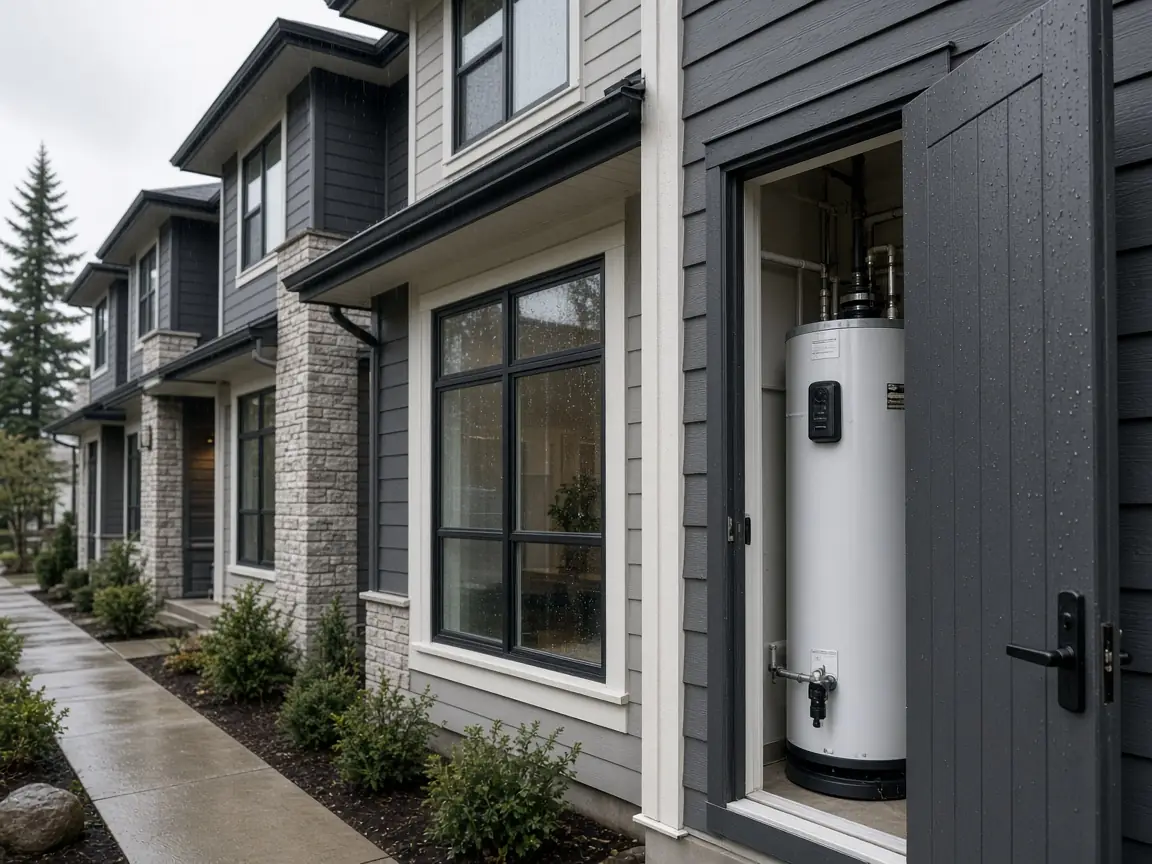
Condensing units vent in plastic pipe; terminations must keep set distances from windows, doors, soffit vents, gas meters, and inside corners. On homes with narrow side yards, the termination may need to exit the roof or the rear wall instead. HOAs in Hillsboro communities may also regulate visible exterior penetrations, so check rules before finalizing the location.
Electric tankless limits
Whole-home electric tankless units can need very large electrical capacity. Townhomes and newer homes often have 150- or 200-amp services already carrying electric ranges, heat pumps, and EV chargers. A licensed electrician should confirm capacity first. For many all-electric Hillsboro homes, a heat pump water heater is the more practical efficient choice.
Condensate
Condensing units produce acidic condensate that must be neutralized and drained. In garages without floor drains, a condensate pump is common. In upstairs closets, condensate can tie into a laundry standpipe if allowed.
Service valves and water quality
Hillsboro's water is generally soft, which is kind to heat exchangers, but isolation valves for descaling are still essential. If the home has a softener, the unit's manufacturer may have guidance on softened water. The tankless descaling guide covers maintenance.
Sizing for valley winters
Valley-floor winters bring colder supply water. Size the unit for winter temperature rise and the realistic number of simultaneous fixtures. A busy household with two showers and a dishwasher may need a larger unit than a summer test suggests.
Permits and incentives
Tankless installs generally need plumbing permits and often mechanical permits for gas and venting; see the Oregon Building Codes Division. Hillsboro building contacts start at the City of Hillsboro site. For incentives, check Energy Trust's residential water heater page and the NW Natural water heater offer.
Choosing the location
Options include the old tank's garage spot, a utility room wall close to an exterior wall, or an exterior-rated unit. Each balances gas line length, vent route, condensate, and freeze exposure differently. In Hillsboro's colder valley mornings, exterior units need reliable freeze protection.
Questions to ask before you commit
Ask how long the vent run will be and where it exits, whether the gas line will be replaced from the meter or only near the unit, where condensate will drain, and how the unit will be descaled in future. Ask what flow rate the unit delivers at a February inlet temperature. Clear answers to those five questions usually separate a careful installer from a rushed one.
Hillsboro notes
Homes around the Orenco Station area, near Jerry Willey Plaza at Orenco Station, often have exactly the tight lot lines that make vent planning tricky. Farther south, homes closer to Jackson Bottom Wetlands Preserve may have more room but longer gas runs.
Living with a water heater in Hillsboro
Hillsboro is the seat of Washington County and the western anchor of the metro, with the MAX Blue Line connecting its downtown and the Orenco Station area to Beaverton and Portland. The city grew quickly from the 1990s onward, so large areas share a construction era, a builder, and often the same model of water heater that is now reaching the end of its life. Townhomes, row houses, and compact single-family homes put many heaters in second-floor closets or crowded garages, where a missed leak can damage a ceiling or a neighbor's wall. The Tualatin River and its wetlands shape the south side of town, and the valley floor can hold cold, foggy air on winter mornings, which lowers inlet water temperature and slows recovery. Many neighborhoods also have pressure-reducing valves, which makes thermal expansion control an important part of every Hillsboro water heater conversation. Older homes near the historic downtown add classic gas tanks with metal flues to the mix.
What a first tankless install in Hillsboro should cover
- Gas load calculation for every appliance and the pipe length from the meter
- Unit sized by flow rate at the coldest realistic inlet temperature
- Vent material and termination chosen per the manufacturer and code clearances
- Condensate drain and neutralizer planned for condensing models
- Isolation service valves and an accessible inlet filter installed
- Electrical outlet or circuit provided for controls, fans, and freeze protection
- Permits pulled for plumbing and, where needed, mechanical work
Tankless install prep list for Hillsboro
Before requesting a first tankless quote in Hillsboro, list every gas appliance in the house, note the distance from the gas meter to the proposed unit location, and photograph the wall where it would hang and the outside wall where the vent would exit. Count the showers and appliances that run together on a busy morning. Check the electrical panel label for open spaces. Those details let an installer size the gas line, vent, and unit properly the first time.
Hillsboro at a glance
- Location: Hillsboro, Oregon, about 25–35 minutes west of central Portland on US-26.
- Local landmarks used on this page: Jackson Bottom Wetlands Preserve, Jerry Willey Plaza at Orenco Station.
- City information and building contacts: City of Hillsboro.
- State permit rules: Oregon Building Codes Division.
- Utilities: PGE or another electric utility and NW Natural gas serve most addresses; incentives are listed by Energy Trust of Oregon.
- Nearby city page: Beaverton.
- Map: the map on this page shows Hillsboro, Oregon at city level, not a business address.
Related pages
If you already have a tankless unit that is failing, read tankless water heater replacement in Hillsboro. To compare against a new tank or heat pump unit, see water heater replacement in Hillsboro. The Hillsboro overview lists all pages, metro notes are on tankless water heater installation in Portland, and tankless installation in Beaverton covers the neighbor.