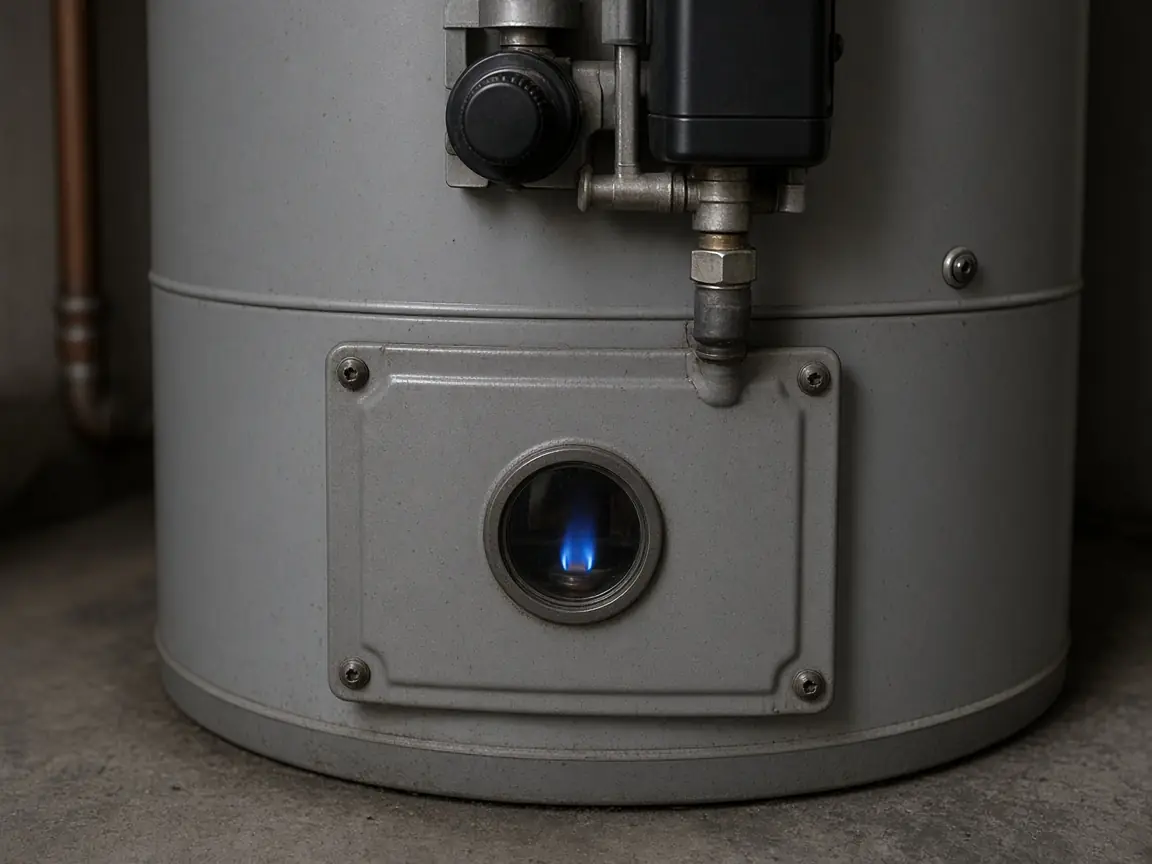
To check a gas water heater in Hillsboro, OR, open the burner viewing window or read the status light on the gas control, count any blink pattern, and match it to the chart on the tank label. Many Hillsboro homes built in recent decades have gas tanks with electronic ignition, flame sensors, power-vent blowers, or flammable-vapor sensors, so the fault is often reported by a code. If you see soot, scorch marks, or smell exhaust or gas, shut the heater off and leave the diagnosis to a licensed professional.
Gas water heaters in Hillsboro single-family homes are frequently newer designs than the standing-pilot tanks common in older Portland neighborhoods. That changes the troubleshooting: instead of relighting a pilot, you are reading codes and checking sensors.
Reading the status light
Most electronic gas controls use a single LED that blinks in a sequence. A steady slow blink often means normal operation. Other patterns indicate a flame sensor fault, a pilot or igniter failure, a pressure switch issue on power-vent units, or a high-temperature cutoff. Write down the number of blinks and the pause pattern. Then compare it to the label inside the burner door or the manual. A reset without understanding the code usually just repeats the failure.
Flammable-vapor sensor lockouts
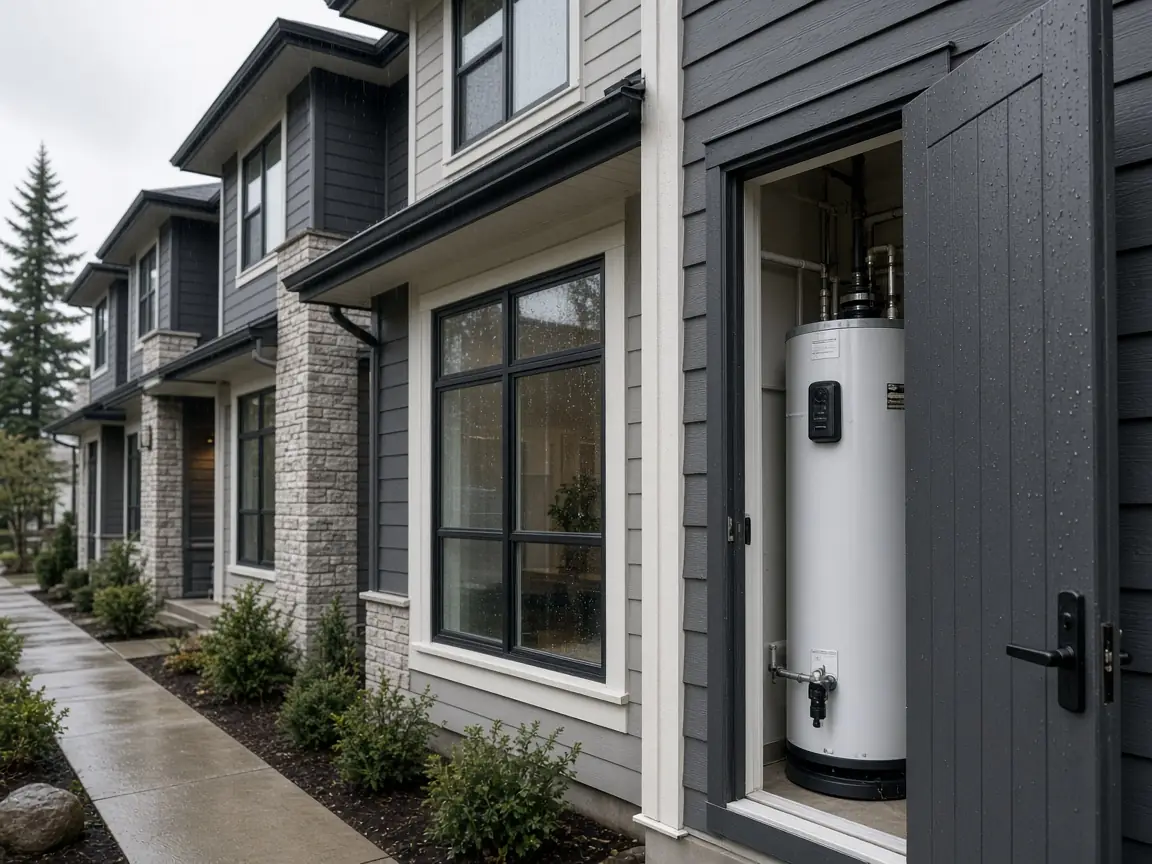
Since the mid-2000s, many gas tanks include a flammable-vapor sensor near the combustion chamber. If it detects vapors from gasoline, paint thinner, or solvents, it shuts the burner down. In a Hillsboro garage where a lawnmower is refueled or paint is stored, that can happen. Some sensors reset after the air clears; others lock out permanently and require replacing a component. Moving vapor sources away from the heater is the first fix.
Igniter and flame sensor faults
Hot-surface and spark igniters fail over time. A flame sensor coated with combustion residue may not detect a healthy flame, so the control shuts the gas off a few seconds after ignition. Cleaning the sensor is sometimes enough. A failed igniter needs replacement.
Power-vent and direct-vent checks
Power-vent tanks use a blower to push exhaust through plastic pipe, usually out a side wall. If the blower does not start, check for power at its outlet first. A blocked termination, a cracked vent pipe, or condensate pooling in a sagging run can trip the pressure switch. Direct-vent tanks pull air from outside and exhaust through a concentric or paired vent; blocked intake screens cause poor combustion. In Hillsboro's newer neighborhoods, side-wall terminations sometimes face fences or landscaping that has grown in close; trim it back.
Atmospheric-vent tanks in older Hillsboro homes
Older homes near downtown Hillsboro and in mid-century neighborhoods may still have standing-pilot tanks venting through a metal flue. Those follow the classic checks: thermocouple, pilot orifice, vent connector condition, and draft at the hood. Soot or a melted relief-valve handle near the top signals spillage. The basement venting guide covers combustion air in tighter older homes.
Gas control valve failure
When a gas control valve fails, the tank usually will not light at all, even with good sensors and igniters. On tanks past about eight to ten years, the cost of a new control valve often makes water heater replacement in Hillsboro the better value.
Safety basics
Every home with gas appliances should have carbon monoxide alarms on each level. If the alarm sounds, get everyone outside and call 911. If you smell gas, leave, then call NW Natural from outside. Never disable a sensor to keep the heater running.
Hillsboro resources
Gas piping or venting changes generally require permits; see the Oregon Building Codes Division. Hillsboro building contacts are on the City of Hillsboro site. If you are considering an upgrade instead of a repair, NW Natural describes its water heater offer.
Hillsboro garages are often full of weekend gear for trips to Orenco Woods Nature Park or the wetlands at Jackson Bottom Wetlands Preserve. Keep fuel cans and coolers with propane well away from the water heater.
Living with a water heater in Hillsboro
Hillsboro is the seat of Washington County and the western anchor of the metro, with the MAX Blue Line connecting its downtown and the Orenco Station area to Beaverton and Portland. The city grew quickly from the 1990s onward, so large areas share a construction era, a builder, and often the same model of water heater that is now reaching the end of its life. Townhomes, row houses, and compact single-family homes put many heaters in second-floor closets or crowded garages, where a missed leak can damage a ceiling or a neighbor's wall. The Tualatin River and its wetlands shape the south side of town, and the valley floor can hold cold, foggy air on winter mornings, which lowers inlet water temperature and slows recovery. Many neighborhoods also have pressure-reducing valves, which makes thermal expansion control an important part of every Hillsboro water heater conversation. Older homes near the historic downtown add classic gas tanks with metal flues to the mix.
What a gas diagnosis in Hillsboro should cover
- Gas supply valve position and gas pressure confirmed
- Pilot, thermocouple, thermopile, flame sensor, or igniter tested
- Status light code read and matched to the manufacturer chart
- Vent connector slope, joints, and condition checked; draft tested at the hood
- Combustion air openings measured against the space and appliance input
- Burner and combustion chamber inspected for rust scale and soot
- Flammable-vapor sensor and thermal cutoff checked, never bypassed
- Carbon monoxide alarm presence confirmed
Gas repair prep list for Hillsboro
Before a gas repair visit in Hillsboro, note the heater brand and model, whether it has a standing pilot or electronic ignition, the vent type, and any blinking status pattern on the gas control. Record whether the problem lines up with wind, rain, an outage, or a recent remodel. Confirm every level of the home has a working carbon monoxide alarm. Keep the area around the burner clear of stored items and anything that gives off vapors, such as paint, solvents, or gasoline cans.
Hillsboro at a glance
- Location: Hillsboro, Oregon, about 25–35 minutes west of central Portland on US-26.
- Local landmarks used on this page: Jackson Bottom Wetlands Preserve, Jerry Willey Plaza at Orenco Station.
- City information and building contacts: City of Hillsboro.
- State permit rules: Oregon Building Codes Division.
- Utilities: PGE or another electric utility and NW Natural gas serve most addresses; incentives are listed by Energy Trust of Oregon.
- Nearby city page: Beaverton.
- Map: the map on this page shows Hillsboro, Oregon at city level, not a business address.
Related pages
If the tank is also rumbling, see water heater flush in Hillsboro. If you are thinking about going tankless, read tankless water heater installation in Hillsboro. The Hillsboro overview lists every page, gas water heater repair in Portland covers the metro, and gas repair in Beaverton covers the neighbor.