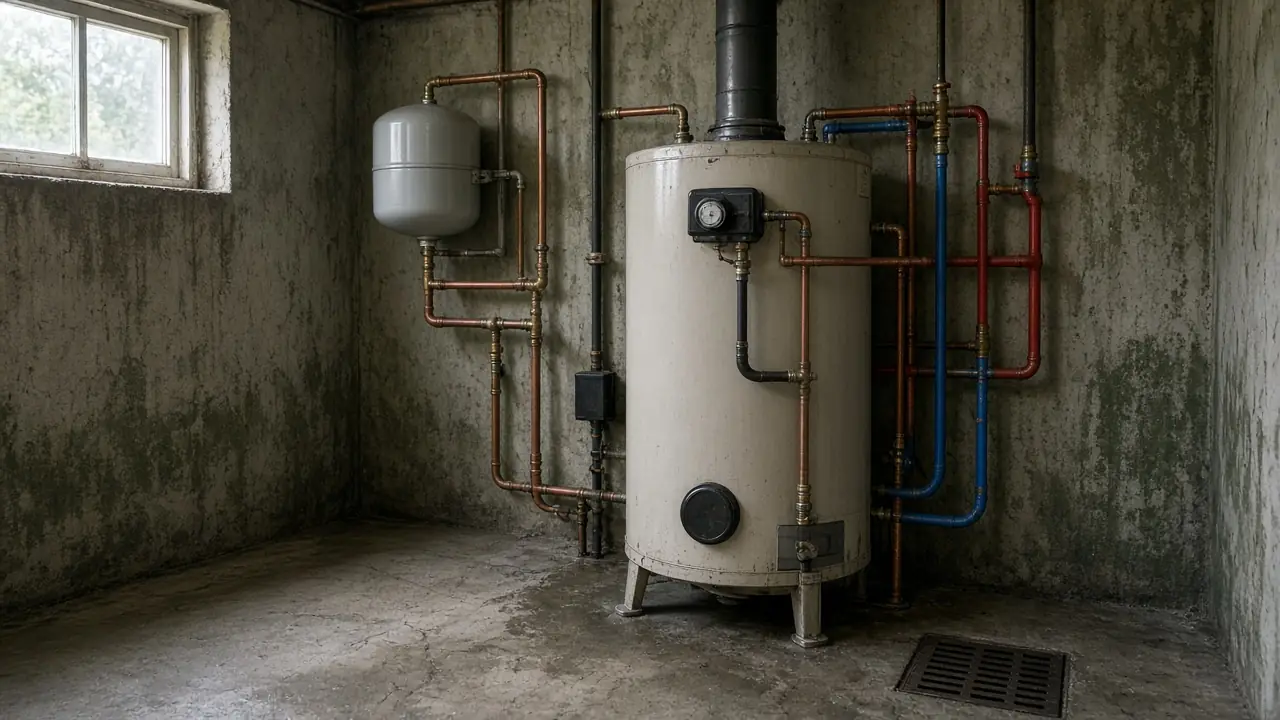
A water heater in Hillsboro, OR should be replaced when it leaks from the tank shell, shows rust at the base or in the hot water, or needs an expensive part after about ten years of service. Hillsboro replacements often involve tight access: upstairs laundry closets, narrow townhome stairs, and garages shared with furnaces and softeners. Measure the route in, confirm what fits, and plan code items such as an expansion tank, seismic straps, and a piped drain pan. Oregon generally requires a permit.
Much of Hillsboro's housing was built in a compressed span of years, and many original tanks are reaching end of life together. That makes it worth planning before the leak rather than after.
Signs the tank is done
Water from the shell or bottom seam, rusty hot water, rust flakes at the base, a burner area full of scale, and relief-valve discharge that continues even after the expansion tank checks out are the clear signs. Age past twelve years combined with any of these makes replacement the practical answer.
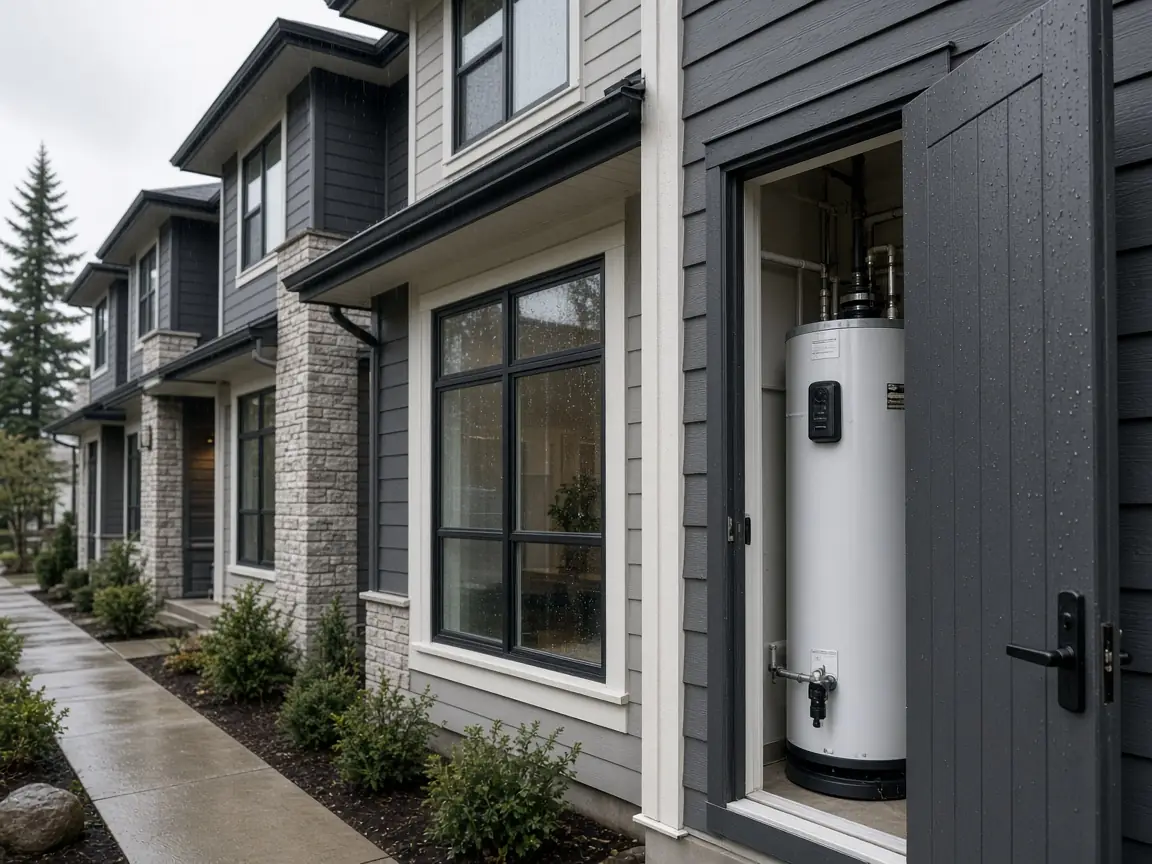
Access is the first measurement
Townhomes and row houses often put the water heater in a second-floor closet. A 50-gallon tank is heavy and tall, and a heat pump tank is taller still. Measure the closet door width and height, the turn at the top of the stairs, and the stairwell itself. Some closets were built around the original tank before the doorframe was trimmed, leaving a door narrower than the tank. In those cases, a slightly smaller-diameter model or a lowboy may be required, or the doorway trim may need to come off.
In garages, look at what stands in the way: softener tanks, furnaces, shelving, and cars. Clearing a path before the replacement day saves time.
Choosing the replacement
Electric tank. Common in Hillsboro townhomes. A like-for-like swap is simplest. Confirm breaker size and wire gauge match the new tank.
Heat pump water heater. Excellent efficiency, but needs room air volume, clearance above for the fan, a condensate drain, and usually a dedicated 240-volt circuit. A closet may need louvered doors or a ducting kit. In a garage, it often fits well. Energy Trust of Oregon lists incentives for qualifying units, and PGE explains the technology on its water heater page.
Gas tank. Common in single-family Hillsboro homes. Confirm the vent type; many newer homes use power-vent or direct-vent tanks with side-wall terminations, and the new tank must match.
Tankless. Saves space but needs gas line capacity, venting, and condensate; see tankless water heater installation in Hillsboro.
Drain pans and leak protection
Upstairs and closet heaters should sit in a drain pan, ideally piped to a drain. Many original pans in Hillsboro townhomes have no outlet. A replacement is the right time to add a piped pan, an automatic leak shutoff valve, or at least a leak alarm. Those small additions protect the ceiling and the unit below in attached housing.
Code items
Expect seismic strapping, a correctly routed relief-valve discharge, a thermal expansion tank where a pressure-reducing valve or check valve makes the system closed, and correct electrical or gas connections. The Oregon Building Codes Division explains when permits apply, and Hillsboro contacts start at the City of Hillsboro. HOAs may have rules about exterior vent terminations if the vent location changes.
Sizing
Use the first-hour rating on the EnergyGuide label rather than tank gallons alone. Count simultaneous morning demand. Valley-floor winters bring cold supply water, which reduces effective capacity. Heat pump tanks are often sized one step up from the tank they replace.
Hillsboro notes
Hillsboro mornings around Jackson Bottom Wetlands Preserve can hold fog well into the day, and the valley's damp air shortens the life of tanks in unconditioned garages. Residents near Orenco Woods Nature Park and the Orenco Station area live in some of the densest housing on the west side, where access planning matters most.
Living with a water heater in Hillsboro
Hillsboro is the seat of Washington County and the western anchor of the metro, with the MAX Blue Line connecting its downtown and the Orenco Station area to Beaverton and Portland. The city grew quickly from the 1990s onward, so large areas share a construction era, a builder, and often the same model of water heater that is now reaching the end of its life. Townhomes, row houses, and compact single-family homes put many heaters in second-floor closets or crowded garages, where a missed leak can damage a ceiling or a neighbor's wall. The Tualatin River and its wetlands shape the south side of town, and the valley floor can hold cold, foggy air on winter mornings, which lowers inlet water temperature and slows recovery. Many neighborhoods also have pressure-reducing valves, which makes thermal expansion control an important part of every Hillsboro water heater conversation. Older homes near the historic downtown add classic gas tanks with metal flues to the mix.
What a Hillsboro replacement should include
- Old tank drained, disconnected, and hauled away
- New heater sized from first-hour rating and household demand
- Seismic strapping installed to current Oregon requirements
- Relief valve discharge piped to an approved termination
- Thermal expansion tank added or checked where the system is closed
- Gas connector, vent connector, or electrical circuit matched to the new unit
- Drain pan, leak alarm, or automatic shutoff considered for finished spaces
- Permit pulled and final inspection scheduled
Replacement prep list for Hillsboro
Before comparing replacement quotes in Hillsboro, collect a photo of the old rating plate, a tape-measured photo of the space including door widths along the path in, the fuel type, the breaker size for electric units, and the vent type for gas units. Note any problems the old heater had, such as running out of hot water, so the new one can be sized for real demand. Ask each quote to list the permit, haul-away, expansion tank, straps, pan, and any fuel-change work as separate lines.
Hillsboro at a glance
- Location: Hillsboro, Oregon, about 25–35 minutes west of central Portland on US-26.
- Local landmarks used on this page: Jackson Bottom Wetlands Preserve, Jerry Willey Plaza at Orenco Station.
- City information and building contacts: City of Hillsboro.
- State permit rules: Oregon Building Codes Division.
- Utilities: PGE or another electric utility and NW Natural gas serve most addresses; incentives are listed by Energy Trust of Oregon.
- Nearby city page: Beaverton.
- Map: the map on this page shows Hillsboro, Oregon at city level, not a business address.
Related pages
If the tank still works, start with water heater repair in Hillsboro. If you already have a tankless unit that needs replacing, see tankless water heater replacement in Hillsboro. The Hillsboro overview collects the city's pages, metro context is on water heater replacement in Portland, and Beaverton's replacement page covers the neighbor.