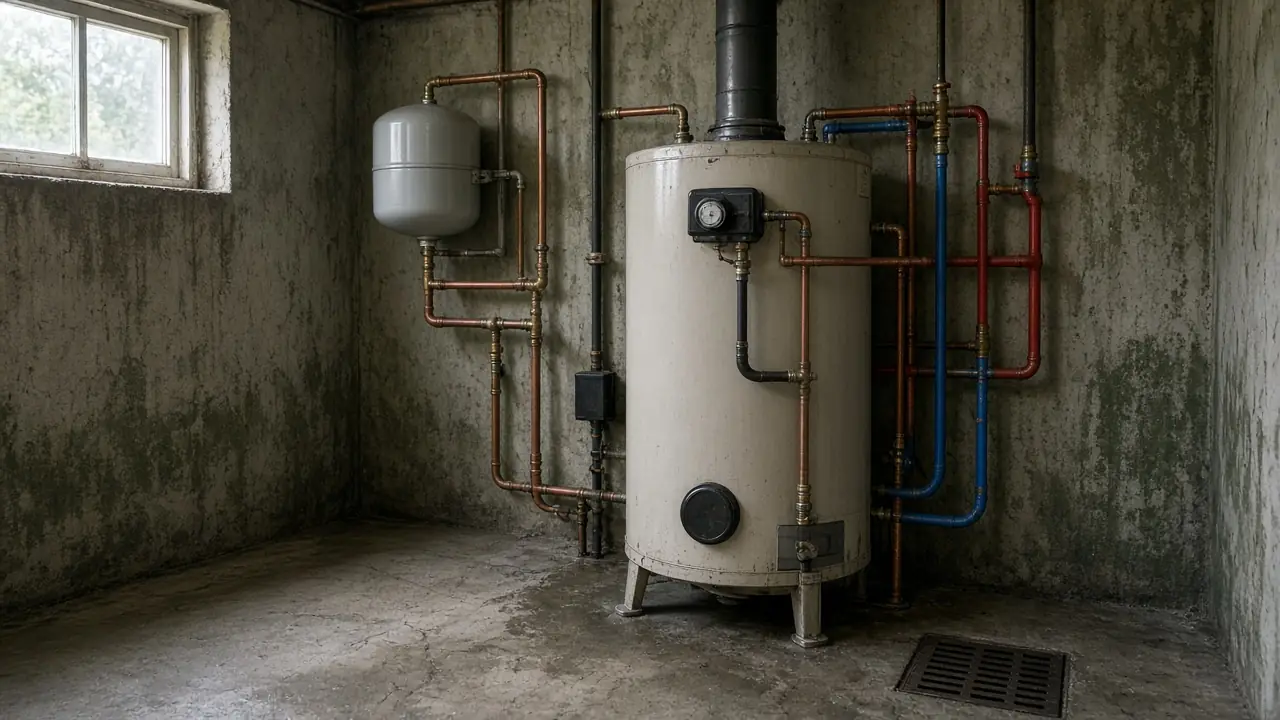
A water heater in Tigard, OR should be replaced when it leaks from the shell, shows rust at the base or in the hot water, or needs an expensive part after about a decade. A Tigard replacement should also check house water pressure and the pressure-reducing valve, because many homes on the city's slopes see high pressure that shortens tank life. Expect code items such as an expansion tank, seismic straps, and a proper relief-valve discharge. Oregon generally requires a permit.
Signs it is time
Water from the shell or seam, rusty hot water, heavy rust at the base, and a gas burner area coated in rust scale are the strongest signs. Age past twelve years with any of them means replacement.
Pressure first
Before installing a new tank, measure static house pressure. If it runs above about 80 psi, adjust or replace the pressure-reducing valve. Then size and pre-charge the expansion tank to match the house pressure. Skipping this step can leave a new heater cycling its relief valve from the first week.
Choosing the replacement
Gas tank: Common in Tigard's older ranches and split-levels. Match vent type; many use atmospheric vents into a chimney or through the roof.
Electric tank: Common in townhomes. Confirm circuit size.
Heat pump water heater: Works well in many Tigard garages. Needs room air, a condensate drain, and a 240-volt circuit. See Energy Trust's residential water heater incentives and PGE's water heater page.
Tankless: Needs gas line capacity and venting; see tankless water heater installation in Tigard.
Split-level access
Split-level homes often hide the heater in a lower-level utility room reached by a short stair and a tight turn. Measure the path. Some older utility doors are narrower than modern tanks with thicker insulation.
Code items and permits
Seismic strapping, a relief-valve discharge to an approved location, an expansion tank where needed, and correct gas or electric connections are standard. The Oregon Building Codes Division explains permit requirements; Tigard contacts start at the City of Tigard. Check contractor registration with the Oregon CCB search.
Sizing
Use the first-hour rating and plan for the busiest morning. Winter supply water is colder, so a borderline tank feels smaller from December through March.
Tigard notes
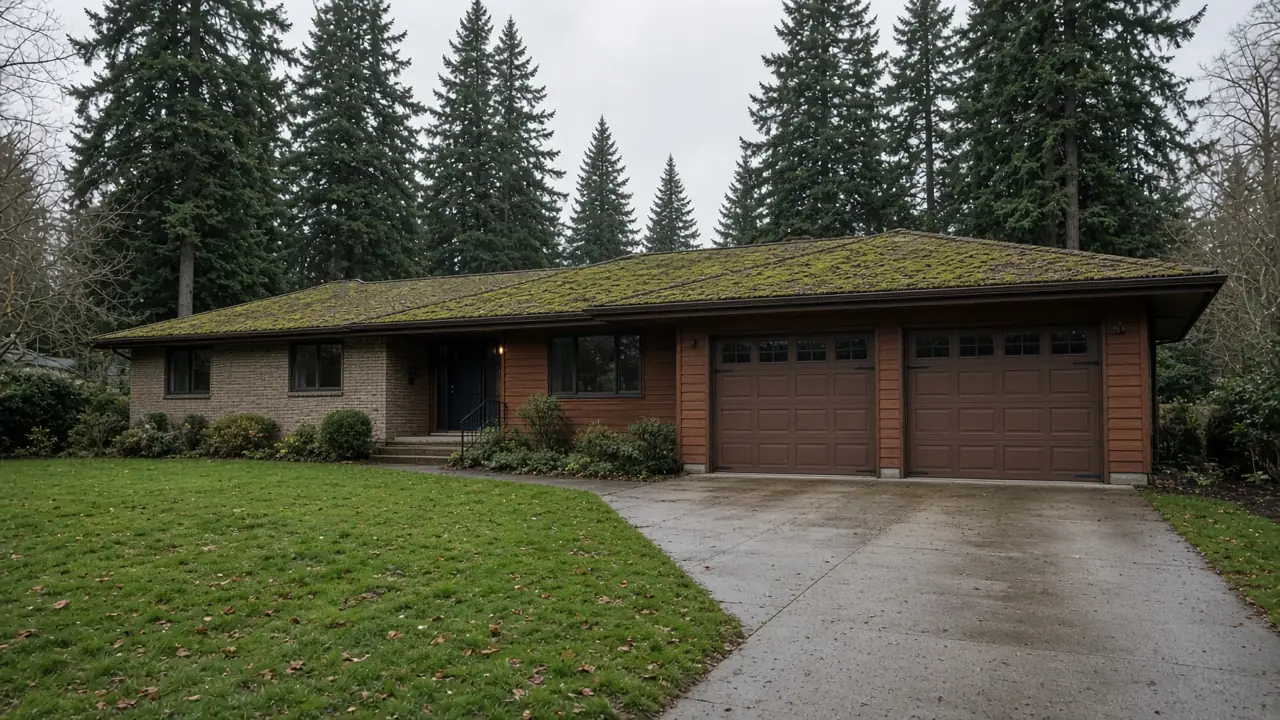
Neighborhoods near Dirksen Nature Park and along the Fanno Creek Trail include many 1970s split-levels where original heaters have already been replaced once or twice. Each replacement is a chance to correct the pressure and expansion setup that may have shortened the last tank's life.
Gas line and vent checks during the swap
If the old gas tank vented into a chimney shared with a furnace that has since been replaced, the new tank may be venting alone into an oversized flue. That is common in Tigard's 1970s homes and can require a liner or a different vent approach. Ask the installer to check draft once the new tank is running.
Living with a water heater in Tigard
Tigard sits southwest of Portland, crossed by Highway 217 and Interstate 5, with Fanno Creek running through its lower neighborhoods and Bull Mountain rising to the west. That change in elevation matters for plumbing: homes low in a pressure zone can see high street pressure, and many houses have pressure-reducing valves that make the plumbing a closed system. High pressure and failed expansion tanks are therefore common reasons for relief-valve drips and stressed fittings here. Housing ranges from 1960s and 1970s ranches and split-levels near the highway corridors to larger hillside homes from the 1990s and 2000s and newer townhomes near the town center. Much of Tigard's water now comes through the Lake Oswego Tigard Water Partnership from the Clackamas River, which is relatively soft. Damp winters, split-level utility rooms with tight access, and pressure are the local factors that shape most Tigard water heater decisions.
What a Tigard replacement should include
- Old tank drained, disconnected, and hauled away
- New heater sized from first-hour rating and household demand
- Seismic strapping installed to current Oregon requirements
- Relief valve discharge piped to an approved termination
- Thermal expansion tank added or checked where the system is closed
- Gas connector, vent connector, or electrical circuit matched to the new unit
- Drain pan, leak alarm, or automatic shutoff considered for finished spaces
- Permit pulled and final inspection scheduled
Replacement prep list for Tigard
Before comparing replacement quotes in Tigard, collect a photo of the old rating plate, a tape-measured photo of the space including door widths along the path in, the fuel type, the breaker size for electric units, and the vent type for gas units. Note any problems the old heater had, such as running out of hot water, so the new one can be sized for real demand. Ask each quote to list the permit, haul-away, expansion tank, straps, pan, and any fuel-change work as separate lines.
Tigard at a glance
- Location: Tigard, Oregon, about 15–25 minutes southwest of central Portland on I-5.
- Local landmarks used on this page: Cook Family Park, Dirksen Nature Park.
- City information and building contacts: City of Tigard.
- State permit rules: Oregon Building Codes Division.
- Utilities: PGE or another electric utility and NW Natural gas serve most addresses; incentives are listed by Energy Trust of Oregon.
- Nearby city page: Tualatin.
- Map: the map on this page shows Tigard, Oregon at city level, not a business address.
Related pages
If the tank still works, see water heater repair in Tigard. For a tankless swap, read tankless water heater replacement in Tigard. The Tigard overview lists every page, water heater replacement in Portland covers the metro, and Lake Oswego replacement notes are next door.