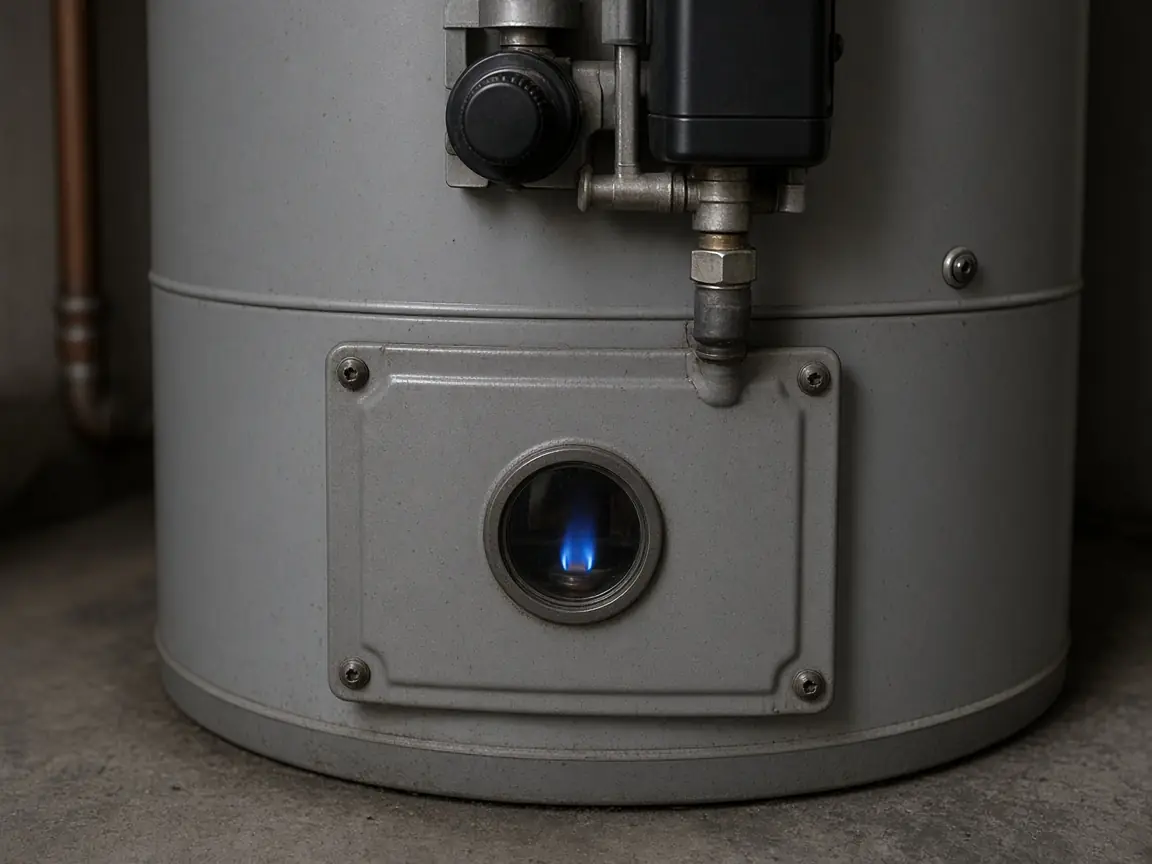
A popping or rumbling sound from a water heater in a Northwest Portland, OR garage near Forest Park usually means sediment on the tank bottom. Water trapped under the sediment boils in bursts when the burner or lower element runs. Flushing helps if the tank is in good condition. Ticking or tapping is usually pipes expanding and contracting, and a loud bang when a faucet closes is water hammer. Hissing near the burner can be condensation dripping onto it on cold mornings.
Homes near Forest Park often sit on steep, wooded lots with cool, damp garages and basements. Those conditions affect how water heaters sound and wear.
Popping and rumbling
Sediment builds up on the bottom of gas tanks and around the lower element in electric tanks. Heat trapped underneath causes small steam bubbles that pop as they escape. The noise is a sign of wasted energy and added stress on the tank. See water heater flush.
Hissing and sizzling
On gas tanks, condensation forms when cold water fills the tank and hot exhaust meets cold metal, and drips onto the burner. This is common on cold mornings and often harmless if it stops once the tank warms. Persistent sizzling can also mean a leak near the burner, which needs attention.
Ticking and tapping
Pipes expand and contract with temperature changes. Heat traps or loose straps can tick. This is usually harmless.
Banging
A sudden bang when a valve closes is water hammer, worsened by high pressure. Hammer arrestors or pressure adjustment help. See the expansion tank guide.
Screeching or whistling
A partially closed valve or a failing relief valve can whistle. Check that the cold supply valve is fully open.
Cool, damp garages
Cold garages cause more condensation and colder incoming water, which increases burner run time and sediment noise. Damp air corrodes burner parts. See gas water heater repair and the gas venting guide.
When noise means replacement
If flushing does not quiet an old tank, or if noise comes with leaks or rust, plan water heater replacement.
Learn more
Explore Forest Park on the City of Portland site.
An example from a hillside home
A gas tank in a detached garage on a steep Northwest Portland street rumbles loudly every morning. The garage stays cold and damp through winter. A flush brings out a large amount of fine sediment and rust flakes, and the noise drops considerably. The owner also notices rust on the burner shield and a weak pilot flame. Cleaning the pilot and replacing the thermocouple resolves intermittent outages, and the tank is put on an annual flush schedule.
Common mistakes
- Ignoring noise until the tank leaks.
- Flushing a very old tank that has never been flushed, which can open a leak.
- Turning up the thermostat to compensate for sediment, which wastes energy and raises scald risk.
- Assuming every noise is sediment without checking for leaks or valve problems.
Quieting a noisy tank
Flush on a regular schedule, consider a full-port brass drain valve to clear sediment better, and inspect the anode, since a failing anode can add rust particles. For electric tanks, low-watt-density elements can reduce noise from sediment around the lower element.
When to call for help
If noise is accompanied by water on the floor, a gas smell, a relief valve discharging, or scorch marks, stop and have the unit checked. Those signs go beyond sediment.
Garage tank tips
Keep the area around the tank clear of stored items, paint, and chemicals. Make sure the tank is strapped and, for gas tanks in garages, raised as code requires.
Detached garages and long pipe runs
Many hillside homes have detached garages or garages below the house, which means long pipe runs to bathrooms. Long runs cool water in the pipes between uses, so the tank fires more often and sediment noise becomes more noticeable. Insulating accessible hot water pipes reduces both heat loss and run time, and it shortens the wait for hot water at the tap.